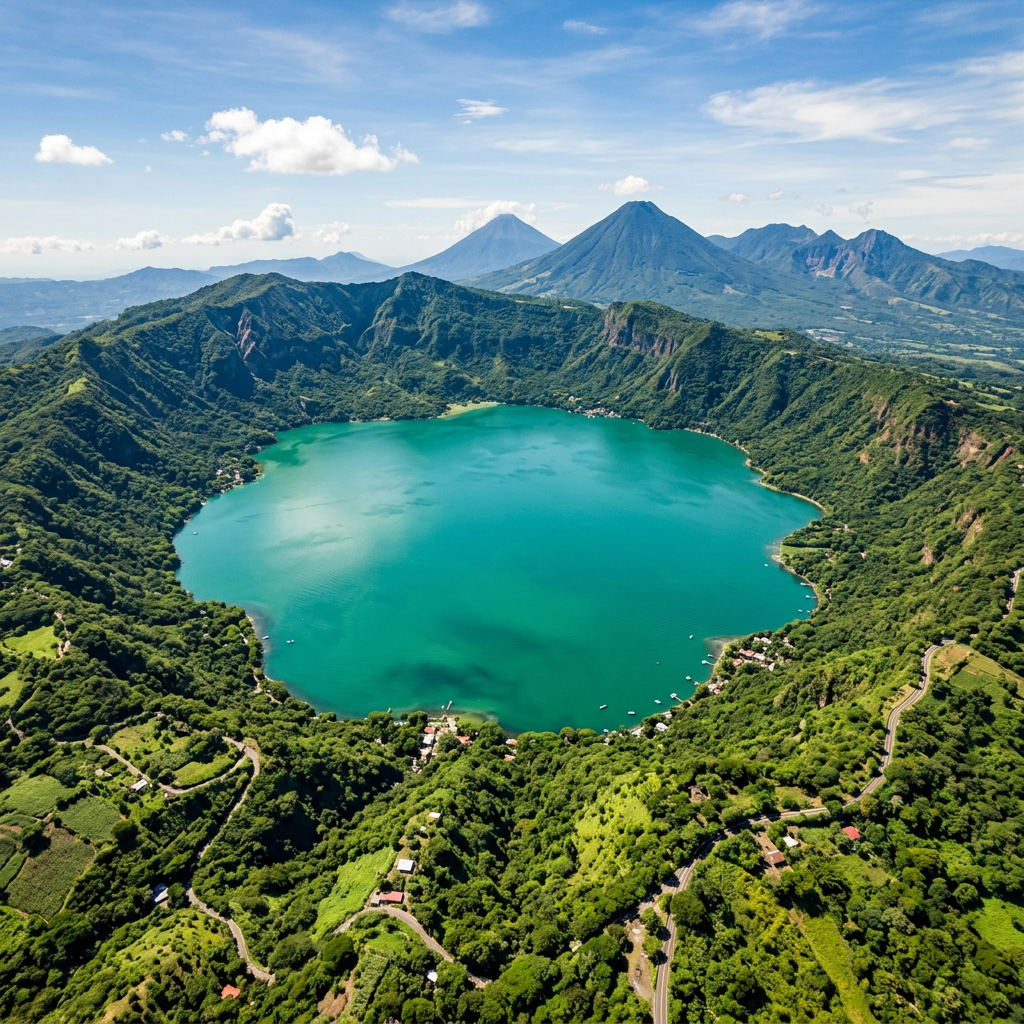

In El Salvador, the “Land of Volcanoes,” beauty is never far away. It’s one of the few places on earth where you can hike a towering volcano in the morning, enjoy a traditional lunch overlooking its crater lake, and still catch the sunset from a scenic viewpoint before dinner. Despite being the smallest country in Central America, we have the highest density of active volcanoes in the region, and they have shaped our landscape into something truly magical.
Thousands of years ago, massive eruptions left behind deep craters that eventually filled with rainwater, creating breathtaking lakes and lagoons. Today, let’s explore these “mirrors of water” born from the hearts of our ancient giants.
Lago de Coatepeque: The Turquoise Gem
Located in Santa Ana, Coatepeque is legendary for its ability to transform from a standard blue to a brilliant turquoise. This phenomenon, which occurs once or twice a year, results from minerals, volcanic activity, and microalgae. Formed about 72,000 years ago, this caldera lake is a favorite for locals and visitors alike. Whether you’re dining at a restaurant in El Congo or exploring Teopán Island—an ancient lava dome—the view is always spectacular.
Lago de Ilopango: The Sleeping Giant
Just 25 minutes from San Salvador lies the country’s largest natural lake. Its origin is tied to one of the most powerful eruptions ever recorded in the region: the Tierra Blanca Joven eruption 1,500 years ago. Today, its calm waters are perfect for sailing and water sports. On clear days, you can even see the distant silhouettes of the San Vicente and San Miguel volcanoes on the horizon.
Laguna de Chanmico: The Heart-Shaped Secret
Nestled within the San Salvador volcanic complex, Chanmico has a unique heart-shaped contour when viewed from above. Its name means “Place of the Dead” in Nahuatl, and it’s steeped in local legends. Between November and January, a natural sulfur phenomenon known as “La Azufrada” occasionally changes the color of its water, reminding us of the volcanic life still breathing beneath the surface.
Laguna de Alegría: The Emerald of America
High in the mountains of Usulután, inside the Tecapa crater, lies the “Emerald of America.” The Laguna de Alegría gets its name from its intense green hue, caused by minerals and geothermal gases. The town of Alegría, with its cobblestone streets and rose gardens, makes this a must-visit destination for anyone seeking fresh air and stunning vistas.
Lago de Güija: Where Lava Met the Valley
Near the Guatemalan border, Lago de Güija offers a different kind of origin story. Instead of a crater, this lake formed when ancient lava flows blocked a valley, allowing water to pool over centuries. It’s now a vital ecological site for migratory birds and is surrounded by colonial history in the nearby town of Metapán.
El Salvador’s volcanic lakes are more than just scenic spots; they are living testaments to nature’s power. Which one will you visit first?
Your voice matters in making this community thrive. Share your thoughts in the comments and subscribe to receive new stories in your inbox. If these stories inspire you, consider a donation—every bit helps us celebrate and share the wonders of El Salvador together.
Leave a Reply