There are moments when a country steps into a larger conversation. Not with noise. Not with force. But with confidence, progress, and a story that is finally being heard beyond its own borders.
Today, El Salvador received one of those moments.
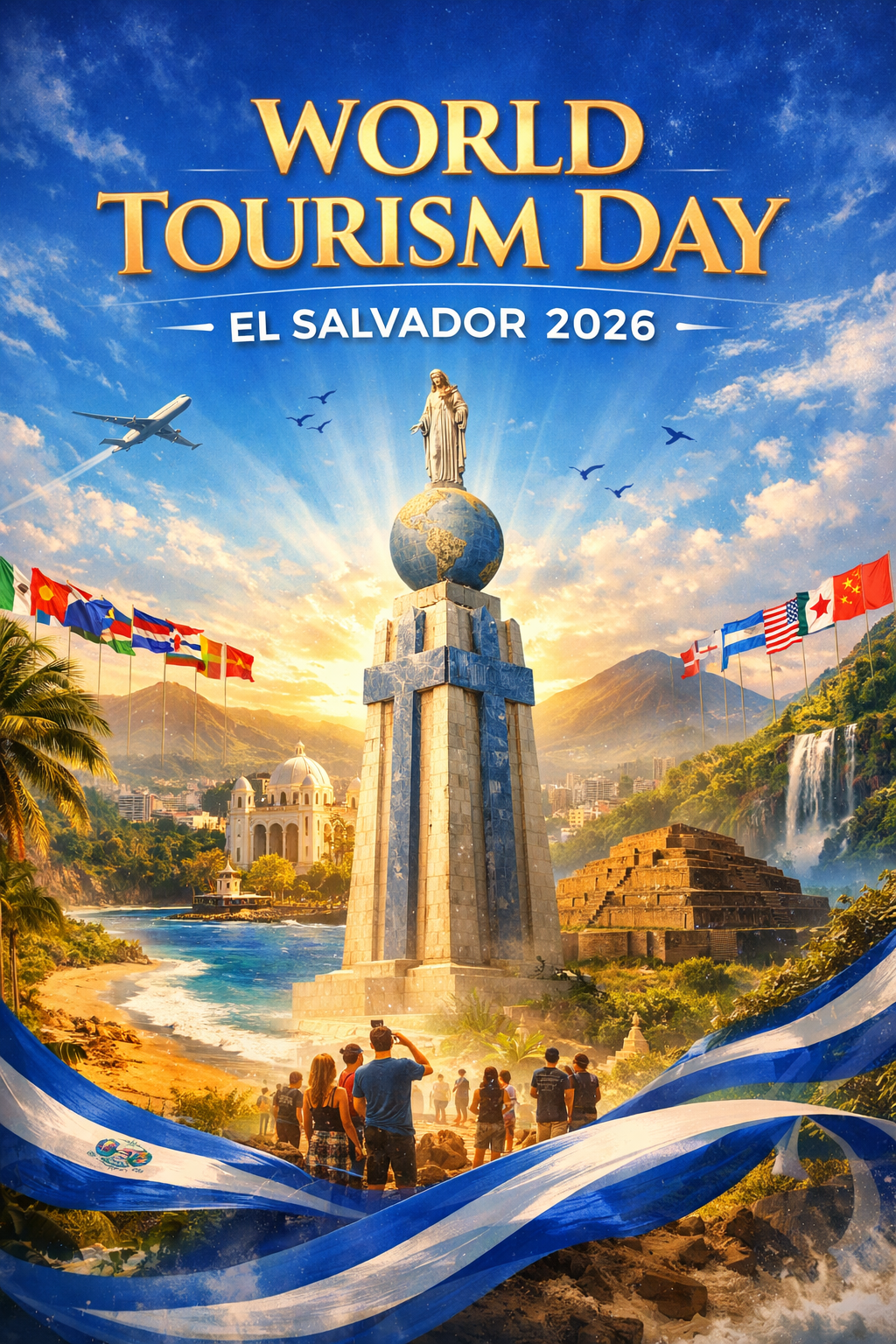
According to Diario El Salvador, our country will host World Tourism Day for the first time in its history. The event is scheduled for the weekend of September 26 and 27, 2026, and will bring tourism ministers, international organizations, companies, innovators, and industry leaders to El Salvador.
For a small country that was once spoken of mostly through conflict, danger, and limitation, this is more than a calendar event. This recognition marks an important shift for El Salvador. No longer standing on the outside of the global tourism conversation, the country is stepping forward with confidence and earning its place on the world stage.
A Global Event With a Modern Theme
World Tourism Day is not just another conference. It is one of the most important international gatherings connected to the future of travel, investment, culture, sustainability, and economic development.
This time, the focus will be on artificial intelligence, digital transformation, and the future of tourism. That theme fits the moment we are living in. Around the world, technology is changing how people choose destinations, book travel, explore new places, and share their experiences.
For El Salvador, this creates an opportunity to show not only our beaches, volcanoes, towns, food, and culture, but also the modernization taking place across the country.
Tourism today is no longer only about beautiful views. It is also about safety, accessibility, digital tools, better services, stronger infrastructure, and experiences that make visitors feel welcomed from the moment they arrive.
That is where El Salvador has been working hard to change its image.
A Weekend That Will Bring the World to Our Shores
Minister of Tourism Morena Valdez confirmed that El Salvador will host the event during the last weekend of September. International delegations are expected to participate in forums, conferences, investment discussions, and activities connected to the future of the tourism industry.
These gatherings matter.
Relationships begin at gatherings like these. Countries have an opportunity to present themselves to investors, new ideas can grow into real projects, and nations can demonstrate not only what they have accomplished, but also where they are headed.
For El Salvador, the message is clear: we are open, we are changing, and we are ready to welcome the world.
That matters not only for government officials or tourism companies. It matters for hotel owners, restaurant workers, tour guides, small businesses, artisans, transportation services, local communities, and families who depend on tourism income.
When tourism grows in the right way, it reaches far beyond the beach. It reaches the small pupusería, the family-owned hostel, the guide who knows the history of a town, the farmer who sells fresh products, and the young person looking for work close to home.
A Designation Earned on the Global Stage
El Salvador’s selection was formalized during a handover ceremony in Malaysia, where the country was designated as host of World Tourism Day 2026. Ambassador Jaime José López Badía received the recognition on behalf of the government.
That moment may have seemed ceremonial, but it carried real meaning.
Diplomacy often works quietly. Much of it happens out of the public eye and out of the headlines. But those efforts can open doors that later bring investment, visibility, and international confidence.
For El Salvador, receiving this designation on a global stage shows that the country’s tourism strategy is being noticed. It also shows that the world is willing to look at El Salvador differently than it did in the past.
That difference matters.
For many years, people outside the country often heard only one version of our story. Violence. Migration. Poverty. Instability. Those problems were real, and no one should pretend they did not exist. But they were never the whole story.
El Salvador was always more than its struggles.
It was always a country of strong families, hardworking people, natural beauty, deep culture, faith, resilience, and warmth. Now the world is beginning to see more of that truth.
Tourism Built Around Families
One important part of the government’s tourism strategy is the family-friendly approach. This is something I believe deserves attention.
Tourism should not only be designed for luxury travelers or large investors. It should also serve families. It should create safe, clean, welcoming spaces where parents can bring their children, grandparents can enjoy the day, and visitors can feel comfortable exploring.
That type of tourism helps build memories.
IFamily-friendly tourism can be seen in simple moments: a child visiting a park for the first time, a family walking through the historic center, grandparents resting nearby while children play, or visitors spending a peaceful Sunday afternoon at the beach. These experiences show a country that feels alive, safe, welcoming, and full of possibility.
For El Salvador, this is important because family is at the heart of the culture. If tourism grows while protecting that value, then it can become more than an industry. It can become part of national renewal.
A Country Becoming a Benchmark
The government has described this moment as part of El Salvador’s effort to become a benchmark in sustainable, innovative, and inclusive tourism.
Those are important words, but they must also become real on the ground.
Sustainable tourism means protecting the places that make El Salvador special. Our beaches, forests, volcanoes, rivers, historic towns, and protected areas must not be treated as disposable resources. They are part of the country’s identity.
Innovative tourism means using technology wisely. Artificial intelligence and digital tools can help improve services, promote destinations, guide visitors, support small businesses, and make travel smoother. But technology should never replace the human warmth that makes El Salvador special.
Inclusive tourism means that growth should reach ordinary Salvadorans. It should create opportunities not only in the most developed areas, but also in rural communities, small towns, and places that have waited a long time to be seen.
That is the balance El Salvador must continue working toward.
Growth is good. Recognition is good. Investment is good. But the true success of tourism will be measured by how much it improves the lives of the people who live here.
A Moment to Reflect on How Far We Have Come
There is something quietly powerful about seeing El Salvador step into this role.
I have lived here long enough to remember when many people outside the country would never have imagined that El Salvador would host a global tourism event. Some would not even consider visiting. Others only knew the country through old headlines.
But things have changed.
Visitors are coming. Families are exploring. International events are arriving. The airport is growing. Beaches are gaining global attention. The historic center has new life. Roads, parks, and public spaces are being improved. More people are beginning to see the country with fresh eyes.
That does not mean everything is perfect. No country is. There is always more work to do. Better infrastructure, stronger services, environmental protection, training, transparency, and long-term planning all matter.
But progress should be recognized when it is real.
And this moment is real.
El Salvador Is Ready to Tell Its Own Story
For decades, our story was often told by others. For too many years, El Salvador’s story was told from the outside, often without fairness, balance, or a real understanding of the people who live here, work here, raise families here, and love this land.
Now El Salvador has a chance to tell its own story.
World Tourism Day will bring ministers, companies, experts, and international organizations to our shores. It will bring conversations about artificial intelligence, investment, sustainability, innovation, and family-friendly tourism.
But beyond the formal meetings, it will also bring something more personal.
It will bring the world face to face with the Salvadoran people.
That is where the real story lives.
The real story is found in everyday moments: the smile of a vendor at the market, the cook preparing pupusas by hand, the fisherman heading out to sea, the farmer working the land, the hotel worker greeting guests, the guide sharing local history, the artist preserving culture, the student looking toward the future, and the family welcoming visitors with open arms.
This event is about tourism, yes. But it is also about identity.
It is about a nation that has passed through difficult years and is now standing taller. It is about a country that wants to be known not only for what it survived, but for what it is becoming.
El Salvador is ready.
And the world is coming.
Gracias por acompañarnos en este camino.
Seguimos adelante, juntos.
— Our Life in El Salvador
If you enjoy stories about El Salvador’s culture, development, tourism, and transformation, please consider liking, commenting, and sharing this article.
And if you’re drawn to true-life stories that explore how experience shapes the soul — confronting reality, searching for meaning, and discovering the quiet spiritual guidance that helps us endure — you may find resonance in my memoir, Harmony of the Cosmos, available now on Amazon.

https://www.amazon.com/s?k=Harmony+of+the+Cosmos+Hugh+Conway+Talley

Consigue la edición en español en Amazon:
https://www.amazon.com/dp/B0GXXK4FKX
Leave a Reply