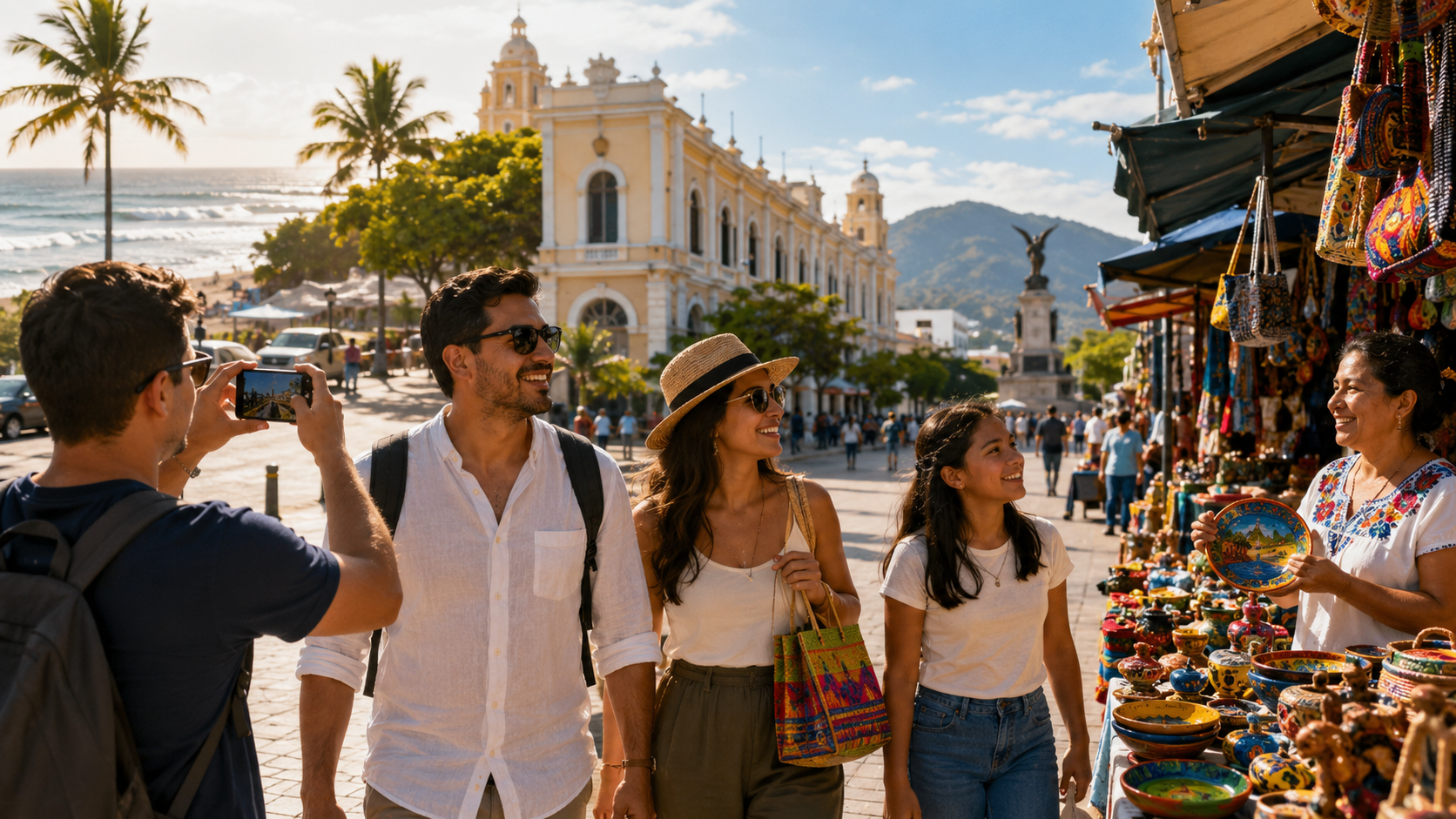
There is something special happening between El Salvador and Honduras.
For many years, crossing the border into El Salvador may have felt like a cautious decision for some travelers. People came for business, family visits, shopping, or a short beach trip, but many did so with concerns that were hard to ignore.
Today, that feeling has changed.
According to a recent report from Diario El Salvador, more Honduran travelers now see El Salvador as one of their favorite destinations. They are coming for the beaches, markets, pupusas, historic places, family connections, and the simple pleasure of visiting a country that feels safer, more welcoming, and easier to explore.
This is not just tourism. It is a sign of renewed confidence between two neighboring countries that share more than a border. We share history, culture, food, family ties, and many of the same hopes for the future.
A New Sense of Safety
One of the strongest reasons Hondurans are visiting El Salvador more often is security.
The change in public safety has affected many areas of daily life here, and tourism is one of them. When people feel safer, they travel more freely. They walk through markets. They visit parks. They take photos. They bring their families. They return home and tell others what they experienced.
That kind of word-of-mouth is powerful.
In the Diario El Salvador report, Honduran merchant Norma Zavala, from Gracias, Lempira, explained that she has traveled to El Salvador for 12 years to buy Salvadoran-made goods. Her purchases include handicrafts, aprons, keychains, dresses, and purses.
For her, the difference today is clear. She said travelers now feel more protected and no longer carry the same fear of being assaulted on the street.
That matters.
For a merchant, safety is not an abstract idea. It affects every part of the trip. It affects whether someone feels comfortable carrying money, walking through a market, asking for directions, or returning with merchandise. It affects whether that person will come back again.
Norma’s preferred stops include the Central Market and the Excuartel Market in San Salvador. These places are not only commercial spaces. They are part of the living heartbeat of the capital, where small businesses, vendors, and visitors meet face to face.
She also shared a story about nearly getting lost and receiving help from members of the Metropolitan Agents Corps, known as CAM. That may seem like a small detail, but it says a lot. Sometimes what visitors remember most is not only the place they visited, but how people treated them when they needed help.
More Than a Shopping Trip
For some Honduran visitors, El Salvador has long been a place to buy products, visit relatives, or enjoy a quick getaway. But the country is becoming more than a practical destination.
It is becoming a place people want to discover.
That is an important shift.
Travel content creator Miguel Flores, from Tegucigalpa, said he has seen many beautiful Salvadoran destinations on social media and is excited to visit. He mentioned the country’s natural beauty, culture, and architecture as part of what draws his attention.
This shows how tourism works today. A photo, a video, or a short post can open the door for someone who has never visited. A beach sunset, a historic building, a mountain road, or a plate of pupusas can travel farther online than any brochure ever could.
El Salvador has many places that catch the eye. There are beaches along the Pacific coast, volcanoes rising over the landscape, colonial towns, renovated public spaces, and a Historic Center in San Salvador that has become one of the country’s most talked-about attractions.
For visitors from Honduras, these places are close enough to feel reachable, but different enough to feel like an adventure.
Pupusas, Beaches, and Familiar Culture
Food has always been one of the strongest bridges between people.
For many Honduran travelers, pupusas are part of the Salvadoran experience. You can talk about beaches, architecture, security, and tourism campaigns, but sometimes the memory that stays with a visitor is sitting in a park, eating pupusas, and watching life move around them.
Adolfo Pineda, president of the National Chamber of Tourism of Honduras, described El Salvador almost like a second home. According to the report, he travels here several times a year. His favorite destinations include Suchitoto, Surf City, and San Salvador.
Suchitoto especially stands out because of its cultural atmosphere. He compared it to Gracias, Lempira, a Honduran town known for its own traditions and historic charm. That comparison is meaningful because it shows how Honduran visitors can find something familiar in El Salvador while still discovering something new.
That is one of the strengths of Central American tourism.
We are not strangers to one another. We are neighbors. We understand many of the same customs. We know the same kind of family gatherings, the same importance of food, the same pride in local traditions, and the same appreciation for towns where history still feels alive.
As Pineda said, Salvadorans and Hondurans are brother peoples. Tourism gives both sides a chance to remember that.
Surf City and the Coastline That Keeps Calling
El Salvador’s coastline continues to be one of the country’s strongest attractions.
For years, surfers knew what many others are now discovering: our beaches are special. Places like El Tunco, El Sunzal, Punta Roca, and other coastal areas have helped place El Salvador on the international surfing map.
But the beach is not only for surfers.
Families come for the ocean breeze. Couples come for the sunsets. Photographers come for the scenery. Visitors come to relax, eat seafood, walk in the sand, and feel that peaceful pull that only the coast can offer.
In the report, Honduran presenter Amy Bonilla said friends had told her how beautiful El Salvador’s beaches are and encouraged her to visit. That is how travel often begins. Someone comes, enjoys the experience, and tells someone else, “You should go.”
That simple recommendation may be one of the best forms of promotion any country can receive.
The Historic Center of San Salvador
Another destination drawing attention is the Historic Center of San Salvador.
For many people who remember the city from years ago, the change is striking. The area has become cleaner, more organized, and more inviting for families, tourists, and local visitors. It is now a place where people walk, take photos, visit public spaces, and experience a different side of the capital.
Yeymi Cadalso, from Choluteca, shared interest in visiting the Historic Center and learning more about Salvadoran culture. That desire to see the country firsthand is important.
There is only so much a person can understand from the outside. To really know a place, you have to walk its streets, listen to its people, taste its food, and see how daily life feels.
That is what tourism allows.
It gives people a chance to replace old impressions with new experiences.
Viewpoints, Photos, and Memories
Scenic viewpoints are also attracting Honduran visitors who want to capture El Salvador through photography.
This may seem like a modern travel habit, but it is more than that. When people take photos, they are not only recording a place. They are claiming a memory. They are saying, “I was here. I saw this. I want to remember it.”
El Salvador offers many of those moments.
A view of the volcano. A street in Suchitoto. A market stall full of color. A beach at sunset. A plate of pupusas. A family standing together in the Historic Center.
These images travel back across the border and become part of the story Hondurans tell about El Salvador.
That story is changing.
A Regional Connection Growing Stronger
What stands out most in this report is not only that Hondurans are visiting El Salvador. It is the feeling behind their visits.
They are speaking of safety. They are speaking of beauty. They are speaking of culture, family, food, and hospitality.
That matters because tourism is not only measured in numbers. It is measured in confidence.
It is measured when a merchant returns year after year because she feels safe doing business. It is measured when a content creator wants to capture the country’s landscapes. It is measured when a tourism leader visits several times a year because the place feels familiar and welcoming. It is measured when a traveler hears about the beaches and begins planning a trip.
This growing exchange between Honduras and El Salvador strengthens both countries.
Hondurans are discovering more of El Salvador, and Salvadorans are also encouraged to visit Honduran destinations like Gracias, Lempira, with its festivals, traditions, and historic charm.
That is how regional tourism should work. It should not be one-sided. It should create movement, friendship, business, and understanding in both directions.
My Reflection
Living here in El Salvador, I have watched the country change in ways that are hard to explain to people who only remember the old headlines.
For years, many people outside the country saw El Salvador through fear. They heard about violence, gangs, and danger. Those problems were real, and no honest person should pretend otherwise.
But that was never the whole story.
El Salvador was always more than its problems. It was always a country of hardworking people, beautiful landscapes, strong families, deep traditions, and a culture that welcomes visitors with open arms.
Now more people are getting the chance to see that for themselves.
When Honduran travelers say they feel safer, when they return to the markets, when they visit the beaches, when they walk through San Salvador, and when they tell others about their experience, they are helping change the conversation.
That kind of change cannot be forced. It grows naturally, one visit at a time.
For me, that is one of the most powerful parts of this story. El Salvador’s reputation is not rising only because of official promotion. It is rising because ordinary people are coming here, seeing the country with their own eyes, and carrying that experience home.
Somos Pueblos Hermanos
El Salvador and Honduras are brother nations.
We share a region, a history, and a culture that is often closer than people realize. Tourism gives us a way to rediscover that connection. It reminds us that borders may separate countries on a map, but they do not erase the ties between people.
For many Hondurans, El Salvador is no longer just a place to pass through, shop, or visit for a weekend. It is becoming a destination filled with confidence, beauty, food, family, and memory.
And for El Salvador, that is something worth celebrating.
Somos pueblos hermanos — and tourism is helping us remember it.
If you enjoy stories about El Salvador’s culture, development, tourism, and transformation, please consider liking, commenting, and sharing this article.
And if you are drawn to true-life stories that explore how experience shapes the soul — confronting reality, searching for meaning, and discovering the quiet spiritual guidance that helps us endure — you may find resonance in my memoir, Harmony of the Cosmos, available now on Amazon.
Leave a Reply