Category: Uncategorized

  • Cinco Mujeres que Impactaron la Historia de El Salvador

    English version available here

    Imagen creada con inteligencia artificial con fines ilustrativos.

    A lo largo de la historia, las mujeres salvadoreñas han desempeñado un papel importante en la formación del país que vemos hoy. Sus contribuciones, muchas veces hechas frente a grandes desafíos, han ayudado a abrir caminos en la política, la literatura, la educación y los medios de comunicación.

    Quise tomar un momento para reflexionar sobre cinco de estas mujeres—sus vidas, sus luchas y el legado que dejaron. Sus historias nos recuerdan que, con determinación y propósito, es posible generar un cambio real.

    Prudencia Ayala: La Primera Mujer en Postularse a la Presidencia

    Prudencia Ayala nació en Sonsonate a finales del siglo XIX. Fue una mujer indígena, madre soltera activista incansable que vivió con una profunda determinación. Trabajó como costurera, pero también escribió en periódicos, defendiendo los derechos de las mujeres y promoviendo una visión feminista y de justicia social. Incluso apoyaba la idea de una unión centroamericana como parte de un proyecto de equidad regional.

    Su lugar en la historia quedó marcado en 1930, cuando se convirtió en la primera mujer en postularse para la presidencia en América Latina. En una época en la que las mujeres ni siquiera tenían derecho al voto, su candidatura desafió las normas establecidas. Aunque no se le permitió asumir el cargo, su valentía abrió el camino para el debate sobre la participación política de las mujeres en El Salvador.


    Claudia Lars: La Voz de la Literatura Salvadoreña

    Margarita del Carmen Brannon Vega, conocida como Claudia Lars, nació en Armenia y llegó a ser una de las figuras más importantes de la literatura centroamericana del siglo XX. Su obra poética, rica en sensibilidad, exploró la naturaleza, la identidad y la experiencia humana de una manera que aún resuena hoy.

    Entre sus obras más reconocidas se encuentran Estrellas en el pozo, Sonetos y Ciudad bajo mi voz. Más allá de su escritura, también contribuyó al desarrollo cultural del país trabajando con el Ministerio de Cultura y dirigiendo la revista Cultura, ayudando a difundir el arte y la literatura salvadoreña.


    María Álvarez de Guillén: Pionera de los Derechos Políticos

    María Álvarez de Guillén fue escritora, activista y una de las primeras defensoras de los derechos de las mujeres en El Salvador. Fue también una de las primeras mujeres en publicar una novela en el país, pero su impacto fue mucho más allá de la literatura.

    Desde la década de 1920, promovió activamente el derecho al voto femenino. En 1921, la Asamblea Federal aprobó su implementación en principio, un paso importante, aunque su aplicación total tardaría varios años más. Además, representó a El Salvador como delegada ante la Comisión Interamericana de Mujeres, donde impulsó políticas de igualdad y justicia.


    Elena Valiente: Una Voz en el Aire

    Elena Valiente, nacida en San Salvador en 1912, fue la primera mujer locutora de radio en el país. En la década de 1940, trabajó en emisoras como Radio Nacional, destacándose en un campo dominado por hombres.

    Su presencia en la radio no solo informaba y entretenía, sino que también rompía barreras de forma silenciosa. Demostró que las mujeres tenían un lugar en los medios de comunicación, abriendo oportunidades para futuras generaciones.


    Mélida Anaya Montes: Liderazgo en la Educación y el Cambio Social

    Mélida Anaya Montes fue maestra, líder y una firme defensora de los derechos laborales. A finales de la década de 1960, se destacó como una de las principales figuras de la Asociación Nacional de Educadores Salvadoreños.

    En 1968, fue elegida secretaria general, desde donde luchó por mejores condiciones para los docentes y por una educación pública más fuerte y equitativa. Su trabajo estuvo siempre guiado por un sentido de justicia y compromiso con la sociedad.


    Reflexión Final

    Estos nombres representan solo una pequeña parte de una historia mucho más amplia. Cada una de estas mujeres, a su manera, ayudó a moldear El Salvador—ya sea a través de la política, la literatura, la educación o los medios.

    Recordarlas no es solo mirar al pasado, sino también reconocer lo que es posible. Su valentía y determinación abrieron caminos que antes parecían cerrados, y su legado continúa inspirando hoy.

    De alguna manera, sus historias nos recuerdan que cuando el propósito se encuentra con la determinación, el cambio no solo es posible—se vuelve inevitable.

  • Five Women who impacted the history of El Salvador

    Versión en español disponible aquí →

    Across different generations, these women helped shape El Salvador through courage, talent, and determination, each one leaving a lasting mark on the country’s story.
    Image created using AI for illustrative purposes.

    El Salvador’s history has been shaped in many ways. Among those stories are the lives of women whose talent, courage, and determination helped move the country forward. From politics to literature, their contributions reach far beyond their own time.

    I think it’s worth taking a moment to look at a few of these women—the paths they walked, the challenges they faced, and the mark they left behind. Their stories remind us that with passion and determination, even in the face of obstacles, there is very little that cannot be achieved.

    March 8 marked International Women’s Day. A United Nations-recognized tribute since 1975 to honor all women who, with effort and courage, have contributed to the construction of fairer and more equitable societies. This commemoration honors the women who transformed El Salvador’s history and left a legacy that continues to inspire new generations.

    Throughout Salvadoran history, many women stood out for their struggle for equality, social justice, art, education, and political participation. Their actions not only marked a before-and-after for the country but also paved the way for the Salvadorans who came after.

    Prudencia Ayala: The First Woman to Run for President

    Prudencia Ayala was born in Sonsonate toward the end of the nineteenth century. She was an Indigenous woman, a single mother, and a tireless activist who lived a life shaped by both hardship and purpose. Working as a seamstress, she also wrote for newspapers, using her voice to defend women’s rights and promote a broader vision—one that included feminism, social justice, and even the idea of a united Central America.

    Her place in history became undeniable in 1930, when she became the first woman to run for president in Latin America. At a time when women could not even vote, her candidacy challenged the very structure of society. Though she was not allowed to take office, her courage helped open the door to a national conversation about women’s political rights. In many ways, she helped lay the groundwork for women’s suffrage in El Salvador, which would come years later.


    Claudia Lars: The Voice of Salvadoran Literature

    Margarita del Carmen Brannon Vega, known worldwide as Claudia Lars, was born in Armenia and became one of the most respected literary figures in Central America. Her poetry—rich in feeling and deeply connected to nature and identity—gave a voice to the Salvadoran experience in a way that still resonates today.

    Her works, including Stars in the Well, Sonnets, and City Under My Voice, reflect a sensitivity and depth that have helped shape the country’s cultural identity. Beyond her writing, she also contributed to the development of the arts in El Salvador, working with the Ministry of Culture and later directing the magazine Cultura. Through both her words and her leadership, she helped bring Salvadoran literature to a wider audience.


    María Álvarez de Guillén: A Pioneer for Women’s Rights

    María Álvarez de Guillén was a writer, activist, and one of the early voices calling for women’s rights in El Salvador. She was among the first women in the country to publish a novel, but her influence went far beyond literature.

    As a suffragette, she worked tirelessly to promote women’s right to vote. In the 1920s, she helped push the issue into the national conversation, and in 1921, the Federal Assembly approved women’s suffrage in principle—a significant step forward, even though it would take years before it was fully realized. She also represented El Salvador internationally as a delegate to the Inter-American Commission of Women, advocating for equality and justice on a broader stage.


    Elena Valiente: A Voice Over the Airwaves

    Elena Valiente, born in San Salvador in 1912, became the first female radio announcer in the country—something that was almost unheard of at the time. In the 1940s, she worked with stations such as Radio Nacional and others, establishing herself as a professional in a field that was largely dominated by men.

    Her presence on the airwaves did more than just inform and entertain—it quietly broke barriers. She showed that women had a place in media and public communication, helping to open doors for those who would follow.


    Mélida Anaya Montes: Leadership in Education and Social Change

    Mélida Anaya Montes was a teacher, a leader, and a powerful advocate for workers’ rights. In the late 1960s, she emerged as one of the leading figures in the National Association of Salvadoran Educators. By 1968, she had been elected general secretary. In this role she fought for better conditions for teachers and a stronger public education system.

    Her work was rooted in a belief in fairness and opportunity—not just for educators, but for society as a whole. She dedicated her life to pushing for equity, leaving behind a legacy of leadership and commitment to social change.


    Final Reflection

    These women represent just a small part of a much larger story. Each, in her own way, helped shape El Salvador—whether through politics, literature, education, or the media.

    When we look back on their lives, we are not just remembering history—we are reminded of what is possible. Their courage and determination helped open doors that once seemed closed, and their influence continues to be felt today.

    In many ways, their stories reflect something greater,that steady force that moves people forward, even when the path is uncertain. Perhaps that is what ties it all together: the idea that when purpose meets determination, change is not only possible but inevitable.

    Your voice matters in making this community thrive. Share your thoughts in the comments and subscribe to receive new stories in your inbox.

  • Nature’s Ancient Masterpieces: Exploring El Salvador’s Volcanic Mirror Lakes

    Nature’s Ancient Masterpieces: Exploring El Salvador’s Volcanic Mirror Lakes

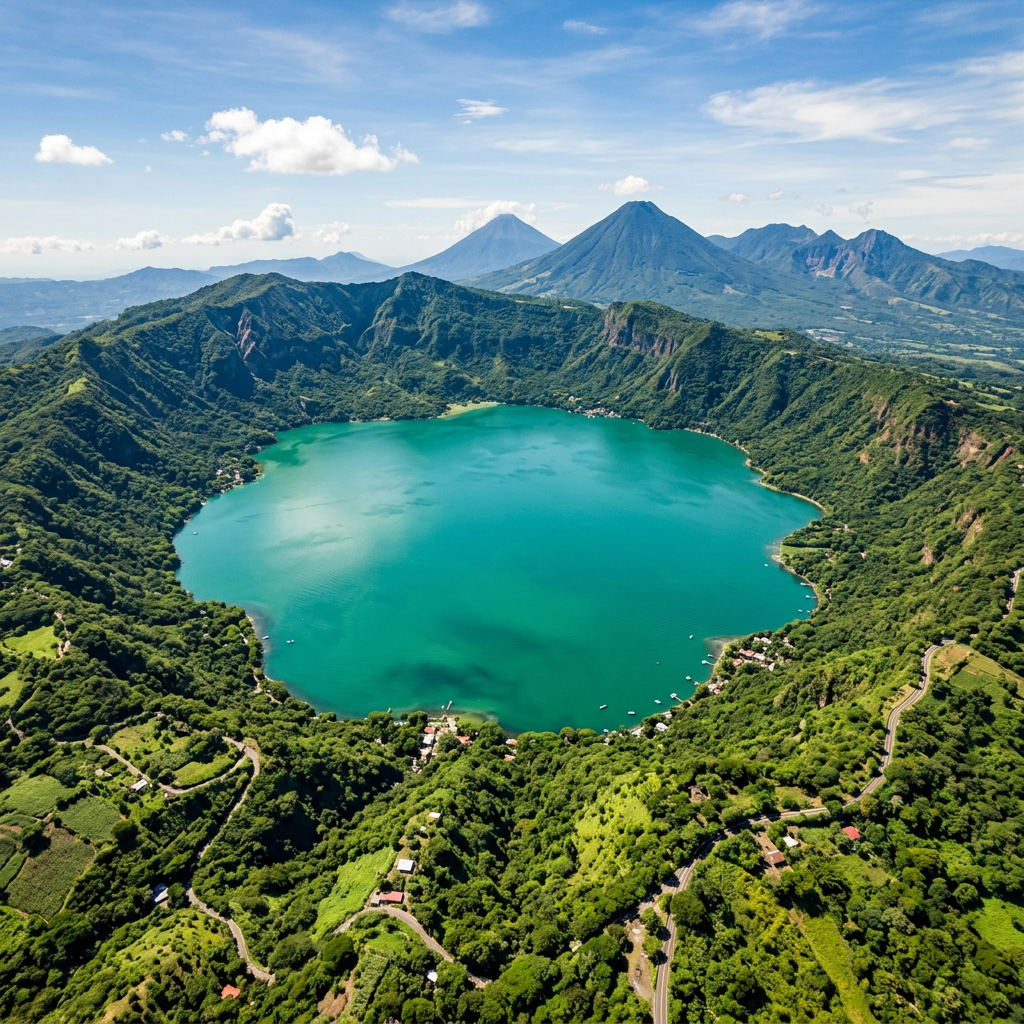
    Aerial view of a stunning volcanic crater lake in El Salvador with vibrant turquoise water

    In El Salvador, the “Land of Volcanoes,” beauty is never far away. It’s one of the few places on earth where you can hike a towering volcano in the morning, enjoy a traditional lunch overlooking its crater lake, and still catch the sunset from a scenic viewpoint before dinner. Despite being the smallest country in Central America, we have the highest density of active volcanoes in the region, and they have shaped our landscape into something truly magical.

    Thousands of years ago, massive eruptions left behind deep craters that eventually filled with rainwater, creating breathtaking lakes and lagoons. Today, let’s explore these “mirrors of water” born from the hearts of our ancient giants.

    Lago de Coatepeque: The Turquoise Gem

    Located in Santa Ana, Coatepeque is legendary for its ability to transform from a standard blue to a brilliant turquoise. This phenomenon, which occurs once or twice a year, results from minerals, volcanic activity, and microalgae. Formed about 72,000 years ago, this caldera lake is a favorite for locals and visitors alike. Whether you’re dining at a restaurant in El Congo or exploring Teopán Island—an ancient lava dome—the view is always spectacular.

    Lago de Ilopango: The Sleeping Giant

    Just 25 minutes from San Salvador lies the country’s largest natural lake. Its origin is tied to one of the most powerful eruptions ever recorded in the region: the Tierra Blanca Joven eruption 1,500 years ago. Today, its calm waters are perfect for sailing and water sports. On clear days, you can even see the distant silhouettes of the San Vicente and San Miguel volcanoes on the horizon.

    Laguna de Chanmico: The Heart-Shaped Secret

    Nestled within the San Salvador volcanic complex, Chanmico has a unique heart-shaped contour when viewed from above. Its name means “Place of the Dead” in Nahuatl, and it’s steeped in local legends. Between November and January, a natural sulfur phenomenon known as “La Azufrada” occasionally changes the color of its water, reminding us of the volcanic life still breathing beneath the surface.

    Laguna de Alegría: The Emerald of America

    High in the mountains of Usulután, inside the Tecapa crater, lies the “Emerald of America.” The Laguna de Alegría gets its name from its intense green hue, caused by minerals and geothermal gases. The town of Alegría, with its cobblestone streets and rose gardens, makes this a must-visit destination for anyone seeking fresh air and stunning vistas.

    Lago de Güija: Where Lava Met the Valley

    Near the Guatemalan border, Lago de Güija offers a different kind of origin story. Instead of a crater, this lake formed when ancient lava flows blocked a valley, allowing water to pool over centuries. It’s now a vital ecological site for migratory birds and is surrounded by colonial history in the nearby town of Metapán.

    El Salvador’s volcanic lakes are more than just scenic spots; they are living testaments to nature’s power. Which one will you visit first?

    Your voice matters in making this community thrive. Share your thoughts in the comments and subscribe to receive new stories in your inbox. If these stories inspire you, consider a donation—every bit helps us celebrate and share the wonders of El Salvador together.

  • A Morning Under My Meditating Tree

    Today I woke up with many thoughts, ideas, and questions, so I decided to go sit under my big meditation tree. This is where I receive much of my inspiration and motivation. This tree is in our upper back yard, and I believe it is well over a hundred years old. We have a few old, large trees around our property that are beautiful to me, but this is the one that I feel I have a connection with. It reminds me of a large, old tree on our family farm in Virginia when I was growing up. I also felt a connection to that tree many years ago.

    I have been working on my blog, trying to keep up with all the news here in El Salvador. So far this year, I have been reporting on the many improvements, achievements, and opportunities in the country, as well as the advancements in Tourism in El Salvador. I plan to start getting out to report firsthand on sights, restaurants, and other establishments across the country. I have been promoting my book, Harmony of the Cosmos, and yesterday I started creating a YouTube channel for ourlifeinelsalvador. This will be up soon.

    So when I woke up with all this going around in my head, I decided to spend some time with my meditation tree. I just cleared my mind as best I could, closed my eyes. The sun peeked through the branches as it was climbing in the morning sky.

    I become fully relaxed. After about twenty minutes, I opened my eyes. There was the sound of the birds singing, a little bee buzzing around my head, and landing on my glasses every once in a while. A hummingbird was getting nectar from some pink wildflowers near the tree. There were two squirrels playing far up in the tree. My first thought to myself was how blessed we were, and I thanked our Creator. The time seemed to stand still, but after almost two hours spent there, I felt refreshed and renewed. I also wanted to share this with my followers today.

    Below is a slideshow of trees on our property.

    If you are reading this from outside El Salvador, I always appreciate hearing where you are from

    Share your thoughts in the comments below, subscribe to receive updates, and join our community. If these stories inspire you, please consider making a donation to support our continued celebration of El Salvador’s achievements.

  • More Than Education: What 49,000 Young Salvadorans Tell Us About a Changing Country

    Image created using AI for illustrative purposes

    Over the past few months, I have noticed something quietly changing here in El Salvador. It does not always make the biggest headlines, but it affects the lives of everyday people.

    When I read that the country is now projecting to benefit 49,000 high school graduates with access to higher education, I paused for a moment.

    Not because of the number alone — but because of what it represents.

    For many years, continuing beyond high school was simply not an option for most young Salvadorans. In fact, only a very small percentage were able to move on to university or technical education.

    That meant something important:

    A large part of the country’s potential was never fully developed.

    A Shift That Feels Different

    What we are seeing now feels like a shift in direction.

    Programs are opening the door for students not only to attend university, but also to pursue technical and vocational training — recognizing that not every path looks the same.

    And that, to me, is important.

    Because education is not just about degrees — it is about opportunity.

    It is about giving someone a chance to build a life where they are, instead of feeling like they have to leave to find it.


    What This Could Mean

    When you begin to see tens of thousands of young people given a real opportunity to continue their education, it starts to point to something larger:

    • A growing workforce with skills
    • A stronger middle class
    • A different kind of future for the next generation

    There was a time when many young people felt they had no other option but to leave the country.

    Now, there is at least the possibility that they can stay — and build something here.


    Looking a Little Deeper

    As I read the article, I found myself reflecting on something I often think about.

    Change does not always happen all at once.

    Sometimes it comes quietly — through opportunities, through small openings, through decisions that begin to shift the direction of people’s lives.

    This feels like one of those moments. We may not fully understand today what this will become. But it is something worth watching.


    Final Thoughts

    Numbers like 49,000 are easy to read and move past, but behind that number are individuals — young men and women, each with their own path ahead. And perhaps, in time, this will be seen as part of a larger story: A country not only changing how it is seen from the outside, but changing what is possible for those who live within it.

    Join our community by sharing your thoughts in the comments and subscribing to updates. If these stories inspire you, please consider making a donation to support our ongoing work in celebrating El Salvador’s achievements.

  • What I Learned Looking Into El Salvador’s Expanding Global Reach

    Among the sectors that closed deals with new destinations are machinery and equipment, chemical substances, base metals and textiles.

    AI-generated image representing Salvadoran exports reaching global markets.

    Over the past few months, I have written quite a bit about the changes taking place here in El Salvador. Some of those changes are easy to see—new roads, increased tourism, and a stronger sense of security. Others happen more quietly, but may have an even greater long-term impact.

    This morning, while reading Diario El Salvador, one headline stood out:

    “Productos salvadoreños llegan a 60 nuevos mercados internacionales.”

    At first glance, it may sound like just another economic update. But when you stop and think about it, this is something much bigger.


    What This Really Means

    According to the report from Diario El Salvador, Salvadoran products are now reaching 60 new international markets. That is not a small step—it is a meaningful expansion of the country’s global reach.

    We are talking about products that are grown, made, and processed right here in El Salvador—things like:

    • Coffee
    • Sugar
    • Textiles
    • Processed foods
    • Agricultural goods

    These are now moving beyond traditional markets and finding their way into new parts of the world.

    From where I sit here in Cara Sucia, it’s interesting to think about something produced not too far from here ending up on a shelf somewhere across the globe.


    Something That Caught My Attention

    As I continued reading the article, one part made me pause.

    It mentioned that new deals were reached in sectors such as:

    • Machinery and equipment
    • Chemical substances
    • Base metals
    • Textiles

    Now, I’ll be honest—when I first read that, I did not fully understand what they meant by some of those categories.

    “Machinery and equipment”…
    “Base metals”…
    “Chemical substances”…

    Those are broad terms, and sitting here, I found myself wondering:

    What exactly are we talking about?


    Looking a Little Deeper

    After doing a bit of research, I realized something that honestly surprised me.

    El Salvador is not just exporting raw materials or agricultural goods—it is also producing and exporting components and materials used in global manufacturing and supply chains.

    Here is what those categories actually include:


    ⚙️ Machinery & Equipment

    This does not mean large machines are being built here. It is more about components such as:

    • Electrical parts like transformers and circuit boards
    • Automotive wiring systems used in vehicles
    • Industrial electronic components

    In simple terms, El Salvador is helping build the pieces that make modern equipment work.

    That was something I did not expect.


    🔩 Base Metals

    This refers to basic but essential materials like:

    • Steel bars and construction materials
    • Iron pipes and tubes
    • Wire products
    • Recycled metals such as aluminum

    These are the kinds of materials that end up in buildings, infrastructure, and manufacturing projects—both here and abroad.


    🧪 Chemical Substances

    This category is broader than it sounds and includes:

    • Pharmaceuticals
    • Plastics and packaging materials
    • Fertilizers
    • Cleaning and industrial chemical products

    These are everyday products that most of us use without thinking about where they come from.


    Something I Didn’t Expect

    I have to say, this part really stood out to me.

    Before looking into it, I had no idea that El Salvador was producing many of these items—especially electrical components and materials tied into global manufacturing systems.

    It gives you a different perspective on what is actually happening here.


    More Than Just Exports

    • Improved trade relationships
    • Better production standards
    • Increased confidence from international buyers
    • A country positioning itself differently on the world stage

    El Salvador is not just exporting what it grows—it is increasingly exporting what it makes.


    Why This Matters for Everyday Life

    • Local businesses expand
    • Jobs are created or strengthened
    • Investment follows opportunity
    • Communities benefit over time

    A Changing Image of El Salvador

    • Tourism increasing
    • International media coverage is shifting
    • Foreign investors taking a closer look

    And now, with products reaching dozens of new markets—including industrial and manufactured goods—the country is quietly building a reputation not just as a destination, but as a producer.


    My Perspective

    Sitting out back under that big tree in the mornings, I often think about how life has a way of unfolding in directions we don’t always expect.

    El Salvador feels a bit like that right now.

    Some of these changes are easy to see. Others, like this one, take a little more digging to understand. But when you do, you begin to see a bigger picture forming.


    Final Thoughts

    This article from Diario El Salvador may seem like a simple economic update, but it represents something deeper:

    A country expanding its reach.
    A shift in how it is seen.
    And opportunities that continue to grow.

    And sometimes, all it takes is one line in an article—something you don’t fully understand—to open the door to a much bigger story.


    Source

    This post is based on reporting from Diario El Salvador:
    “Productos salvadoreños llegan a 60 nuevos mercados internacionales.”

    Join our community by sharing your thoughts in the comments and subscribing to updates. If these stories inspire you, please consider making a donation to support our ongoing work in celebrating El Salvador’s achievements.

  • Suchitoto Opens a New Chapter: Renewing Its Historic Center

    AI-Generated Image

    Suchitoto’s quiet beauty lies in its stone streets, whitewashed walls, and relaxed colonial atmosphere. This week, Diario La Página reports the town has launched a major project to restore its historic center. By upgrading streets, public spaces, and landmarks, Suchitoto aims to reinforce its identity and reputation as a prime tourist destination.

    A Renewed Colonial Heart

    The project focused on well-known streets like San Martín, 1a Avenida Sur, 5a Calle Poniente, 5 de Noviembre, 15 de Septiembre, and Francisco Morazán. Each one was improved to restore the colonial look that makes Suchitoto unique. The work included planning, cleaning, and moving electrical wires underground. With streets renewed, attention turned to key public spaces that define the town’s spirit.

    Now, walking these streets feels more open and carefully planned. Without the overhead cables, the building fronts and rooftops stand out the way they were meant to. These enhancements pave the way for improvements in the town’s social spaces, starting with its central park.

    A Central Park That Welcomes You to Stay

    Central Park also got a careful makeover. New lighting and better seating have made it more welcoming for everyone. In towns like Suchitoto, parks are more than green spaces—they are places where people gather, and daily life unfolds. Improving these spaces helps everyone feel more connected to the community.

    Santa Lucía Church Shines Again

    One of the key restorations is the Iglesia Santa Lucía, the town’s well-known white church. Fresh paint and new LED lights now show off its architecture at night, giving the plaza a new energy. As with the other enhancements, the church’s renewal honors Suchitoto’s history and spiritual life for residents and visitors alike.

    Tourism With Identity

    These improvements are not just for modernization—they protect what makes Suchitoto distinct and enhance its reputation among destinations such as San Vicente, Ruta de las Flores, and San Salvador’s historic center.

    Tourism flourishes when places are cared for. This project demonstrates Suchitoto’s commitment to preserving its character while shaping its future.

    My Reflection

    I’ve always thought historic towns have a special feel. Their streets hold memories, and their buildings keep stories alive even without words. Seeing Suchitoto invest in its historic center feels like a promise to protect those stories and welcome new ones.

    What stands out to me is how the project balances renewal and preservation. The changes respect the town’s colonial character while making life easier and more enjoyable for everyone who lives there.

    What Do You Think?

    Have you visited Suchitoto recently, or do you plan to now that the revitalization is complete?

    How do you feel about projects like these? Do they help strengthen a town’s identity, or do they risk changing it?

    I’d love to hear your thoughts.

    Share your thoughts in the comments below, subscribe to receive updates, and join our community. If these stories inspire you, please consider making a donation to support our continued celebration of El Salvador’s achievements.

  • El Salvador’s Educational Rise: Global Praise and the Vision of First Lady Gabriela de Bukele

    AI-Generated Image

    Global Praise for El Salvador’s Educational Leadership

    Christine Hogan, Vice President of the Global Partnership for Education, praised El Salvador this week for “showing what leadership within education could look like.” Her remarks, delivered during a high-level forum in San Salvador, highlighted the country’s strategic investment in early childhood development — a transformation rooted in national policy and long-term vision.

    Hogan emphasized that El Salvador’s Crecer Juntos framework is “not only the right policy, but also a smart investment.” Italy’s ambassador, Paolo Emanuele Rozo Sordini, echoed the praise, citing improvements to infrastructure and the use of digital tools in classrooms.

    👩‍🏫 The First Lady Behind the Transformation

    The core of this progress is First Lady Gabriela de Bukele, whose office has led the creation of a national early childhood system since 2019. Her initiatives include:

    • CAPI Early Childhood Centers
    • Child Welfare Centers
    • Family Circles
    • Community Child and Family Care Centers
    • Tree of Life Collection
    • La Casa de Lula
    • Creativerso
    • Tablets for kindergarten and first grade
    • A redesigned National Early Childhood Curriculum

    These are not symbolic gestures — they are institutions, tools, and frameworks that have changed how El Salvador educates and supports its youngest citizens. Enrollment in early childhood programs has tripled, and parvularia coverage has risen from 50% to nearly 74%.

    🧭 Redefining the Role of First Lady

    In many countries, the role of First Lady is ceremonial. But figures like Gabriela de Bukele — and, in a different context, Melania Trump, with her Be Best initiative — show what happens when that platform is used to champion children, families, and long-term wellbeing.

    Both women stepped into roles often underestimated. Both focused on children’s emotional and developmental needs. And both demonstrated that First Ladies can shape national priorities in ways that endure.

    💡 A New Identity for El Salvador

    El Salvador’s entry into the Global Partnership for Education in 2022 brought nearly $30 million in financing, executed with the World Bank and the Inter-American Development Bank. The meeting where Hogan delivered her remarks — Education Multiplies Possibilities: An Investment in Our Future — was organized by the Office of the First Lady, the Embassy of Italy, and GPE.

    That collaboration alone signals how central early childhood has become to El Salvador’s development strategy. And it reflects a deeper truth: this recognition is not accidental. It is the result of years of coordinated work, much of it led by a First Lady who chose to treat her role not as a formality, but as a responsibility.

    Join our community by sharing your thoughts in the comments and subscribing to updates. If these stories inspire you, please consider making a donation to support our ongoing work in celebrating El Salvador’s achievements.

  • Easter in El Salvador: Where Everything Is Close and Full of Surprises

    Easter in El Salvador: Where Everything Is Close and Full of Surprises

    A vibrant sawdust carpet (alfombra) in a colonial Salvadoran town during Holy Week.

    Semana Santa in El Salvador is a beautiful blend of deep-rooted tradition and exciting travel. In this small but vibrant country, you are never more than a short drive away from misty mountains, sparkling lakes, or sun-drenched beaches.

    Holy Week in Ahuachapán, for instance, has a unique rhythm. Streets burst with color as families prepare for processions, and the air fills with the scent of incense, flowers, and the warm dusk breeze.

    From the vibrant ‘alfombras’ to the quiet ringing of church bells, this season makes the whole town feel like it is breathing differently.

    A recent article in El Diario de Hoy notes that Holy Week remains one of the busiest travel times in the region. Many Salvadorans and international visitors take advantage of the time to explore the country’s diverse landscapes.

    Beaches That Come Alive During Holy Week

    If you love the sun, El Salvador’s coast offers a variety of experiences during the holiday:

    • El Tunco (La Libertad): Known for its surf culture and lively nightlife, this beach attracts crowds from all over the world.
    • El Cuco (San Miguel): For those seeking peace, these long beaches and gentle waters are perfect for a family getaway.
    • Los Cóbanos (Sonsonate): Home to a significant coral reef, it is the ideal spot for diving and boat tours.
    • Playa Playitas (La Unión): A quiet haven with views of the Conchagua Volcano, where you can enjoy fresh seafood and boat rides to nearby islands.

    Each beach has its own personality—whether it’s lively, calm, or adventurous—but they all share the warm coastal weather that makes Holy Week so special.

    Cooler Weather in the Mountains

    If you prefer to escape the heat, the mountains provide a completely different perspective on Easter:

    • El Boquerón National Park: Stand at the edge of a massive volcanic crater and walk through lush trails with panoramic views.
    • Balboa Park: Enjoy 44 blocks of forest and trails, featuring monuments inspired by the country’s pre-Columbian history.
    • Montecristo National Park: Trek through cloud forests and discover the rich biodiversity of the Trifinio Biosphere Reserve.

    The beauty of El Salvador is how quickly the scenery changes. You can literally travel from a tropical beach to a cool pine forest in under an hour.

    Towns Where Tradition Still Lives

    Beyond the nature, Holy Week is when cultural towns truly shine:

    • Juayúa: Famous for its weekend food festival, this town is a must for anyone wanting to taste traditional Salvadoran dishes.
    • Concepción de Ataco: Wander through streets filled with colorful murals and explore a relaxed, bohemian vibe.
    • Izalco: Known for its solemn processions, Izalco keeps centuries-old religious traditions and colonial heritage alive.

    These towns offer a more reflective experience, full of community and color. Each year, it feels as if the country is being rediscovered by those who walk its streets.

    Tourism officials highlight these destinations because they showcase why El Salvador is called a “small but complete” destination. Whether you are looking for adventure or peace, you’ll find it here.

    Holy Week: A Personal Note

    For me, in Ahuachapán, Holy Week is more than just a holiday. It brings a profound sense of belonging. I love seeing the plazas fill with families and watching the churches prepare their altars with such care.

    When the processions move slowly through the streets, the everyday noise of life simply fades away. People greet each other more warmly, and the whole town unites in celebration. For me, that is the true heart of Easter—slowing down to rediscover the places that have shaped my life.

    Whether you find yourself at the beach, in the mountains, or in a quiet town like Cara Sucia, the invitation to reflect and reconnect is always there.

    Your voice matters in making this community thrive. Share your thoughts in the comments and subscribe to receive new stories in your inbox. If these stories inspire you, consider a donation—every bit helps us celebrate and share the wonders of El Salvador together.

  • Construction Underway: New 153-Room Hotel Rising at El Salvador International Airport

    Construction Underway: New 153-Room Hotel Rising at El Salvador International Airport

    Construction site of a 153-room hotel across from El Salvador International Airport

    Exciting developments are taking flight at El Salvador’s San Óscar Arnulfo Romero y Galdámez International Airport! Construction has officially begun on a brand-new, 153-room hotel located directly across from the terminal, marking a significant milestone for the country’s tourism and business infrastructure.

    A New Hub for Connectivity

    Led by the Costa del Sol Hotel Group, this ambitious project aims to meet the growing demand for high-quality accommodation near the nation’s primary gateway. With 153 modern rooms, the hotel is designed to cater to international travelers, corporate executives, and transit passengers, offering unprecedented convenience for those visiting El Salvador.

    The strategic location—right in front of the airport terminal—is expected to significantly enhance El Salvador’s position as a regional connectivity hub. By providing seamless access to lodging, the project supports the government’s vision to boost corporate tourism and facilitate international business operations in the country.

    Economic Impact and Future Growth

    During the recent groundbreaking ceremony, officials and developers emphasized the project’s economic benefits. Beyond the temporary construction jobs, the hotel will create numerous permanent positions in hospitality and services once it opens its doors. This investment reflects a strong confidence in El Salvador’s burgeoning tourism sector and its expanding global reach.

    As construction progresses, this new airport hotel stands as a symbol of progress, promising a more comfortable and efficient experience for the millions of passengers who pass through El Salvador each year. Stay tuned for more updates as this exciting project takes shape!

    If you enjoy our stories, we’d love to hear from you in the comments. You can subscribe to our blog for free. Donations help us keep the site running, but subscribing is always free and never required.