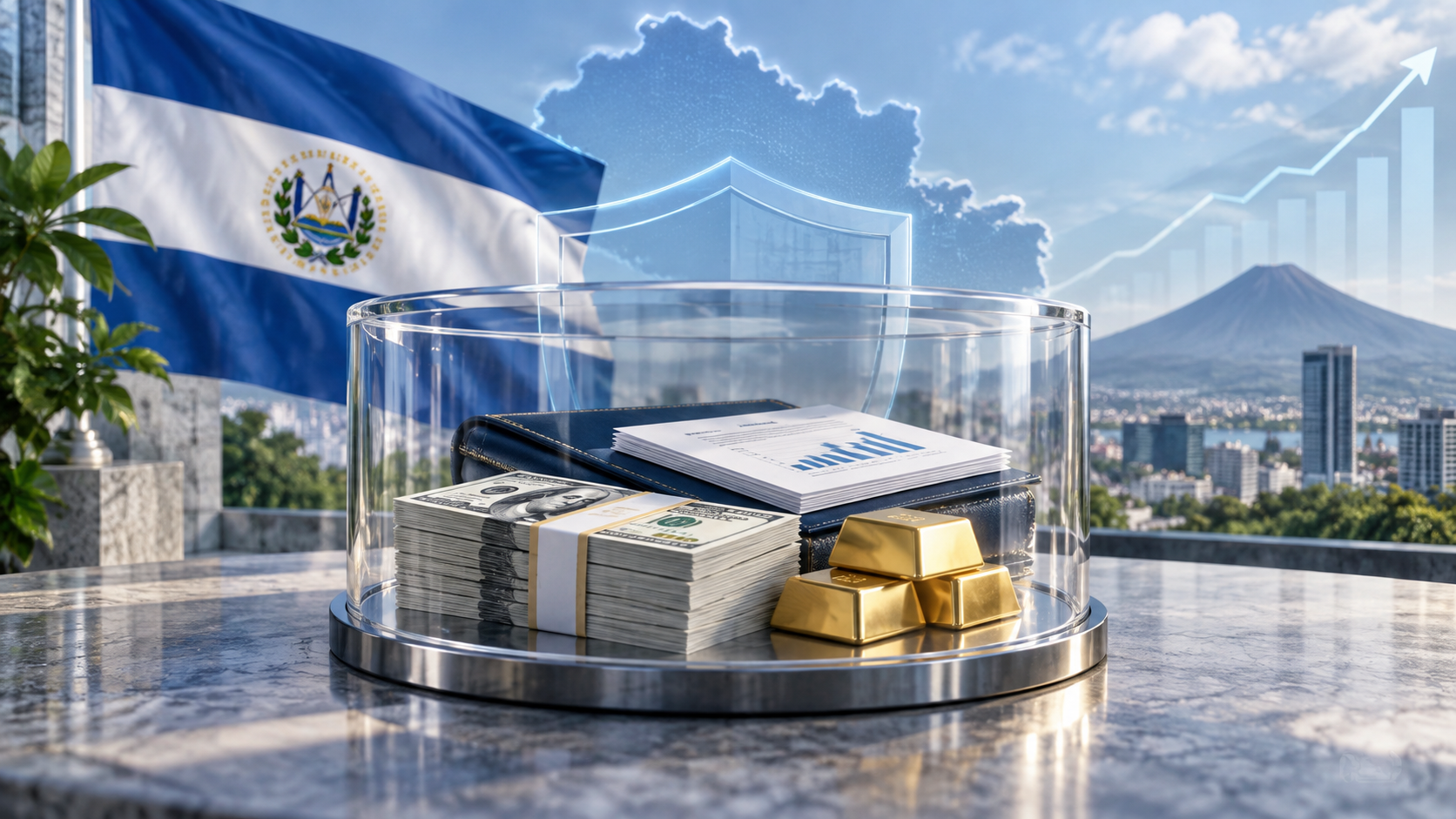
El Salvador’s net international reserves reached approximately $5.14 billion at the end of August 2026, giving the country a larger financial cushion against economic emergencies and disruptions.
This is encouraging news for El Salvador. However, the figures deserve a closer examination because the increase does not mean that the government suddenly accumulated more than $5 billion that it can spend. International reserves serve a specific purpose, and some of the money belongs to or supports the country’s banking system.
There is also some confusion over the percentage reported in the original newspaper article.
Correcting the Percentage
Diario El Salvador reported that the country’s international reserves grew by 15.2% in August. However, the figures included in the article do not produce that percentage.
According to the report, net international reserves increased from approximately $4.36 billion in August 2025 to $5.14 billion in August 2026. That represents a year-over-year increase of about 18%, or approximately $783 million.
Other published figures show that the reserves stood at approximately $4.48 billion at the end of December 2025. Compared with the August 2026 total, that represents an increase of approximately $658 million, or 14.7%, during the first eight months of this year.
The increase from July to August was much smaller. Reserves rose by approximately $44.6 million during the month, an increase of about 0.9%.
Regardless of which comparison is used, the important point is that El Salvador’s reserves have grown substantially over the past year and have remained above $5 billion since April.
They reached approximately $5.17 billion in June, declined slightly in July and recovered to $5.14 billion in August. This suggests that the higher level has been reasonably stable rather than resulting from one temporary monthly increase.
What Are International Reserves?
International reserves are foreign assets controlled by a country’s monetary authorities and available when needed.
They can include foreign currency, deposits, financial securities, monetary gold, Special Drawing Rights from the International Monetary Fund and other reserve assets.
In practical terms, they serve as a country’s emergency financial cushion. They can help a nation meet international payment obligations, respond to financial disruptions and maintain confidence in its banking system.
Strong reserves are particularly important for El Salvador because the country uses the U.S. dollar. El Salvador cannot simply create additional dollars if the financial system experiences a shortage. It must earn, borrow or otherwise attract dollars into the economy.
A healthy supply of liquid international assets can therefore help protect the country when it faces an economic shock, a decline in remittances, weaker exports or sudden pressure on the banking system.
Where Did the Increase Come From?
The growth in reserves is positive, but it should not be described simply as additional government savings.
Part of the increase appears to be connected to stronger liquidity requirements for Salvadoran banks.
Under El Salvador’s agreement with the International Monetary Fund, banks have been required to hold larger liquid reserves at the Central Reserve Bank. These requirements are intended to strengthen the financial system and ensure banks have enough readily available resources to respond to withdrawals or other emergencies.
The IMF has explained that the reserve deposits of Salvadoran commercial banks at the Central Reserve Bank are one of the principal sources supporting the country’s gross international reserves.
In other words, some of the growth occurred because banks are holding more liquid assets at the Central Reserve Bank. This is beneficial for financial stability, but the money cannot be treated as unrestricted government funds.
International financing has also contributed.
In February 2025, the IMF approved a 40-month, $1.4 billion financing program for El Salvador. One of the program’s objectives is to rebuild the country’s external and financial reserves.
The entire $1.4 billion was not delivered at once. The money is being made available in stages, depending on El Salvador’s compliance with the conditions and financial targets established under the agreement.
As of early September 2026, approximately $231 million had been disbursed. The IMF and Salvadoran authorities recently reached a staff-level agreement that could allow another $140 million to be released, subject to approval by the IMF Executive Board.
The IMF reported that El Salvador had exceeded its reserve and liquidity targets. It also said economic activity had performed better than expected, supported by investment, private consumption, remittances, tourism and capital inflows.
Growth in bank deposits and strong remittance flows may also be supporting the higher reserve total.
Gold Contributed to the Increase
Reports based on Central Reserve Bank figures indicate that the value of El Salvador’s gold reserves increased during 2026.
Some reports place their value at approximately $307.5 million in August, compared with $250.3 million at the end of December 2025. That would represent an increase of approximately 22.9%.
However, a rise in the value of the country’s gold reserves does not necessarily mean that El Salvador purchased that amount of additional gold. Gold is valued according to international market prices, so part of the increase could result from changes in the price of the metal.
Published reports also contain different figures for the value of the country’s gold holdings. That is another reason the composition of the reserves should be explained more clearly.
A Positive Development—but Questions Remain
Surpassing $5.1 billion in international reserves is a positive development for El Salvador. It strengthens the country’s financial protection and may improve confidence among banks, international lenders and potential investors.
It may also support El Salvador’s effort to improve its international credit standing. A country with stronger reserves is generally viewed as being better prepared to meet its foreign obligations and withstand economic problems.
However, the total dollar amount does not tell the entire story.
To understand the country’s true financial position, we also need to know how much of the increase came from loans, how much came from bank liquidity requirements and how much resulted from remittances, exports, investment or higher asset values.
We should also ask how many months of imports the reserves could cover and how they compare with El Salvador’s upcoming foreign-debt payments.
Borrowed money can strengthen reserves and provide valuable financial protection, but loans must eventually be repaid. Long-term financial strength will depend on El Salvador generating more dollars through exports, tourism, foreign investment, productive businesses and sustainable economic growth.
My Perspective
I consider this encouraging news for El Salvador.
The country has increased its financial cushion, remained above $5 billion in reserves for several consecutive months and exceeded targets established under the IMF program. These achievements can help protect the banking system and strengthen confidence in the Salvadoran economy.
At the same time, we should be careful not to describe the reserves as money available for ordinary government spending. A substantial portion has specific financial purposes, and some of the growth is connected to banking requirements and international financing.
The real test will be whether El Salvador can maintain and continue building its reserves through productive economic activity rather than depending heavily on borrowed money.
Economic progress should be recognized when it occurs, but the public also deserves a clear explanation of what the numbers mean, where the money came from and whether the improvement can be sustained.
For now, reaching $5.14 billion represents another positive sign for El Salvador’s economy—one that deserves recognition, along with careful and transparent analysis.
If you enjoy reading about El Salvador’s development, economy, tourism, culture, environment, and continuing transformation, please consider liking and sharing this article. Your comments help start conversations, and subscribing ensures you never miss a new post. Every interaction helps our blog reach more readers and lets us keep sharing stories about life in El Salvador.
Leave a Reply