I grew up under peach and apple trees in Virginia, where the seasons were measured by blossoms, pruning, thinning, and harvest. There is something about fruit trees that stays with you. The smell of warm fruit in summer air, the feel of soft skin under your thumb, the quiet satisfaction of seeing branches heavy with the work of a year.
That is why reading about Elva Yasmín Méndez and her peach farm in Río Chiquito, San Ignacio, touched something familiar in me.
At first glance, Virginia and Chalatenango may seem worlds apart. One belongs to my childhood in the United States. The other rises into the cool mountains of northern El Salvador. But when I think about families working the land, opening their gates to visitors, and turning a harvest into something shared, the distance between them feels much smaller.
A Cool Mountain Corner of El Salvador
Río Chiquito sits in the highlands of Chalatenango Norte, one of the coolest and most scenic areas in the country. It is a place of mountain roads, misty mornings, vegetable fields, fruit trees, and views that remind visitors how diverse El Salvador really is.
Many people know this region because of El Pital, the highest point in the country. But Río Chiquito has its own quiet identity. It is not only a place to pass through on the way to somewhere else. It has become part of a growing rural tourism route where agriculture, food, family businesses, and mountain landscapes come together.
In this setting, the organic farm Nubes del Pital has become one of the local points of interest. There, Elva Yasmín Méndez cultivates melocotón diamante, or diamond peach, and welcomes visitors who want to experience the harvest up close.
What began as fruit trees on a hillside is now part of a broader story about rural development, community pride, and tourism rooted in the land.
Elva Méndez: Farmer, Host, and Example
Elva is not only a producer. She is also a host.
Her farm opens its gates to people who want more than a quick purchase at a roadside stand. Visitors can walk among the trees, learn about the crop, enjoy the cool mountain air, and see how a working finca becomes part of the tourism experience.
That matters because rural tourism works best when it feels real. People are not visiting a staged attraction. They are stepping into a place where families live, plant, harvest, cook, sell, and welcome others.
For more than a decade, Elva and other producers in the area have helped build interest in peach cultivation during harvest season. Through farm visits and participation in the Festival del Melocotón, they have shown how a small crop can become a source of income, identity, and connection.
The model is simple, but powerful:
Visitors come to the mountains.
Farmers open their orchards.
Families taste the fruit where it grows.
Local entrepreneurs sell jams, preserves, juices, desserts, and other products.
Money stays closer to the community.
That is the kind of tourism that feels personal. It is not only about taking a picture or buying a bag of fruit. It is about understanding the hands and landscape behind what you are eating.
The Festival del Melocotón
The Festival del Melocotón has become one of the most recognized agrotourism events in northern Chalatenango. Held in Río Chiquito, San Ignacio, the festival celebrates the peach harvest while also promoting local food, small businesses, and mountain tourism.
During the event, families can visit fincas, walk among the trees, taste fresh fruit, and buy directly from the producers. Local vendors also offer peach-based products such as mermeladas, melocotón en almíbar, conservas, natural drinks, desserts, and even wine.
For visitors, it is a day in the mountains.
For producers, it is much more.
It is a chance to sell directly, explain their work, build relationships, and show the value of agriculture beyond the farm gate. A peach is no longer just a crop. It becomes part of the region’s identity.
That is how places grow in the public imagination. Not only through roads and signs, but through flavors, traditions, and memories people carry home.
A Crop With Deeper Roots
The growth of peach cultivation in this part of Chalatenango did not happen by accident. It is connected to efforts by Plan Trifinio, working with agricultural and environmental programs, to introduce fruit species suited to the highland ecosystem.
The idea was practical: identify crops that could adapt to the climate, help protect the landscape, and create new sources of income for local families.
Peach trees found a place in that vision.
Because El Salvador does not have a large nursery system for these plants, some trees have been brought from Guatemala, a country with more experience in supplying peach plants for the region. Once planted in the cooler elevations of Chalatenango, the trees became part of a productive landscape that now supports both farming and tourism.
This is where public planning and daily work meet. A program may introduce the crop, but it is the farmer who tends the tree. It is the family that cares for the land. It is the community that turns a harvest into a festival.
Security, Tourism, and Confidence
Another important part of this story is security.
Producers in Río Chiquito have described their area as traditionally peaceful, but they also recognize that recent years have brought more visitors from inside and outside El Salvador. Better security across the country has helped many rural communities feel more confident about promoting themselves as destinations.
That confidence matters.
A family from San Salvador may be more willing to take a weekend trip.
A Salvadoran living abroad may be more curious to explore the country beyond the beach.
Foreign visitors may discover that El Salvador is not only surf, volcanoes, and city centers, but also cold mountain villages, small farms, fresh produce, and family-run tourism.
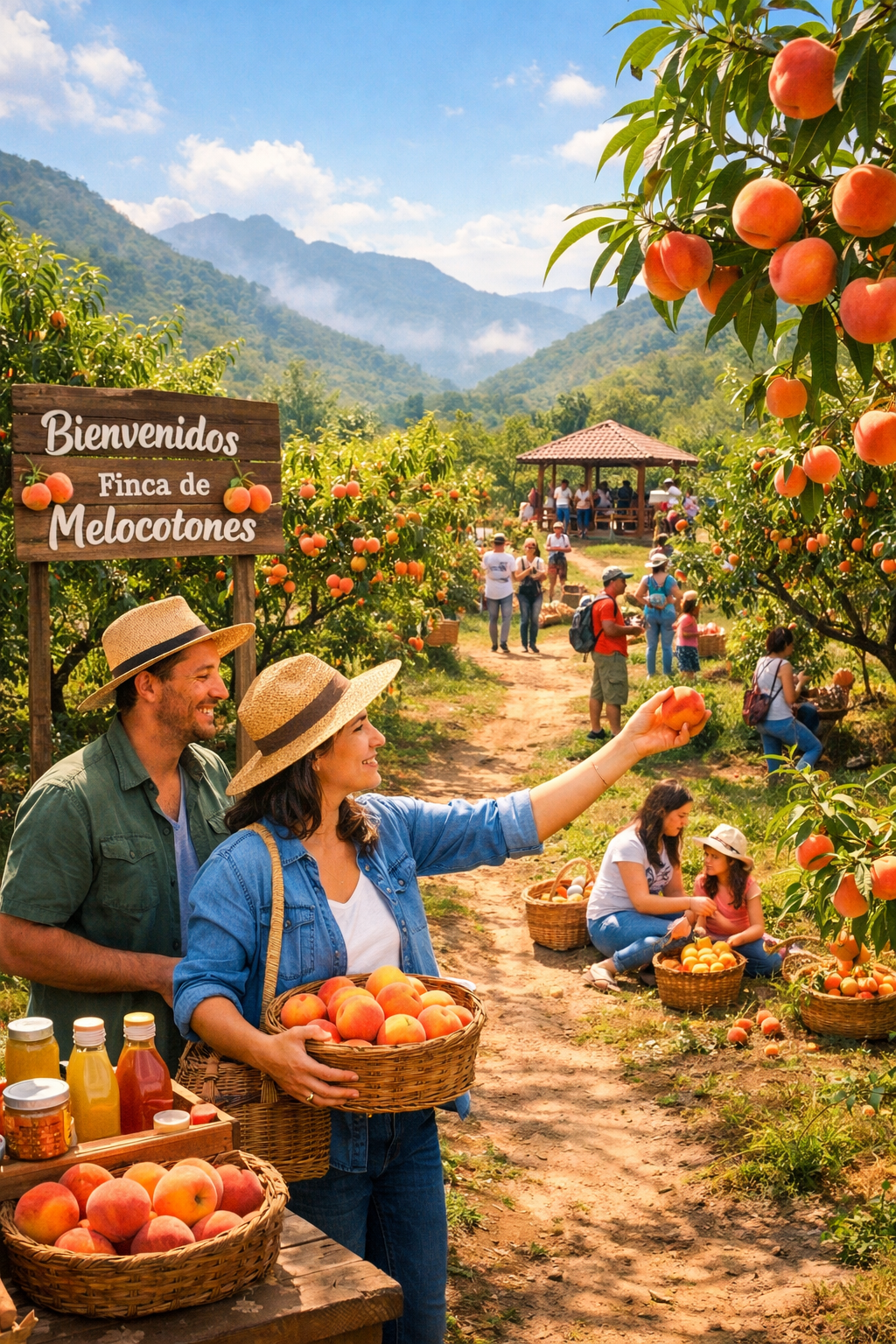
In Río Chiquito, the result is visible in a simple scene: visitors walking through orchards, children picking fruit, producers sharing their stories, and local vendors selling what they make with their own hands.
From My Virginia Farm to Elva’s Peach Rows
When I read about Elva’s farm, I can almost feel a ripe peach in my hand again.
On our farm in Virginia, fruit trees were part of life’s calendar. Blossoms came first. Then the small green fruit. Then the waiting. Then the work of harvest, when everything seemed to ripen at once, and the air carried that unmistakable sweetness.
Those memories never left me.
So when I imagine the rows of peach trees in Río Chiquito, I do not see only a tourism story. I see something more human. I see families making use of the land they have. I see a community finding value in what grows naturally in its climate. I see visitors discovering that agriculture is not something distant or old-fashioned, but something alive, beautiful, and necessary.
The orchard becomes a classroom.
It becomes a marketplace.
It becomes a place where children learn that food does not begin in a supermarket.
It becomes a meeting point between the countryside and the traveler.
Why This Matters for El Salvador
Stories like this may seem small compared with major infrastructure projects, new investments, or national economic announcements. But rural tourism is part of the same larger transformation.
When a community like Río Chiquito attracts visitors, several things happen at once. Farmers gain another way to earn income. Local cooks and artisans find customers. Young people see possibilities close to home. Visitors leave with a deeper understanding of the country.
This kind of development does not erase rural life. It strengthens it.
It does not ask farmers to abandon the land. It invites others to value it.
That is important for El Salvador, especially in areas where families have worked hard for generations but have not always had access to wider markets. A festival, a finca tour, or a jar of peach jam may seem simple, but each one carries effort, planning, and pride.
A Sweet Symbol of Chalatenango Norte
Over time, the peach has become more than a fruit in Río Chiquito. It has become a symbol of patience, adaptation, and regional pride.
A tree brought into the highlands takes root.
The family cares for it.
A harvest becomes a product.
The product becomes a festival.
Festival becomes a destination.
That is how rural identity grows.
For Elva Yasmín Méndez and the other producers of Río Chiquito, peach tourism is not only about selling fruit. It is about opening a door. It is about allowing visitors to see the beauty and discipline behind a mountain harvest.
And for someone like me, who grew up around peach and apple trees in Virginia, the story feels deeply familiar.
Another country.
Different mountains.
Same quiet lesson.
The land gives, but only after people give themselves to it first.
Closing Reflection
Elva Yasmín Méndez’s story is not just about peaches. It is about how a small farm can help reshape the future of a community.
Río Chiquito’s orchards show that rural development does not have to mean leaving the land behind. It can mean inviting others in to see it, taste it, and understand its value.
For anyone who has lived among fruit trees, this kind of tourism feels less like an industry and more like an extended family visit. People come to share in the harvest, walk the rows, breathe the mountain air, and carry a little of that hillside home with them.
And sometimes, a simple peach is enough to remind us that progress can grow quietly, one tree and one family at a time.
Enjoying these stories from El Salvador?
My book Harmony of the Cosmos shares the deeper story of my life — from childhood through adulthood, with the memories, lessons, losses, spiritual reflections, and quiet guidance that shaped the person I became.
It is a personal memoir about life’s unexpected turns and the unseen ways our path often comes together over time.
The book is available on Amazon in English and Spanish.
Read more or order your copy on Amazon.
If you enjoy stories about El Salvador’s culture, development, tourism, and transformation, please consider liking, commenting, and sharing this article.
Leave a Reply