Author: Hugh Talley

  • Empowering the Future: El Salvador Strengthens Academic and Employment Opportunities

    Empowering the Future: El Salvador Strengthens Academic and Employment Opportunities

    El Salvador is taking a major step forward. Specifically, the country is focusing on vocational training and employment in El Salvador to build a stronger future. Through a new strategic partnership managed by ESCO, a significant agreement will boost technical skills and job creation nationwide.

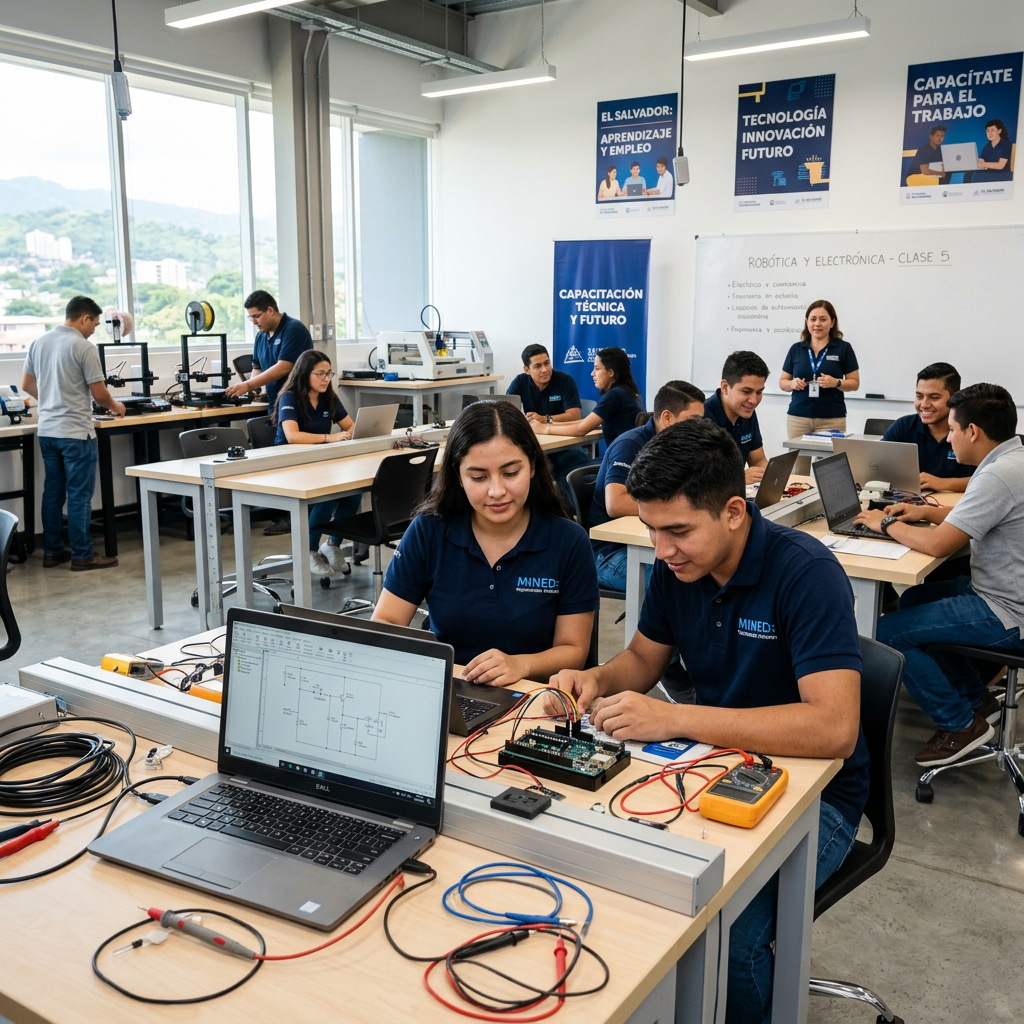
    A modern vocational training classroom in El Salvador with young adults using advanced technology
    Investing in vocational training is key to providing long-term opportunities for El Salvador’s youth.

    A New Collaboration for El Salvador Vocational Training Employment

    The Embassy of Japan in El Salvador and the International Organization for Migration (IOM) recently signed this important agreement. Consequently, the focus remains on expanding access to technical-vocational education. Furthermore, this initiative specifically helps young people aged 15 to 35. This includes those who have returned to the country or are at risk of migrating irregularly.

    This news follows our previous reflections on investing in education as planting seeds for the future. Just as the government has worked to improve thousands of schools, this new project ensures that learning translates directly into real-world livelihoods. Moreover, it strengthens the connection between the classroom and the workforce.

    What the Training Project Includes

    The Ministry of Education (Mined) will implement the project, titled “Improvement of vocational training facilities for low-income youth.” Specifically, the key components include:

    • Infrastructure Rehabilitation: Teams will renovate educational centers and equip them with state-of-the-art technology.
    • Specialized Training: Experts will prepare teaching staff to better serve young adults in flexible study modalities.
    • Private Sector Alliances: The government will build strong partnerships with businesses. These alliances will guarantee internships and effective job placement for students.

    Building a Digital and Educated State

    This initiative aligns perfectly with the broader vision we have seen recently. For instance, the partnership between El Salvador and Google is already digitizing the state. In addition, it is modernizing education from the ground up. By combining high-tech tools with practical vocational skills, El Salvador is positioning its citizens to compete successfully in a globalized market.

    In a recent statement, Vice Minister Adriana Mira emphasized the core goals. She noted that the project aims to increase access to education and strengthen employability. Consequently, this will reinforce the socio-economic resilience of families across the nation.

    Closing Thoughts on El Salvador’s Future

    For those of us living in El Salvador, it is truly encouraging to see this continued focus on the next generation. Programs like this, along with previous campaigns such as “Join the U,” show a consistent effort. Ultimately, these actions empower Salvadorans through education, whether they are here at home or returning from abroad.

    This post was based on an article published in today’s Diario El Salvador newspaper.

    If you enjoy our stories, we’d love to hear from you in the comments. You can subscribe to our blog for free. Donations help us keep the site running, but subscribing is always free and never required.
  • El Salvador’s Tourism Boom: Record-Breaking 815,000 Visitors in Early 2026

    El Salvador’s Tourism Boom: Record-Breaking 815,000 Visitors in Early 2026

    El Salvador has officially kicked off 2026 by shattering tourism records. According to the latest data from the Ministry of Tourism (Mitur), the country welcomed 815,000 international visitors during the first two months of the year—a staggering 28% increase compared to the same period in 2025. This follows a historic January where the country saw its highest visitor count for that month in recent history, setting the stage for an even more explosive February.

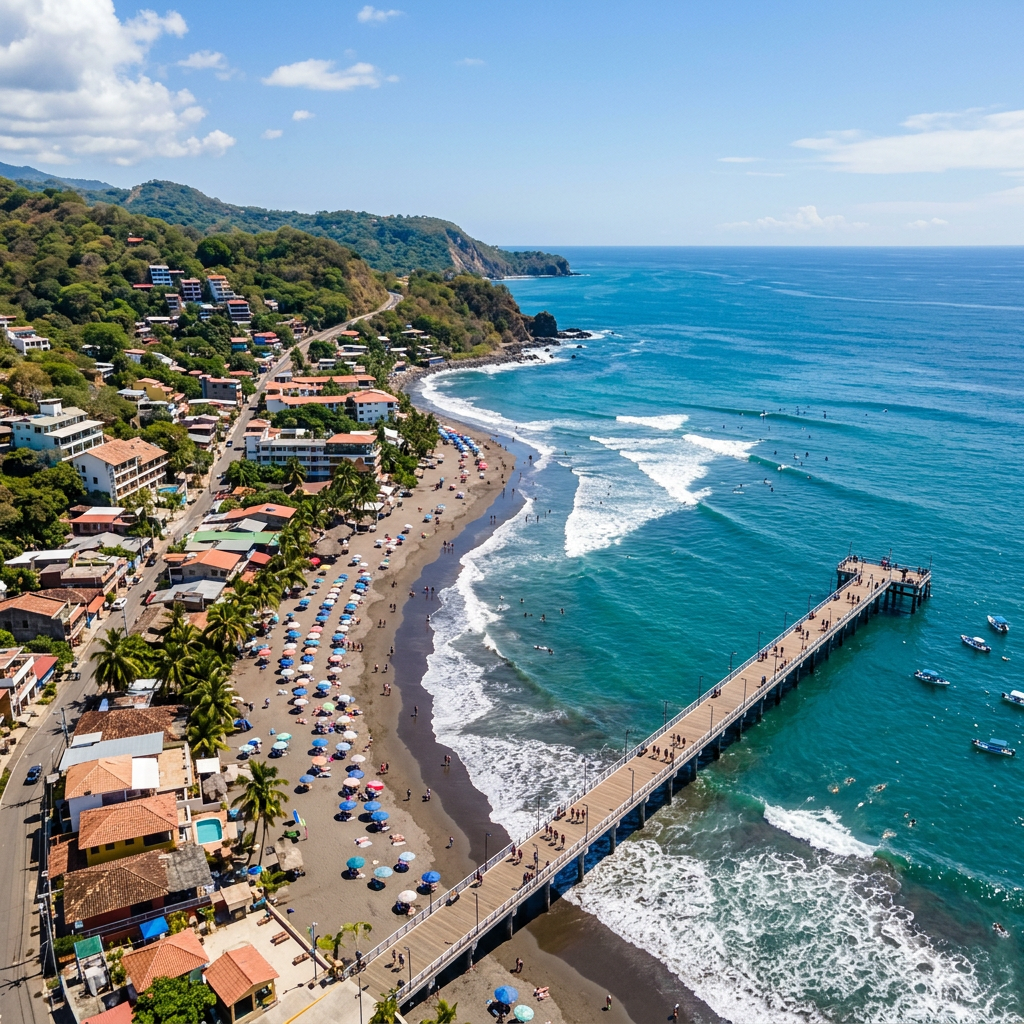
    Aerial view of the El Salvador coastline and pier, Surf City style
    International arrivals have grown significantly as El Salvador becomes a top regional destination.

    A Historic Start to the Year

    The surge was particularly notable in February, which saw 403,000 visitors—a 43% jump from the previous year. Tourism Minister Morena Valdez highlighted that February 2026 stands as the month with the highest number of international arrivals in the country’s history. The Minister noted that this success is a direct result of international events and the country’s transformation into a secure and attractive destination.

    Global Interest in El Salvador

    So, where is everyone coming from? While regional neighbors remain the strongest markets, growth is happening globally across several key regions:

    • Guatemala: 317,000 visitors (+43%)
    • United States: 215,000 visitors (+8%)
    • Honduras: 159,000 visitors (+31%)
    • Central American Neighbors: Nicaragua saw a 49% increase with 34,000 visitors, and Costa Rica surged by 94% with 14,000 visitors.
    • North America: Beyond the US, Canada sent 15,000 visitors, and Mexico grew by 25% with 10,000 arrivals.
    • European Surge: Germany led European growth with a massive 144% increase (3,000 visitors), followed by the UK at +88% and Spain at +18%.

    What’s Driving the Surge?

    The Ministry of Tourism attributes this massive growth to a combination of high-profile international events and the country’s significantly improved security climate. As we discussed in our recent look at how major events fuel growth, attractions in early 2026 included Shakira’s residence, the Ironman 70.3, and the Pan-American Maxi Basketball Tournament. These events, combined with a 0% homicide rate in several recent months, have created an environment where tourists feel safe to explore our beaches, volcanoes, and historic sites.

    Looking Ahead: Holy Week

    The momentum shows no signs of slowing down. With Semana Santa (Holy Week) just around the corner, the hotel sector is already reporting nearly 100% occupancy in popular areas. This includes fully renovated spots like the Apulo Recreational Park, which is ready to welcome the holiday crowds.

    For those of us living our lives here in El Salvador, seeing this transformation firsthand is incredible. The world is finally discovering what we already know: this “Tom Thumb of the Americas” is a giant in beauty, hospitality, and economic potential.

    This post was based on an article published in today’s Diario El Salvador newspaper.

    If you enjoy our stories, we’d love to hear from you in the comments. You can subscribe to our blog for free. Donations help us keep the site running, but subscribing is always free and never required.

  • El Salvador’s Energy Landscape: Mapping Our Fuel Supply in a Global Market

    El Salvador’s Energy Landscape: Mapping Our Fuel Supply in a Global Market

    A gas station in El Salvador showing a fuel tanker truck.

    Have you ever wondered where El Salvador gets its fuel? With all the news about conflicts in the Middle East and rising gas prices, it is a question many of us are asking. A recent report from La Prensa Gráfica sheds some light on this topic, and the answers might surprise you.

    Even though El Salvador imports 100% of the fuel we use, most of it does not actually come from the Middle East. Let us take a closer look at our energy map and why global events still hit our wallets.

    Where Does Our Fuel Really Come From?

    In 2025, El Salvador spent about $2.39 billion on hydrocarbons. That is a massive part of our economy. However, our main suppliers are much closer to home than you might think. Here is the breakdown:

    • The United States: This is our primary source, providing a staggering 86% of our fuel.
    • Ecuador and Canada: These two countries each contribute about 2%.
    • Other Partners: We also receive smaller amounts from Nigeria, Trinidad and Tobago, Panama, and Guatemala.

    Why Do Middle East Tensions Still Matter?

    If we get most of our gas from the U.S., why does a conflict in the Middle East cause gas prices to rise in San Salvador? The reason is that El Salvador is what economists call a “price taker.” This means we must follow global market prices.

    Everything is connected. For example, the Strait of Hormuz handles about 20% of the world’s oil. When that area faces trouble, global supply drops and prices soar everywhere. Recently, we saw the West Texas Intermediate (WTI) price jump by nearly $10 in just one week. Since the U.S. follows these global trends, we feel the impact here too.

    The Ripple Effect on Our Daily Lives

    Unfortunately, higher gas prices affect more than just our cars. When fuel gets expensive, it costs more to transport food and goods. This leads to higher grocery prices and larger energy bills for our homes. It is a chain reaction that affects every family in the country.

    This post is based on a report originally published in La Prensa Gráfica.

    If you enjoy our stories, we’d love to hear from you in the comments. You can subscribe to our blog for free. Donations help us keep the site running, but subscribing is always free and never required.

  • Whale Watching El Salvador: Final Call for the 2026 Season

    Whale Watching El Salvador: Final Call for the 2026 Season

    This post is based on a recent report by the newspaper Diario El Salvador regarding the final month of the whale watching season.

    Are you ready for an unforgettable marine adventure? The annual whale watching season in El Salvador is now entering its final stretch. In fact, the Ministry of Environment and Natural Resources (MARN) recently confirmed that the window to witness these magnificent Pacific giants will only remain open through the month of March.

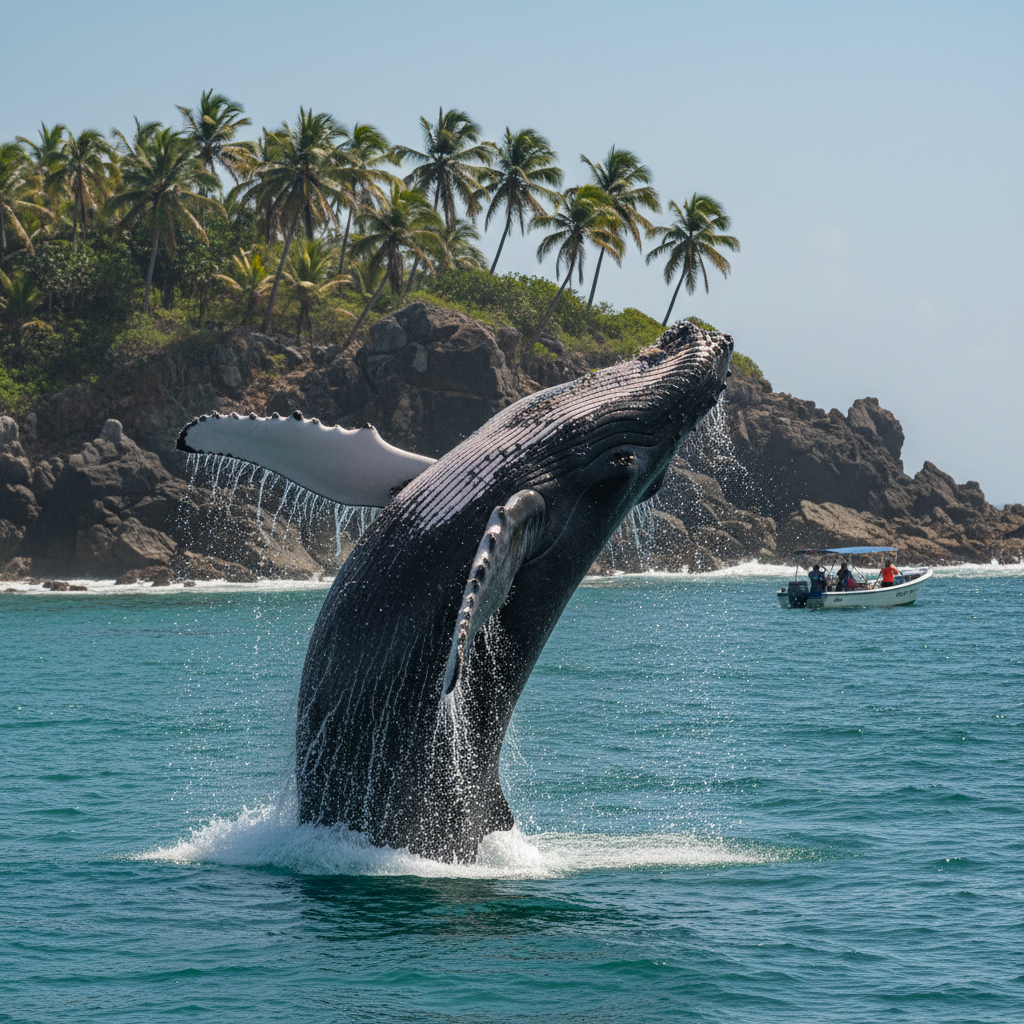
    Humpback whale breaching near the coast of El Salvador at Los Cóbanos
    Humpback whale breaching near the coast of El Salvador.

    The Magic of Seasonal Migration

    Every year, between November and March, humpback whales migrate from the cold North Pacific to the warm tropical waters of El Salvador. This journey is essential for their reproduction and the birth of their calves. Consequently, the Salvadoran coastline becomes a vital corridor for marine biodiversity during these months.

    Los Cóbanos: The Best Place to Visit

    Specifically, the Los Cóbanos Natural Protected Area is the top destination for whale sightings. Here, visitors can often see whales breaching or hear the powerful spray from their blowholes. Furthermore, authorized local guides ensure that every tour is both safe and educational.

    Important Guidelines for Responsible Watching

    To protect these amazing creatures, the Ministry of Environment enforces strict rules. For example, boats must stay at least 100 meters away from the whales. If a calf is present, that distance increases to 200 meters. Additionally, only two boats can watch a single group of whales for a maximum of 30 minutes. Most importantly, swimming or diving with them is strictly forbidden to avoid causing stress.

    When you go, remember to wear a life jacket and use plenty of sun protection. Always listen to your boat captain for the best and safest experience.

    Plan Your Trip Before March Ends

    If you haven’t visited the coast yet, now is the time. You have until the end of March to witness one of El Salvador’s most spectacular natural events. While the sightings often last only seconds, the memories of seeing a whale in the wild will stay with you forever.

  • El Salvador: A New Haven for Foreign Investors in a Changing World

    El Salvador: A New Haven for Foreign Investors in a Changing World

    Table of Contents

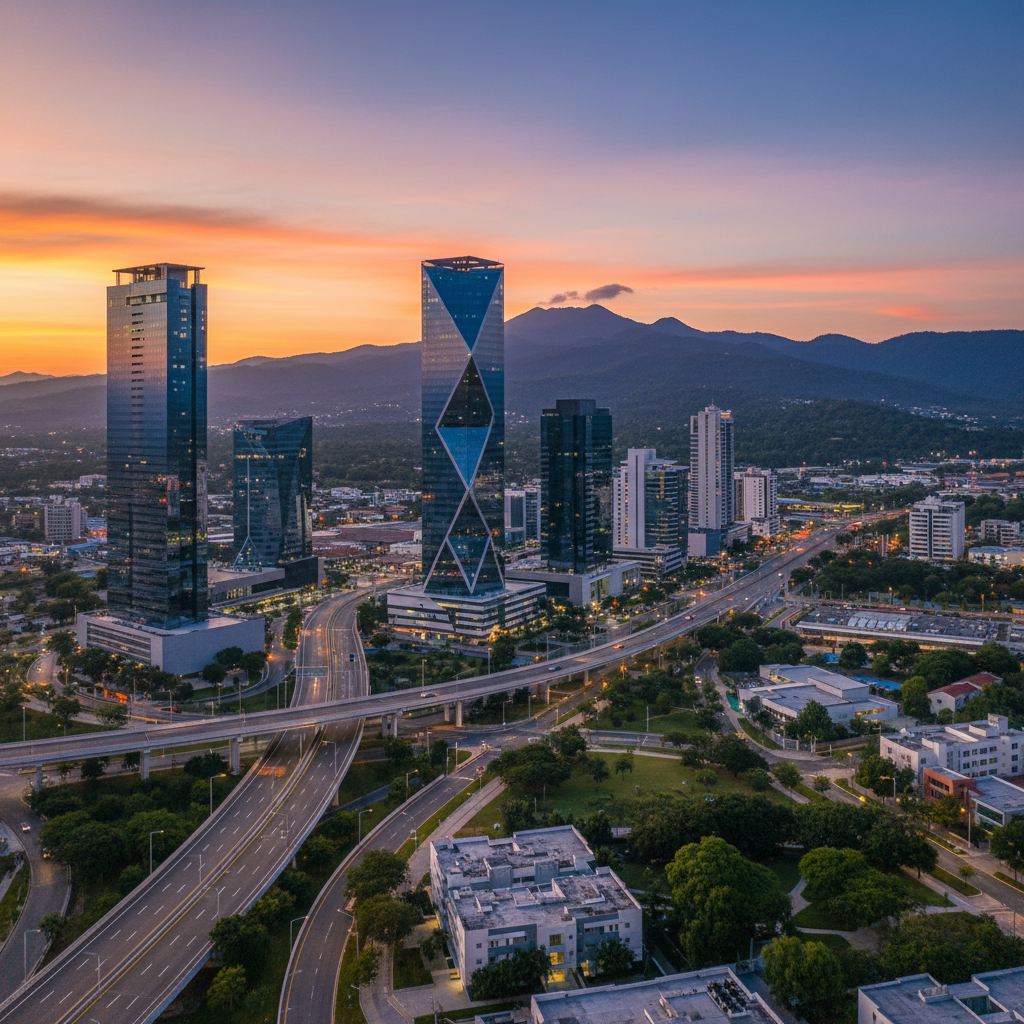
    Modern skyscrapers of San Salvador at sunset with lush mountains in the background, illustrating the 2026 investment boom.

    This Post is based on an article in the Newspaper El Pais 01/03/2026

    🌍 The Economic Shift: A Global Refuge

    With so much global tension, rising energy prices, and uncertainty, El Salvador has quietly taken on a new role that few would have expected ten years ago. Once known mostly for its struggles, the country is now being called an “Earth Refuge” for foreign investors—a place where security, clarity, and opportunity converge in ways hard to find elsewhere. This trend is not limited to real estate; as we recently noted, the surge in coffee exports also signals a renewed global confidence in Salvadoran productivity.

    This shift isn’t theoretical. It’s measurable, visible, and reshaping the country’s landscape in real time. According to the National Registry Center (CNR), more than 25,000 property registrations were filed in just the first two months of 2026—a surge driven not only by Salvadorans abroad, but by buyers from the United States, Canada, and Europe who see in El Salvador something they no longer find at home: stability.

    While news from other countries often highlights war in the Middle East, nuclear threats, and political division, El Salvador is moving in a different direction. The country’s big improvements in security have created the predictability that investors want. Families feel safer. Businesses feel safer. And foreign buyers, including retirees, digital nomads, and tech entrepreneurs, are taking notice.

    🏄 The Magnet Zones: Surf City, Bitcoin City, and the Eastern Boom

    Two regions have become the main focus for this wave of investment, as highlighted by Invest in El Salvador:

    • La Libertad / Surf City: Beachfront land has reached record prices, and luxury apartments are selling out before construction even starts. International buyers see the coastline as both a better way of life and a smart long-term investment.
    • The Eastern Zone (Conchagua, Bitcoin City corridor): With the Pacific Airport and digital economy projects on the horizon, land prices have soared. “Bitcoin nomads” and real estate funds are buying in early, hoping to benefit from the region’s growth.

    These investments are not just hype or speculation. They are supported by real infrastructure, government policy, and a worldwide search for safe places to invest.

    ⚖️ Policies That Lower Barriers and Accelerate Capital

    The government’s 2026 reforms, designed to enhance economic openness, have made it unusually easy for foreigners to establish themselves. This data-driven approach is further supported by the country’s first Economic Census in decades, which aims to provide investors with clear, verifiable statistics on market sectors.

    • Tax incentives: Through the Digital Asset Investment Law and International Services Law, offering benefits up to 0% in certain zones.
    • Property processes are now digital, allowing foreigners to invest quickly and without the complicated paperwork that was common in the region.

    🏗️ A Construction Boom Reshaping the Skyline

    San Salvador’s metropolitan area is seeing its biggest construction boom in decades, with more than $5.1 billion in planned investment for March alone. This massive capital injection is supported by international partners; for instance, the Inter-American Development Bank (IDB) recently pledged $1.3 billion in funds for 2026. Much of this growth is connected to:

    • High‑rise housing
    • Short‑term rental markets (Airbnb)
    • Foreign residents seeking long‑term stays

    This is a new El Salvador. The country is being rebuilt with tall buildings, confidence, and a focus on connecting with the world.

    🌱 What “Earth Refuge” Really Means

    The phrase means more than just economics. It shows a new way of seeing El Salvador—as a place where people can invest money, start a business, build a home, or plan a future, and trust that these things will grow. In fact, the growth of neighborhood stores by 23% shows that security and economic confidence are reaching every corner of the community.

    Security is now like currency. Predictability is a national strength. In a world where both are hard to find, El Salvador’s changes are getting noticed. Foreigners are doing more than just visiting now. They are buying homes for retirement, moving their startups, and choosing this small country as a place to settle down.

    Security is now like currency. Predictability is a national strength. In a world where both are hard to find, El Salvador’s changes are getting noticed. Foreigners are doing more than just visiting now. They are buying homes for retirement, moving their startups, and choosing this small country as a place to settle down.

    If you enjoy our stories, we’d love to hear from you in the comments. You can subscribe to our blog for free. Donations help us keep the site running, but subscribing is always free and never required.
  • Apulo’s Return: A Beloved Lakeside Park Prepares for Holy Week

    Image Created by AI

    Inspired by today’s coverage in Diario El Salvador on the reopening of Apulo Recreational Park for Holy Week.

    For years, Apulo has been a place that lives in Salvadorans’ collective memory: warm water, simple food, families relaxing under the trees, and the gentle sounds of Lake Ilopango. Many went there as children, but later stayed away as safety concerns grew along the shoreline. Now, after a long break and a complete renovation, Apulo Recreational Park is getting ready to reopen for Holy Week 2026. The story of its return says a lot about the country we are becoming.

    A Park Rebuilt for Families

    The Salvadoran Institute of Tourism (ISTU) has managed a full remodel of the park, adding new infrastructure, better lighting, and longer hours from 8 a.m. to 8 p.m. ISTU president Eny Aguiñada says the goal is to create a top-quality, family-friendly space. There will be a breastfeeding and nursing area, and the restaurant zone has been updated so long-time tenants can keep serving the dishes visitors have loved for years.

    These changes are important. They show a move away from the old way of just fixing things quickly and reopening. Now, the focus is on creating spaces that offer dignity, safety, and comfort, not just basic access.

    A Different Security Reality

    Aguiñada pointed out something many Salvadorans know but rarely say: Apulo used to be a place people were afraid to visit. Violence in the area kept families away, even though the lake always stayed beautiful. Today, she says, things are different. The park can reopen because security has improved. No matter how people feel about the country’s changes, it’s clear that places once abandoned are now being brought back.

    Part of a Larger Pattern

    Apulo’s renovation is part of a bigger trend. Other public spaces, such as Puerta del Diablo, Costa del Sol, and the San Sebastián Tourist Terminal, are also receiving new investment. The government is clearly focusing on tourism, hoping it will boost the economy and help restore national pride.

    For people living outside the capital, these projects have a wide impact. They affect how people travel, where families spend time together, and how the country sees itself.

    What This Means for Holy Week

    Holy Week is one of the busiest travel times of the year in El Salvador. If Apulo opens as planned, thousands of visitors will come between March 29 and April 5. Even more important, they will find a space that feels renewed, both in its appearance and in its meaning.

    A park that people once stayed away from is now being made ready for families to return. That, by itself, is a story worth sharing.

    If you enjoy our stories, we’d love to hear from you in the comments. You can subscribe to our blog for free. Donations help us keep the site running, but subscribing is always free and never required.

  • A January Surge in Coffee Exports — And What It Says About El Salvador’s Changing Place in the World

    The numbers landed quietly in Diario El Salvador, but they carry the weight of a decade: coffee exports grew 260.5% in January 2026, reaching $28.2 million, the highest January figure in ten years. The scale of that jump is almost disorienting. One year ago, the same month closed at $7.9 million. Now, the country has added more than $20 million in coffee sales in just thirty-one days.

    For a crop that has shaped this country’s hillsides, families, and fortunes for more than a century, this kind of surge is more than an economic data point. It’s a reminder that the world is paying attention again.

    What the Numbers Reveal

    A few details from the report stand out:

    • 84.8 thousand quintales of Salvadoran coffee were sold abroad in January, at an average price of $331.60 per quintal.
    • The United States remains the dominant buyer, purchasing $18.6 million worth of coffee, followed by Belgium with $3.1 million.
    • Smaller but meaningful shipments reached Italy, Finland, Germany, Canada, South Africa, Japan, Australia, and France.
    • Coffee alone accounted for 5% of all Salvadoran exports in January.

    These aren’t just trade flows—they’re signals of renewed confidence in Salvadoran quality, processing, and consistency. They’re also evidence that the country’s coffee sector, long battered by disease, migration, and low prices, is finding a new footing.

    A Personal Thread Back to January

    Back on January 23rd, I published a post titled From the Hills of El Salvador to the Markets of Dubai: A Coffee Journey I’ve Watched From the Outside. In it, I wrote about the strange, almost dislocated feeling of watching Salvadoran coffee gain prestige in places around the world—Dubai, Seoul, Tokyo—while living quietly in Cara Sucia, surrounded by the landscapes that grew the beans in the first place.

    This new export report feels like a continuation of that same story. The world is not just discovering Salvadoran coffee; it’s actively seeking it out. And from the outside—from the dusty roads of Ahuachapán, from the small fincas tucked between rivers and volcanoes—it feels like watching a long‑overdue recognition unfold.

    Why This Moment Matters

    Three things make this surge more than a statistical anomaly:

    • It breaks a decade-long ceiling. The last “best January” was 2023, with $10.5 million in exports. This year nearly triples that figure.
    • It reflects global demand for specialty flavor profiles. Salvadoran coffee’s reputation for sweetness, balance, and altitude-grown complexity is finally translating into real contracts.
    • It hints at a broader economic shift. January’s total exports across all sectors grew 8.5%, but coffee’s growth dwarfed everything else. Even sugar—another traditional pillar—grew “only” 111.9% by comparison.

    For a country that has often struggled to convert its natural strengths into global opportunity, this is a rare moment of alignment.

    Watching From the Ground

    Here in the West, the coffee harvest has already moved downhill. Trucks loaded with red cherries have come and gone. The smell of wet parchment has faded from the beneficio floors. Life has returned to its usual rhythms.

    But somewhere between these quiet rural days and the polished counters of cafés in Brussels or Boston, Salvadoran coffee is carrying a different story—one of resilience, reinvention, and global curiosity.

    And for those of us watching from the outside, it’s a reminder that even in a small country, the world can shift beneath your feet.

    If you enjoy our stories, please let us know in the comments. You can subscribe to our blog for free. Donations help us keep the site running, but subscribing is always free and never required.
  • El Salvador Prepares for Its First Economic Census in Decades: Why This Is Important

    Illustration of El Salvador map with businesses and data charts for Economic Census blog post
    Illustration for blog post about El Salvador’s first Economic Census in decades

    This article is based on a report originally published by the Salvadoran newspaper Diario Latino about El Salvador’s upcoming Economic Census.

    El Salvador is preparing to better understand its economy. President Nayib Bukele has signed an executive order for the 8th Economic Census—the first in a long time—and has created a National Census Commission to oversee the process.

    While the census might seem important only to economists, it can actually impact jobs, investment, and how public money is used in El Salvador.

    What Is an Economic Census?

    An Economic Census is a nationwide effort to collect information about businesses and economic activity. In simple terms, it tries to answer questions like:

    • How many businesses are operating in El Salvador?
    • In what sectors do they work (commerce, services, industry, agriculture, etc.)?
    • How many jobs do they create?
    • Where are they located, by municipality and department?

    This data lets the government plan with real, current information instead of relying on guesses. El Salvador has needed this for quite a while.

    Who Will Be in Charge?

    The Central Reserve Bank (BCR) will be responsible for the census. Since 2022, the BCR has handled national statistics following the closure of the old Directorate General of Statistics and Censuses.

    Reports say the BCR has already:

    • Completed 100% of the cartographic update of the country.
    • Conducted a pre‑census across the national territory.

    They have already mapped out areas and found businesses in all 14 departments, using 18 regional offices. This should help the census run faster and more smoothly.

    Part of a Bigger Statistical Effort in 2026

    The 8th Economic Census is only one part of a larger plan to update statistics in El Salvador. The government says the economy is a top priority in its second term, which is clear from other upcoming projects:

    • A National Agricultural Census will help show how the farming sector is structured and how it supports food security.
    • A National Household Income and Expenditure Survey will measure living conditions, what Salvadoran families spend money on, and how much they spend on food and health.

    All these studies together will give a clearer and more complete picture of how people in El Salvador live, work, and produce.

    Why Is This Happening Now?

    This decision comes at a time when El Salvador’s economy is sending mixed signals:

    • The government estimated growth above 4% at the end of 2025.
    • International organizations, such as the IMF, have more cautious forecasts.

    In times like this, having reliable data is essential. Without it, it’s hard to know:

    • Whether economic growth is reaching ordinary people through more and better jobs.
    • Which sectors are really driving the economy and could receive more support?
    • Which regions are being left behind and need more public investment?

    Trying to make public policy without solid data is like driving at night with no headlights.

    How Will the Institutions Work Together?

    A census of this size needs more than one institution. Many agencies have to work together and share information.

    The newly created National Census Commission will bring together:

    • Ministries and public institutions related to the economy and social policy.
    • The National Registry of Persons.
    • The Salvadoran Social Security Institute (ISSS).
    • Municipal governments.
    • Other public bodies that handle statistics and records.

    The aim is to avoid duplicating work, share information in an organized way, and build a clear, unified picture of El Salvador’s economy.

    Catching Up After Years Without an Economic Census

    International standards recommend that countries do a census every 10 years. El Salvador has missed this timeline, leaving a significant gap in economic information.

    That’s why the 8th Economic Census is more than just another government project. It can also be viewed as:

    • A gesture toward greater transparency by publishing clear, verifiable data on economic activity.
    • A move toward evidence‑based planning, instead of decisions based only on political interests or impressions.
    • An effort to get in line with international best practices in the field of official statistics.

    What Will This Mean for People, Businesses, and Communities?

    Even though many details like dates and questionnaires are still being decided, we can already see some possible benefits if the census is done well:

    small and medium businesses

    • Better information about how many businesses like theirs exist and where.
    • Data to understand if their sector is growing or shrinking.
    • A better foundation for requesting loans, investments, or support programs.

    investors (local and foreign)

    • A clearer idea of the size and location of economic activity.
    • More confidence when deciding whether to open or expand operations in the country.
    • Less uncertainty when planning long-term projects.

    citizens and local governments

    • Tools to demand public policies based on real needs.
    • Information to prioritize projects such as roads, markets, training centers, or industrial parks.
    • A clearer idea of where jobs are being created and where opportunities are still missing.

    A Needed Step Toward a Better Economic Future

    For years, El Salvador has tried to grow without a clear understanding of its current economy. The 8th Economic Census and other studies planned for 2026 are a chance to change that.

    If the process is done carefully, with strong technical standards and transparency, the country will have a powerful tool to:

    • Design smarter and more effective public policies.
    • Attract investment that responds to the country’s real situation.
    • Build a development model that is more strategic and less improvised.

    As data becomes more valuable, updating our economic information is no longer just a nice-to-have. It’s a necessary step if El Salvador wants to grow sustainably and inclusively.

    If you enjoy our stories, please let us know in the comments. You can subscribe to our blog for free. Donations help us keep the site running, but subscribing is always free and never required.

  • El Imposible: From Hidden Gem to “Wonder of the World” in 2026

    Hiking trail leading into dense tropical forest at El Imposible National Park in El Salvador
    Hiking trail into the tropical forest of El Imposible National Park, El Salvador

    Image AI Generated

    When Condé Nast Traveler, a respected travel magazine, makes a recommendation, people notice, especially those searching for their next adventure. Their latest list of seven wonders to visit in 2026 includes a local treasure: El Imposible National Park in El Salvador.

    According to a story from Diario La Página on February 27, 2026, El Imposible is now recognized not only as a beautiful park but as a must-see natural wonder around the world. For a small country often overlooked by tourists, this is big news.


    Why El Imposible Matters So Much

    El Imposible has long been a favorite spot for hikers, birdwatchers, and nature lovers in El Salvador. Now, this new recognition is putting it on the map for people everywhere. Here’s what makes it special:

    • A biodiversity hotspot
      El Imposible is home to:
      • Hundreds of bird species, including hawks, toucans, and migratory birds
      • Endemic and endangered species that rely on this forest to survive
      • Dense tropical forest, rivers, waterfalls, and stunning viewpoints
    • A living representation of El Salvador’s natural heritage
      El Salvador is often known for its fast-growing cities and its history of conflict and migration, but El Imposible proves there’s much more to the country than headlines suggest. It’s a place where:
      • You can still walk for hours under a closed canopy of trees
      • You hear more birds than cars.
      • You’re reminded that this land has strong roots and stories older than any of us.
    • A sign of what is possible
      In an interesting twist, “El Imposible” is turning into a symbol of what El Salvador can achieve:
      • To protect natural areas
      • To welcome respectful tourism
      • To appear on the global platform for something positive, beautiful, and hopeful

    What This Recognition Means for El Salvador

    Being named one of the seven wonders to visit in 2026 is more than just a compliment in a travel magazine. It could really make a difference:

    1. More international visitors
      Adventurous travelers who may not have considered El Salvador before might now start planning trips, drawn by the mix of:
      • World‑class surfing
      • Coffee country in the highlands
      • And now, a globally recognized natural wonder
    2. A boost for local communities
      Communities near El Imposible, like guides, small lodges, local restaurants, and transport providers, can benefit if tourism is handled with care and respect for nature.
    3. Stronger arguments for conservation
      When a place becomes known as a world-class destination, it’s harder to ignore the importance of:
      • Environmental protection
      • Responsible development
      • Long‑term planning so that the forest doesn’t pay the price for short‑term profit

    Visiting El Imposible in 2026 (and Beyond)

    If you’re planning a trip to El Salvador in 2026, or if you live here and haven’t visited yet, now is a great time to add El Imposible to your plans.

    What to expect when visiting:

    • Tough but satisfying hikes
      The park is not a manicured city park; it is a real forest. Trails can be steep and hot, but the rewards are worth it: rivers, viewpoints, and the feeling of being truly surrounded by nature.
    • Local guides
      It’s a good idea to go with a local guide:
      • They know the safest routes.
      • They help you spot wildlife.
      • Your visit directly supports people who live near the park.
    • Simple infrastructure, big rewards
      You won’t find luxury hotels inside the forest. Instead, expect:
      • Basic facilities at the entrances
      • Lodges, hostels, and eco‑stays in nearby towns
      • A chance to take a break from the pace of daily life

    A Personal Viewpoint on El Imposible

    For those who call El Salvador home, or have chosen to live here, this recognition means a lot. We’re used to seeing our country in the news for negative reasons. Seeing El Imposible named a wonder of the world worth visiting is truly moving.

    It’s a notice that:

    • El Salvador is more than its past.
    • Our future can be rooted in caring for the land we have.
    • The world is starting to notice the beauty we already know is here.

    Gazing Forward

    When Diario La Página shared the news about Condé Nast Traveler’s list on February 27, 2026, it was more than a travel update. It was a proud moment for El Salvador.

    Now that El Imposible is on the world’s bucket list, we all have a clear challenge and opportunity:

    • Visit responsibly
    • Support local communities
    • Protect the forest
    • And keep proving that, in El Salvador, even “the impossible” is possible.

    😎 If you enjoy our stories, please let us know in the comments. You can subscribe to our blog for free. Donations help us keep the site running, but subscribing is always free and never required.

  • A Quiet Economic Change: How Better Security Helped Neighborhood Stores Grow by 23%

    AI-Generated Image

    Life in El Salvador has clearly changed in recent years. Neighborhood stores are making a comeback. According to Diario El Salvador, better security has helped these small shops grow by about 23%.

    People who lived here during the hardest years of violence know this is more than just a statistic. Back then, many small business owners were too afraid to open, expand, or stay open late. Now, more people are out walking, more families shop nearby, and more entrepreneurs are starting or improving their stores.

    This growth in neighborhood stores has led to several changes:

    • Families now have more convenience. Instead of traveling far for basics, many people can find what they need just a short walk from home.
    • These stores create local jobs and income. Even a small shop can support a family, give a young person a job, and help keep money in the community.
    • They also help build a stronger sense of community. These shops are more than just places to buy things. They are small meeting spots where neighbors talk, catch up, and look out for each other.

    Better security has made all of this possible. When people feel safe, they are more likely to invest, open businesses, stay open longer, and offer more products. Customers also feel comfortable going out early or late, which helps these stores grow.

    To outsiders, a 23% rise in neighborhood stores might seem like just a number. But for those of us who live here, it means much more. It marks a return to normal daily life. Being able to walk to the corner, buy a soda or rice, chat with the owner, and go home without fear is the kind of normal life many Salvadorans missed for years.

    For us, seeing this change is a quiet but powerful sign that security policies are changing daily life in El Salvador. It is not just about numbers. It is about seeing more doors open, more lights on at night, and more hope for small neighborhood businesses everywhere.

    Personal Reflection

    Here in Cara Sucia, I have seen many small businesses open in the past year. This trend is happening both here and across the country. When I retired here in 2011, I never imagined the area would grow as much as it has.

    😎 If you enjoy our stories, please let us know in the comments. You can subscribe to our blog for free. Donations help us keep the site running, but subscribing is always free and never required.