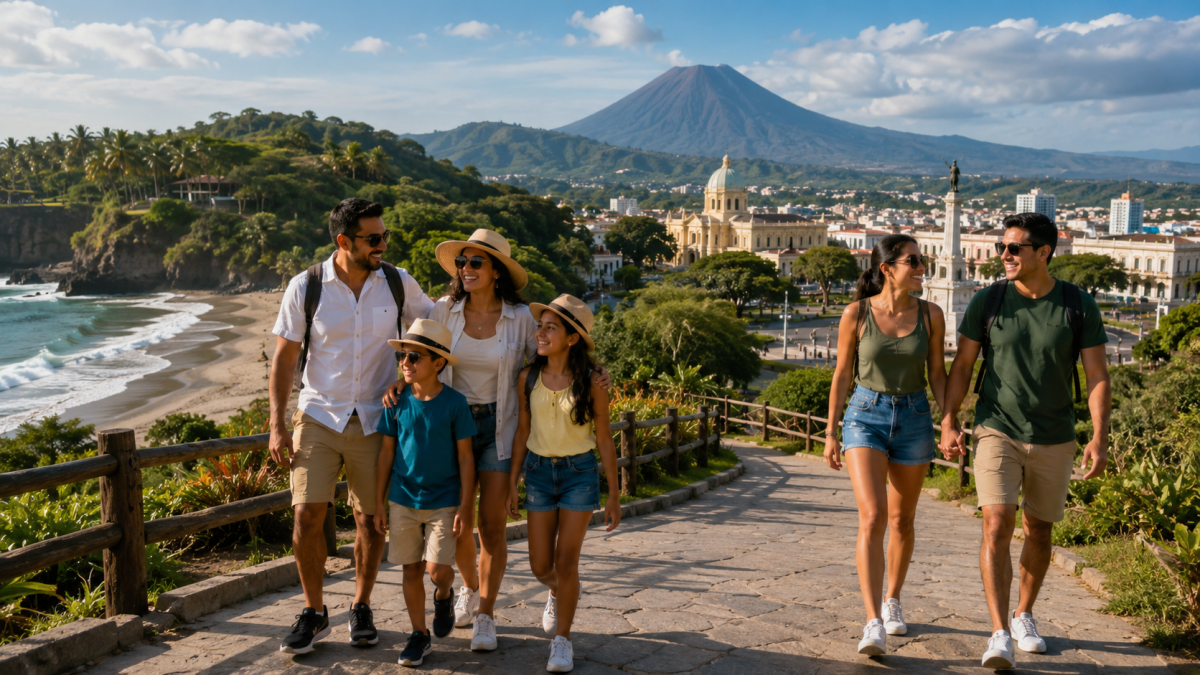
A reflection on movement, family, and the quiet transformation of our national destinations
El Salvador is becoming a country on the move.
From January through June 2026, domestic tourism generated 4.7 million recorded visits to destinations across the country, according to figures from the Ministry of Tourism. Salvadorans, foreign residents, and other visitors traveled to beaches, parks, mountain towns, cultural sites, and historic districts on weekends, holidays, and vacations.
That number represents more than people passing through a gate or arriving at a beach. It reflects a change in how Salvadorans see their own country.
Families are getting into their cars on Saturday morning and heading somewhere together. Couples are spending an afternoon in the Historic Center of San Salvador. Friends are visiting the mountains, walking through a national park, or sitting beside the ocean with food and conversation.
Little by little, Salvadorans are rediscovering the country they call home.
A Small Country With Many Choices
One of El Salvador’s greatest strengths is the variety found within such a small area.
A person can leave the city in the morning, reach the mountains before lunch, and finish the day watching the sunset over the Pacific. Beaches, volcanoes, lakes, forests, colonial towns, archaeological sites, and modern public spaces are all within a few hours of one another.
The latest tourism figures show that people are taking advantage of that variety.
Surf City continues to attract international travelers, while Costa Azul and Barra de Santiago remain popular along the western coast. Protected natural areas, the Route of Las Flores, and the Historic Center of San Salvador are also receiving strong numbers of national and international visitors.
Each destination offers something different.
Surf City provides waves, restaurants, hotels, and the energy of a growing coastal destination. Barra de Santiago offers a quieter connection to nature, mangroves, and traditional seaside life. The Route of Las Flores brings together mountain scenery, colorful towns, local food, crafts, and weekend markets.
The Historic Center of San Salvador offers another kind of experience. Its plazas, restored buildings, churches, restaurants, museums, and public events have transformed the capital’s center into a place where families once again gather.
Together, these destinations tell the story of a country learning to appreciate its own beauty.
National Parks Are Becoming Weekend Retreats
The country’s recreational and natural parks are also playing an important role in this growth.
The Salvadoran Tourism Institute reported that its 18 parks received 235,758 visitors during June alone. The five most visited were:
- Apulo Recreational Park: 35,392 visitors
- Puerta del Diablo Natural Park: 31,005 visitors
- Cerro Verde Natural Park: 27,423 visitors
- Amapulapa Recreational Park: 23,696 visitors
- Ichanmichen Recreational Park: 18,370 visitors
These numbers reveal what many Salvadorans are looking for: fresh air, open spaces, affordable recreation, and places where the family can spend time together.
A national park does not need luxury hotels or expensive attractions to matter. Sometimes people simply need a place to walk, sit beneath the trees, share a meal, let the children play, and step away from the pressures of everyday life.
Apulo offers water and recreation close to the capital. Puerta del Diablo combines dramatic views with one of the country’s most recognizable natural landmarks. Cerro Verde provides cooler temperatures and views of the surrounding volcanoes. Amapulapa and Ichanmichen offer pools, trees, and spaces that generations of Salvadoran families have enjoyed.
These places are not new, but the way people are returning to them feels new.
Tourism Begins With a Family Outing
Large tourism reports usually speak about visitor totals, investment, hotel occupancy, and economic growth. All of those things are important.
But domestic tourism often begins with something much simpler.
It begins when a family decides not to stay home on Sunday.
They may pack food, gather the children, call a relative, and leave early in the morning. They might spend only a few dollars, but those dollars move through the community. They pay for fuel, parking, entrance tickets, lunch, cold drinks, souvenirs, or something handmade by a local artisan.
One family outing may seem small. Thousands of family outings taking place every weekend create an economy.
A Source of Income for Local Communities
Tourism supports far more than hotels and large restaurants.
It helps the woman selling pupusas beside the road. It helps the fisherman supply seafood to a small coastal restaurant. It helps the artisan producing handmade gifts, the young person working as a guide, the family operating a guesthouse, and the driver transporting visitors between destinations.
The steady flow of visitors drives economic activity for restaurants, hotels, artisans, transportation providers, and other small businesses connected to tourism.
This is especially important in rural and coastal communities, where weekend visitors can make the difference between a slow month and a successful one.
Every meal purchased, room rented, entrance fee paid, and locally made product sold becomes part of a much larger chain. That money stays active. It supports jobs, families, suppliers, and future investment.
Tourism is not only recreation. For many Salvadorans, it is a livelihood.
Safety Has Changed the Way People Move
There is also a part of this story that should not be ignored.
For many years, Salvadorans did not always feel free to travel wherever they wanted. Some communities, roads, parks, and public spaces were avoided because people worried about crime or crossing into unfamiliar territory.
That fear shaped daily life.
Today, many families travel with a level of confidence that would have been difficult to imagine several years ago. They visit places they once avoided, stay out later, walk through public squares, and allow their children to enjoy spaces that previously felt uncertain.
That change cannot always be measured in a tourism chart.
It is measured when parents feel comfortable taking their children to a park. It appears when a family drives across the country without worrying about entering the wrong neighborhood. You can see it when public spaces remain active after sunset and when visitors return home talking about what they enjoyed rather than what they feared.
The growth of domestic tourism is partly the story of Salvadorans reclaiming their freedom of movement.
Tourism and the Responsibility to Protect What We Enjoy
Growth also brings responsibility.
More visitors mean more pressure on beaches, forests, parks, roads, water systems, and local communities. Trash, uncontrolled construction, damage to natural areas, and overcrowding can quickly weaken the very places attracting people.
We should enjoy these destinations, but we must also care for them.
Visitors can help by taking their trash home, respecting protected areas, supporting responsible local businesses, and treating communities as homes rather than temporary playgrounds.
Authorities and private developers also carry responsibility. Tourism growth should include proper sanitation, environmental protection, safe infrastructure, fair access, and long-term planning.
Success should not be measured only by how many people arrive. It should also be measured by the condition in which we leave these places for the next generation.
A Country Becoming Its Own Destination
For many years, tourism discussions focused mainly on attracting foreigners. International tourism remains extremely important, but domestic tourism provides something equally valuable: stability.
Foreign travel can rise or fall because of airfare, economic conditions, world events, or changing trends. Salvadorans traveling within their own country provide a more consistent foundation for restaurants, parks, hotels, tour operators, and community businesses.
They also become ambassadors.
A Salvadoran who discovers a beautiful beach, mountain village, park, or historic site will tell relatives, share photographs, return with friends, and recommend the place to visitors from abroad.
Domestic tourism builds pride from within.
The 4.7 million visits recorded during the first six months of 2026 show that El Salvador is no longer only presenting itself as a destination to the rest of the world. It is becoming a destination for its own people.
That may be one of the most meaningful transformations of all.
A country changes when its citizens begin seeing familiar landscapes differently. A beach becomes more than a coastline. A park becomes more than trees and walking paths. A historic street becomes more than old buildings.
They become places where memories are made.
They become part of the family story.
They become reminders that sometimes we do not have to travel far to find something beautiful.
Sometimes it has been here all along.
If you enjoy stories about El Salvador’s growth, economy, tourism, culture, environment, and continuing transformation, please like, comment, and share this article.
Leave a Reply