Author: Hugh Talley

  • A Surge in Confidence: El Salvador Leads Central America in Construction Growth

    A Surge in Confidence: El Salvador Leads Central America in Construction Growth

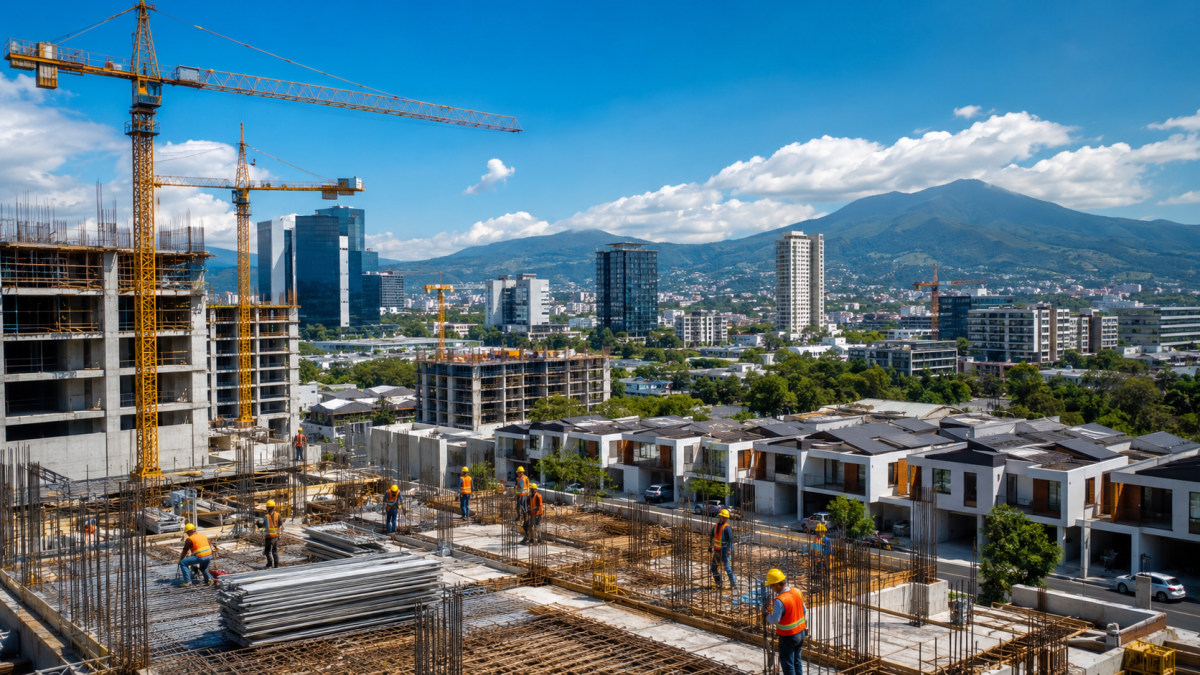
    Across El Salvador, change is becoming increasingly visible. New homes, commercial developments, roads, public buildings, logistics centers, and major infrastructure projects are reshaping both the capital and communities beyond it.

    Behind that activity is one of the strongest construction performances in Central America.

    According to data from the Executive Secretariat of the Central American Monetary Council (SECMCA), El Salvador’s construction sector recorded year-on-year growth of 18.5% through April 2026. That placed the country at the top of the regional ranking and well ahead of most neighboring economies.

    This is more than another encouraging statistic. Construction requires planning, financing, materials, workers, transportation, permits, and confidence that tomorrow will offer enough stability to justify investing today.

    When all those pieces begin moving together, they tell us something important about a country’s direction.

    El Salvador Establishes a Clear Regional Lead

    The regional figures presented by SECMCA show a noticeable difference between El Salvador and the rest of Central America:

    • El Salvador: 18.5%
    • Nicaragua: 11.9%
    • Costa Rica: 1.5%
    • Honduras: 0.7%
    • Guatemala: Updated 2026 figures were not available

    Nicaragua posted a respectable result, but El Salvador’s rate was still approximately 55% higher. The difference becomes even more striking when compared with Costa Rica and Honduras, where construction activity remained nearly flat.

    That does not mean every construction project is the same or that each country faces identical economic conditions. It does, however, show that El Salvador has developed unusually strong momentum within one of the economy’s most important industries.

    What Is Driving the Construction Boom?

    Buildings do not rise simply because a government announces a new policy or because a developer purchases a piece of land. Construction expands when investors believe projects can move forward, customers believe they can make long-term commitments, and businesses see enough opportunity to risk their capital.

    Luis Rodríguez, executive director of the Office of Planning for the Metropolitan Area of San Salvador, or OPAMSS, has connected the sector’s performance to stronger cooperation between public institutions and private enterprise.

    “Continuing to lead construction growth in the region is only possible through alliances between the public and private sectors,” Rodríguez said, adding that the boom is helping position El Salvador as a development hub in Central America.

    That cooperation matters. Private developers need efficient approval processes and clear rules. Government agencies need responsible businesses that will create jobs, comply with safety requirements, and contribute to organized urban development.

    Neither side can transform the country alone.

    Security Has Changed the Investment Conversation

    Housing Minister Michelle Sol has also emphasized the role of national security and investor confidence in the sector’s expansion.

    “El Salvador leading construction growth in Central America is not a coincidence,” she said. “It is the result of a clear vision, of generating confidence for investment, and above all, of the security achieved thanks to the president’s decisions.”

    For years, insecurity affected nearly every part of life in El Salvador. It influenced where people could live, where businesses could operate, how construction workers traveled, and whether investors were willing to invest in certain communities.

    When companies feared extortion, theft, or territorial restrictions, even a promising project could become too risky. Those conditions did not only hurt large corporations. They affected contractors, hardware stores, transportation companies, architects, engineers, equipment operators, and ordinary laborers.

    Today, the investment conversation is changing.

    Projects that once appeared uncertain are moving forward. Communities previously overlooked by developers are receiving greater attention. Businesses can plan with greater confidence that their workers, materials, and property will be protected.

    Security alone cannot build an economy, but economic confidence is difficult to sustain without it.

    Construction Leads a Broader Economic Expansion

    The building boom is not taking place in isolation.

    El Salvador also led growth in overall economic activity in the Central America and the Dominican Republic region during April 2026. The country recorded a year-on-year increase of 5.78%, placing it ahead of Guatemala, Costa Rica, Honduras, and Nicaragua, according to the regional figures.

    That broader performance suggests construction is part of a larger acceleration rather than a temporary surge limited to one industry.

    The Central Reserve Bank reported that El Salvador’s gross domestic product grew by 4.8% during the first quarter of 2026 compared with the same period of 2025. GDP reached approximately $9.26 billion, an increase of more than $604 million.

    Construction was the country’s most dynamic economic activity during the quarter, expanding by 13.5%. It was followed by mining and quarrying at 11.1% and transportation and storage at 7.6%. Hotels and restaurants also performed strongly, growing by 7.1%.

    Seventeen of the 19 economic activities measured by the BCR posted positive results. Together, those growing sectors represented more than 80% of national GDP.

    These figures show that the country’s progress is becoming more widely distributed across the economy.

    Public and Private Projects Are Moving Together

    The BCR attributed construction’s strong first-quarter performance to a mixture of private and public investment.

    Housing, commercial buildings, and logistics developments have attracted private financing. At the same time, the government continues to invest in roads, schools, airports, public facilities, and other infrastructure.

    One of the most visible examples is the Pacific International Airport, a strategic project intended to improve connectivity and bring new economic opportunities to eastern El Salvador.

    Public works of this scale can produce benefits far beyond the construction site. Better roads reduce transportation time. Modern airports improve access to markets. New schools support education. Logistics facilities help companies move products more efficiently.

    Private projects have a different but equally important role. Residential construction responds to housing demand, while offices, hotels, stores, warehouses, and industrial developments support business expansion.

    When both forms of investment grow together, they can reinforce one another. Public infrastructure makes private development more attractive, while expanding businesses increase demand for improved services and transportation.

    One Project Supports Many Different Jobs

    Construction is sometimes measured by the number of permits issued, square meters built, or dollars invested. Those measurements are important, but they do not show the full human impact.

    A single development may employ architects, engineers, electricians, plumbers, welders, masons, carpenters, painters, machine operators, truck drivers, security personnel, and administrative workers.

    The project also creates demand for cement, steel, glass, lumber, electrical supplies, plumbing materials, paint, tools, fuel, food, transportation, and professional services.

    This is why construction can become such a powerful economic engine. Money invested in a building does not remain inside its walls. It moves through a wide network of businesses and households.

    The BCR noted that the sector’s expansion increased demand for labor, materials, transportation, and professional services, strengthening activity in other parts of the economy.

    For a small supplier, a new contract can mean the ability to hire another employee. For a construction worker, steady employment can provide greater security for a family. For a young Salvadoran learning a skilled trade, the industry can offer a future without leaving the country in search of opportunity.

    Housing Must Remain Part of the Story

    Minister Sol correctly pointed out that every project can help bring the dream of homeownership closer to Salvadoran families.

    That is an important goal, but it is also where the country must remain focused.

    Luxury apartments, commercial towers, hotels, and large developments are signs of investor confidence. However, the true measure of progress will include whether working families can find safe, decent, and affordable housing.

    The construction boom creates an opportunity to address long-standing housing needs. That will require cooperation among government institutions, private developers, banks, community organizations, and the families hoping to purchase or improve a home.

    Economic growth should not only change skylines. It should improve neighborhoods and expand opportunities for people at different income levels.

    A strong construction industry gives El Salvador the tools to pursue both goals.

    Growth Must Be Planned Responsibly

    Rapid development also brings responsibilities.

    Cities must consider traffic, drainage, access to water, waste management, green spaces, public transportation, and the ability of local services to support a growing population. Poorly planned construction can create problems that last for decades.

    OPAMSS and municipal authorities therefore have an important role. Faster permit processing can encourage investment, but speed must not replace proper oversight.

    El Salvador needs modern development that respects safety standards, protects the environment, and fits into a wider vision for each community.

    The goal should not be to build everywhere simply because investment is available. It should be about building wisely, creating places that will continue to serve Salvadorans long after the current boom has passed.

    Can El Salvador Exceed the 2026 Forecast?

    SECMCA has projected that El Salvador’s economy could grow between 3% and 3.5% by the end of 2026.

    With GDP already expanding by 4.8% during the first quarter and construction continuing to lead the region through April, there is reason for optimism. However, one strong quarter does not guarantee the final result.

    Global trade conditions, energy costs, interest rates, commodity prices, extreme weather, and developments in the United States can still influence El Salvador’s performance.

    Even so, the country enters the second half of 2026 with encouraging momentum. Public investment remains active, private developers continue to announce projects, and infrastructure improvements are creating new possibilities for commerce, tourism, housing, and logistics.

    The challenge now is to maintain that progress without losing sight of affordability, transparency, environmental protection, and the needs of ordinary Salvadorans.

    What These Numbers Mean for Salvadoran Families

    Economic reports can sometimes feel distant from daily life. Percentages and regional rankings may sound impressive, but people naturally want to know what they mean at home.

    In practical terms, a growing construction sector can mean:

    • More jobs in skilled trades and general labor
    • Additional business for local suppliers and contractors
    • Greater demand for transportation and professional services
    • New homes and residential communities
    • Improved roads, schools, airports, and public facilities
    • Expanded opportunities for young people to learn technical skills
    • Increased commercial activity in developing areas

    Not every family will experience those benefits immediately. Progress rarely reaches every community at the same speed. Still, the economic connections created by construction are broad, and the potential impact extends far beyond developers and property owners.

    People can see this kind of growth. They see it in cranes above the capital, road crews working across the country, new businesses opening, neighborhoods expanding, and projects beginning in areas where little investment once occurred.

    A Country Building More Than Structures

    El Salvador’s 18.5% construction growth is an important achievement, but the larger story is about confidence.

    It reflects businesses willing to invest, institutions working to modernize, laborers finding employment, and communities preparing for new possibilities.

    The country is building homes, roads, airports, businesses, and public facilities. At the same time, it is building a reputation as a place where projects can advance, and long-term plans can become real.

    There is still much work ahead. Housing must remain affordable. Development must be organized. Public resources must be used responsibly, and the benefits of expansion must reach communities throughout the country.

    Those are not reasons to dismiss the progress. There are reasons to manage it carefully.

    For now, El Salvador stands at the top of Central America’s construction ranking, supported by one of the region’s strongest rates of overall economic activity. That position represents more than concrete and steel.

    It represents jobs, movement, opportunity, and a growing belief in the country’s future.

    El Salvador is not simply building new structures. It is building momentum—and people across the region are beginning to notice.

    If you enjoy stories about El Salvador’s development, economy, tourism, culture, and continuing transformation, please consider liking, commenting, and sharing this article.
  • Featured Exporters 2026: The New Shape of El Salvador’s Economic Momentum

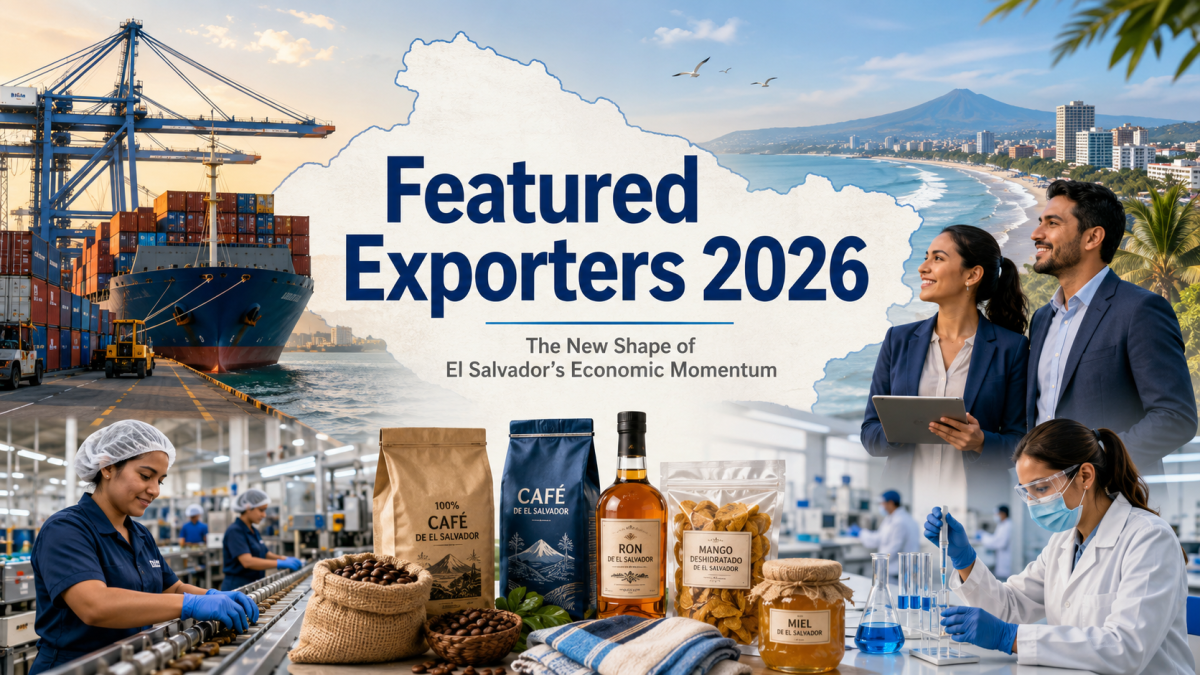
    Featured Exporters 2026: The New Shape of El Salvador’s Economic Momentum


    Some stories about a country’s progress are easy to see. They appear in new roads, safer towns, busy beaches, modern hospitals, and families walking through places that once felt difficult to visit.

    Other stories are quieter.

    They move through factories, farms, laboratories, shipping routes, business meetings, certifications, and products that leave El Salvador carrying the name of this country into markets around the world.

    That is what the 2026 edition of Featured Exporters, organized by COEXPORT, represents.

    According to reporting by Alonso Rosales in ContraPunto, this year’s recognized companies account for 29% of El Salvador’s national exports. That is not a small number. It is a sign that Salvadoran businesses are no longer only looking inward. They are learning to compete beyond the country’s borders, and they are doing so with higher quality, greater organization, and more confidence.

    A Country Learning to Compete Beyond Its Borders

    For many people, exports may sound like something distant — something discussed by economists, business leaders, or government officials. But exports are not only numbers on a report.

    They are jobs.

    They are an investment.

    They are training.

    They are products made by Salvadoran hands and carried into markets where quality, reliability, and standards matter.

    Behind every successful exporter are workers, managers, farmers, technicians, drivers, designers, inspectors, and families who depend on the strength of the productive sector. That is why these awards matter. They show a part of El Salvador’s transformation that does not always receive the attention it deserves.

    COEXPORT’s Featured Exporters awards are now in their 47th edition, making them one of the most established recognitions in the country’s business sector. This year’s event is scheduled for July 14 and will honor companies that continue pushing Salvadoran products and services into international markets.

    The Numbers Tell a Story of Growth

    The companies recognized this year surpassed US$220 million in exports during 2025 and generated nearly 4,000 direct jobs. Those numbers alone are important. But the broader picture shows something even larger.

    Four key sectors — Plastics, Food and Beverages, Chemical-Pharmaceutical, and Tourism — reached US$3,686 million in exports in 2025, representing 29.2% of El Salvador’s total exports.

    That tells us something important.

    El Salvador’s economy is not standing still. It is becoming more diverse. It is building strength in sectors that require planning, consistency, investment, and a serious commitment to quality.

    Food and beverages carry Salvadoran flavor into other countries. Plastics support manufacturing and supply chains. The chemical-pharmaceutical sector reflects technical capacity and regulation. Tourism, in its own way, exports the experience of El Salvador itself — its beaches, mountains, culture, food, history, and hospitality.

    Together, these industries show a country that is becoming more connected to the world.

    A New Standard for Salvadoran Exporters

    What stands out to me is that COEXPORT is not only recognizing volume. It is also looking at how companies are growing.

    The evaluation includes areas such as technological innovation, environmental sustainability, digital transformation, international certifications, and quality standards.

    That matters because exporting today is very different from what it was years ago.

    It is no longer enough to simply produce something and ship it. Companies now have to prove they can meet international requirements. They must understand markets, protect quality, follow regulations, improve processes, and keep up with changing technology.

    This is the new language of global commerce.

    And Salvadoran companies are learning to speak it.

    That should encourage the country, because every company that reaches international standards helps raise the expectations for the next one. It opens a door for other businesses. It shows small and medium-sized companies that exporting is not just a dream for large corporations. With discipline, guidance, and persistence, it can become a real goal.

    Eight Categories That Show the Breadth of Salvadoran Talent

    The 2026 awards will recognize exporters across eight categories:

    COEXPORT Exporter Award
    Featured Exporter
    Exporter Trajectory
    Central American Exporter
    Services Exporter
    SME Exporter
    Innovation Exporter
    Women Exporter

    Each category tells a different part of the same story.

    There are companies with years of experience that continue to open new markets. Small businesses are stepping into foreign trade for the first time. There are service providers demonstrating that El Salvador can compete on knowledge, not only on physical products. There are innovators using technology to improve their processes. There are women entrepreneurs leading businesses and strengthening value chains.

    That variety is important.

    It shows that the Salvadoran export sector is not limited to a single industry, product, or type of company. It is becoming broader, more flexible, and more prepared for the demands of a changing global economy.

    “Exporting Is No Small Achievement”

    Silvia Cuéllar, president of COEXPORT, said something that should not be overlooked. She explained that exporting is not a minor achievement. Every company that reaches that level has spent years investing, entering new markets, and meeting quality standards in competition with global rivals.

    That is exactly right.

    Exporting requires patience. It requires money. It requires paperwork, planning, contacts, certifications, consistency, and trust. A company cannot simply decide one day to sell abroad and expect success to happen overnight.

    It takes time.

    It takes discipline.

    It takes people who are willing to keep going when the process becomes difficult.

    Cuéllar also pointed out that El Salvador is not only exporting more but also exporting differently, with a broader, more value-added offering.

    That may be one of the most important messages in this story. Growth is good, but smarter growth is even better. A country that depends too heavily on a limited number of products can become vulnerable. A country that diversifies its exports builds more resilience.

    Exporting Is a Network

    Another important detail is the number of partners involved in this year’s event. Around 600 people are expected to attend, with support from companies and institutions connected to logistics, ports, finance, transportation, hospitality, food, beverages, coffee, and industry.

    That tells us something simple but powerful.

    Exporting is not an isolated effort.

    A product does not reach another country because of a single company. It takes ports, shipping, packaging, banking, customs processes, air travel, hotels, suppliers, and business relationships. It takes an entire network moving in the same direction.

    When that network works, the country benefits.

    When it becomes stronger, more companies can participate.

    And when more companies participate, more Salvadorans feel the impact through jobs, income, and opportunity.

    A Reflection From the Ground

    Living here in El Salvador, I see progress in many forms. Some of it is very visible. Some of it is quieter.

    This story belongs to the quieter kind.

    Most people will not see the meetings where exporters negotiate with buyers. They will not see the inspections, training, quality checks, or the lengthy process of obtaining certifications. They may never see the shipping documents, the production lines, or the late nights spent solving problems before an order leaves the country.

    But all of that work matters.

    It matters because each successful exporter carries a part of El Salvador into the world. It matters because every product that competes abroad helps shape how others see this country. It matters because strong exports can support formal jobs, encourage investment, and help build confidence in the national economy.

    From Cara Sucia to San Salvador, from small towns to industrial areas, from family businesses to larger companies, El Salvador is moving.

    Not perfectly.

    Not without challenges.

    But steadily.

    The Featured Exporters 2026 awards are more than a ceremony. They are a reminder that the country’s economic future is being built by people who produce, innovate, certify, ship, serve, and compete.

    Behind every statistic are workers, risks, investments, and dreams carried across borders.

    And in that movement, you can feel the quiet but steady pulse of a country redefining its place in the world.

    If you enjoy stories about El Salvador’s culture, development, tourism, and transformation, please consider liking, commenting, and sharing this article.
  • The Strawberry Corner: How a Small Farm in Río Chiquito Is Boosting Agrotourism in Chalatenango

    The Strawberry Corner: How a Small Farm in Río Chiquito Is Boosting Agrotourism in Chalatenango

    Some foods carry a simple kind of happiness, and for me, strawberries have always been one of them.

    I enjoy them fresh, blended into milkshakes, sliced over cereal, or served with ice cream. They are bright, sweet, and comforting. So when I read about El Rincón de las Fresas, or The Strawberry Corner, in Río Chiquito, Chalatenango, it immediately caught my attention.

    This small farm in the mountains is doing more than growing fruit. It is becoming part of a bigger story about rural tourism, family effort, and the new opportunities opening across El Salvador.

    A Farmer, a Hillside, and a Vision

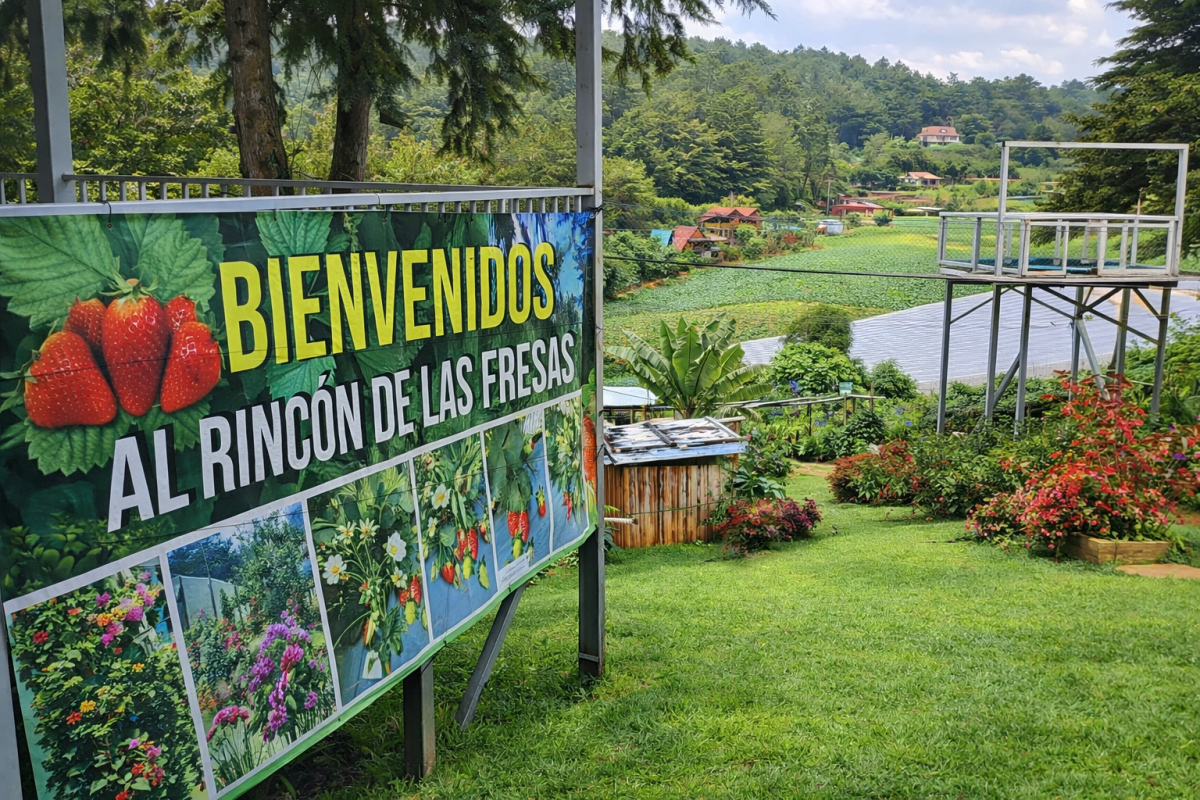
    In the cool highlands of Chalatenango, in the canton of Río Chiquito, a local producer named Santos Vásquez decided to take a chance on a crop that is not common in many parts of El Salvador: strawberries.

    Four years ago, he planted strawberries on half a manzana of land. With patience, care, and the advantage of the mountain climate, that small decision has grown into something much larger.

    Today, his farm produces around 200 pounds of strawberries per harvest. Visitors can come directly to the farm, walk among the plants, pick their own fruit, and meet the farmer behind the project.

    That direct connection is one of the things that makes this story special. There are no middlemen between the producer and the visitor. People can see where the fruit comes from, talk with the person who grows it, and enjoy the product in the same place where it was harvested.

    That is agriculture with a human face.

    To strengthen his family’s income, Santos also grows spinach and passion fruit. This gives the farm more variety and helps create a small, productive ecosystem that supports both the land and the household.

    A Simple Visit With a Sweet Reward

    What began as a strawberry patch has now become a small but charming agrotourism destination.

    For only $1, visitors can enter the farm, walk through the rows, and taste strawberries fresh from the plant. It is a simple experience, but sometimes those are the ones people remember most.

    There is something different about eating food close to where it was grown. It connects you to the land in a way a supermarket never can. You see the plants, feel the air, meet the producer, and understand the work behind something that many of us enjoy without thinking much about it.

    The farm also offers homemade products made with strawberries, including:

    • Strawberries with cream
    • Ice cream
    • Yogurt
    • Jams and jellies
    • Semitas with strawberry jam

    For visitors who want to stay longer, lodging is also available, starting at $50 per person, depending on the size of the group.

    That makes El Rincón de las Fresas more than a quick stop. It can become a quiet mountain getaway, surrounded by cool air, fruit plants, flowers, gardens, and the peaceful views of Chalatenango.

    Tourism Growing in Rural El Salvador

    One of the important parts of this story is what it says about rural tourism in El Salvador.

    For many years, places like Río Chiquito may not have received the attention they deserved. People often thought first about beaches, large towns, or the more famous destinations. But El Salvador has many different faces.

    It has the Pacific coast, yes. But it also has mountains, cold mornings, farms, forests, and communities where people are building something with their own hands.

    Local entrepreneurs say that improved security across the country has helped encourage more Salvadorans to travel, explore, and support small destinations like this one. Families are visiting places they may have overlooked before. Small producers are finding new ways to earn income. Communities are beginning to see tourism not only as something for big hotels or major attractions, but as something that can grow from the land itself.

    That shift brings real benefits.

    It creates more local consumption. It increases commercial activity. It gives rural families new opportunities. It also helps small agricultural projects gain visibility.

    A strawberry field may seem small at first glance. But in a rural community, one good idea can become a spark for something larger.

    A Climate Made for Strawberries

    Chalatenango is one of the most beautiful regions of El Salvador, and its higher elevations offer a climate very different from the heat many people associate with the country.

    In some areas, temperatures can drop to around 5°C. That cool mountain weather creates good conditions for crops like strawberries, which need a climate very different from the lowlands.

    This is part of what makes Río Chiquito special. It reminds visitors that El Salvador is not just beaches, surf, and sunshine. It is also misty mornings, cold air, mountain roads, small farms, and fruit grown in quiet places.

    That variety is one of the country’s strengths.

    The more people explore El Salvador, the more they discover how much is packed into this small nation. You can be at the beach one day and in the mountains the next. You can eat seafood on the coast, then travel north and enjoy strawberries in a cool highland village.

    That is a beautiful thing.

    Support From Plan Trifinio

    Projects like El Rincón de las Fresas also show the importance of support programs that help small producers develop tourism opportunities.

    The farm receives support from Plan Trifinio, an initiative led by the Vice Presidency of El Salvador. Its goal is to promote agrotourism, strengthen rural economies, and help producers build sustainable projects connected to the natural beauty of the region.

    The idea is simple but powerful: use what a community already has — land, climate, crops, scenery, and local knowledge — to create new opportunities for the people who live there.

    That kind of development matters because it does not erase the identity of a place. It builds from it.

    A farm remains a farm. A producer remains connected to the land. But now visitors can come, learn, taste, buy, and help support the family behind the work.

    A Sweet Example of Rural Innovation

    El Rincón de las Fresas is more than a tourist stop. It is a story of perseverance, creativity, and rural innovation.

    Santos Vásquez saw possibility in a hillside and decided to try something different. He planted a crop that required patience and care. He opened the farm to visitors. He added homemade products. He created a small destination where agriculture and tourism work together.

    That is how progress often begins. Not always with something large or noisy, but with one family, one piece of land, and one idea carried forward with determination.

    For anyone who loves strawberries, this sounds like a place worth visiting.

    For anyone who loves El Salvador, it is a story worth celebrating.

    Because stories like this show a country growing in more than one way. They show rural families creating opportunities. They show visitors discovering new corners of the nation. And they remind us that sometimes, development can begin with something as simple and sweet as a strawberry.

    Please give this post a like and share it if you find it interesting. It really helps us.

    And if you’re drawn to true-life stories that explore how experience shapes the soul — confronting reality, searching for meaning, and discovering the quiet spiritual guidance that helps us endure — you may find resonance in my memoir, Harmony of the Cosmos, available now on Amazon.

  • El Salvador Becomes a Favorite Destination for Honduran Travelers

    El Salvador Becomes a Favorite Destination for Honduran Travelers

    There is something special happening between El Salvador and Honduras.

    For many years, crossing the border into El Salvador may have felt like a cautious decision for some travelers. People came for business, family visits, shopping, or a short beach trip, but many did so with concerns that were hard to ignore.

    Today, that feeling has changed.

    According to a recent report from Diario El Salvador, more Honduran travelers now see El Salvador as one of their favorite destinations. They are coming for the beaches, markets, pupusas, historic places, family connections, and the simple pleasure of visiting a country that feels safer, more welcoming, and easier to explore.

    This is not just tourism. It is a sign of renewed confidence between two neighboring countries that share more than a border. We share history, culture, food, family ties, and many of the same hopes for the future.

    A New Sense of Safety

    One of the strongest reasons Hondurans are visiting El Salvador more often is security.

    The change in public safety has affected many areas of daily life here, and tourism is one of them. When people feel safer, they travel more freely. They walk through markets. They visit parks. They take photos. They bring their families. They return home and tell others what they experienced.

    That kind of word-of-mouth is powerful.

    In the Diario El Salvador report, Honduran merchant Norma Zavala, from Gracias, Lempira, explained that she has traveled to El Salvador for 12 years to buy Salvadoran-made goods. Her purchases include handicrafts, aprons, keychains, dresses, and purses.

    For her, the difference today is clear. She said travelers now feel more protected and no longer carry the same fear of being assaulted on the street.

    That matters.

    For a merchant, safety is not an abstract idea. It affects every part of the trip. It affects whether someone feels comfortable carrying money, walking through a market, asking for directions, or returning with merchandise. It affects whether that person will come back again.

    Norma’s preferred stops include the Central Market and the Excuartel Market in San Salvador. These places are not only commercial spaces. They are part of the living heartbeat of the capital, where small businesses, vendors, and visitors meet face to face.

    She also shared a story about nearly getting lost and receiving help from members of the Metropolitan Agents Corps, known as CAM. That may seem like a small detail, but it says a lot. Sometimes what visitors remember most is not only the place they visited, but how people treated them when they needed help.

    More Than a Shopping Trip

    For some Honduran visitors, El Salvador has long been a place to buy products, visit relatives, or enjoy a quick getaway. But the country is becoming more than a practical destination.

    It is becoming a place people want to discover.

    That is an important shift.

    Travel content creator Miguel Flores, from Tegucigalpa, said he has seen many beautiful Salvadoran destinations on social media and is excited to visit. He mentioned the country’s natural beauty, culture, and architecture as part of what draws his attention.

    This shows how tourism works today. A photo, a video, or a short post can open the door for someone who has never visited. A beach sunset, a historic building, a mountain road, or a plate of pupusas can travel farther online than any brochure ever could.

    El Salvador has many places that catch the eye. There are beaches along the Pacific coast, volcanoes rising over the landscape, colonial towns, renovated public spaces, and a Historic Center in San Salvador that has become one of the country’s most talked-about attractions.

    For visitors from Honduras, these places are close enough to feel reachable, but different enough to feel like an adventure.

    Pupusas, Beaches, and Familiar Culture

    Food has always been one of the strongest bridges between people.

    For many Honduran travelers, pupusas are part of the Salvadoran experience. You can talk about beaches, architecture, security, and tourism campaigns, but sometimes the memory that stays with a visitor is sitting in a park, eating pupusas, and watching life move around them.

    Adolfo Pineda, president of the National Chamber of Tourism of Honduras, described El Salvador almost like a second home. According to the report, he travels here several times a year. His favorite destinations include Suchitoto, Surf City, and San Salvador.

    Suchitoto especially stands out because of its cultural atmosphere. He compared it to Gracias, Lempira, a Honduran town known for its own traditions and historic charm. That comparison is meaningful because it shows how Honduran visitors can find something familiar in El Salvador while still discovering something new.

    That is one of the strengths of Central American tourism.

    We are not strangers to one another. We are neighbors. We understand many of the same customs. We know the same kind of family gatherings, the same importance of food, the same pride in local traditions, and the same appreciation for towns where history still feels alive.

    As Pineda said, Salvadorans and Hondurans are brother peoples. Tourism gives both sides a chance to remember that.

    Surf City and the Coastline That Keeps Calling

    El Salvador’s coastline continues to be one of the country’s strongest attractions.

    For years, surfers knew what many others are now discovering: our beaches are special. Places like El Tunco, El Sunzal, Punta Roca, and other coastal areas have helped place El Salvador on the international surfing map.

    But the beach is not only for surfers.

    Families come for the ocean breeze. Couples come for the sunsets. Photographers come for the scenery. Visitors come to relax, eat seafood, walk in the sand, and feel that peaceful pull that only the coast can offer.

    In the report, Honduran presenter Amy Bonilla said friends had told her how beautiful El Salvador’s beaches are and encouraged her to visit. That is how travel often begins. Someone comes, enjoys the experience, and tells someone else, “You should go.”

    That simple recommendation may be one of the best forms of promotion any country can receive.

    The Historic Center of San Salvador

    Another destination drawing attention is the Historic Center of San Salvador.

    For many people who remember the city from years ago, the change is striking. The area has become cleaner, more organized, and more inviting for families, tourists, and local visitors. It is now a place where people walk, take photos, visit public spaces, and experience a different side of the capital.

    Yeymi Cadalso, from Choluteca, shared interest in visiting the Historic Center and learning more about Salvadoran culture. That desire to see the country firsthand is important.

    There is only so much a person can understand from the outside. To really know a place, you have to walk its streets, listen to its people, taste its food, and see how daily life feels.

    That is what tourism allows.

    It gives people a chance to replace old impressions with new experiences.

    Viewpoints, Photos, and Memories

    Scenic viewpoints are also attracting Honduran visitors who want to capture El Salvador through photography.

    This may seem like a modern travel habit, but it is more than that. When people take photos, they are not only recording a place. They are claiming a memory. They are saying, “I was here. I saw this. I want to remember it.”

    El Salvador offers many of those moments.

    A view of the volcano. A street in Suchitoto. A market stall full of color. A beach at sunset. A plate of pupusas. A family standing together in the Historic Center.

    These images travel back across the border and become part of the story Hondurans tell about El Salvador.

    That story is changing.

    A Regional Connection Growing Stronger

    What stands out most in this report is not only that Hondurans are visiting El Salvador. It is the feeling behind their visits.

    They are speaking of safety. They are speaking of beauty. They are speaking of culture, family, food, and hospitality.

    That matters because tourism is not only measured in numbers. It is measured in confidence.

    It is measured when a merchant returns year after year because she feels safe doing business. It is measured when a content creator wants to capture the country’s landscapes. It is measured when a tourism leader visits several times a year because the place feels familiar and welcoming. It is measured when a traveler hears about the beaches and begins planning a trip.

    This growing exchange between Honduras and El Salvador strengthens both countries.

    Hondurans are discovering more of El Salvador, and Salvadorans are also encouraged to visit Honduran destinations like Gracias, Lempira, with its festivals, traditions, and historic charm.

    That is how regional tourism should work. It should not be one-sided. It should create movement, friendship, business, and understanding in both directions.

    My Reflection

    Living here in El Salvador, I have watched the country change in ways that are hard to explain to people who only remember the old headlines.

    For years, many people outside the country saw El Salvador through fear. They heard about violence, gangs, and danger. Those problems were real, and no honest person should pretend otherwise.

    But that was never the whole story.

    El Salvador was always more than its problems. It was always a country of hardworking people, beautiful landscapes, strong families, deep traditions, and a culture that welcomes visitors with open arms.

    Now more people are getting the chance to see that for themselves.

    When Honduran travelers say they feel safer, when they return to the markets, when they visit the beaches, when they walk through San Salvador, and when they tell others about their experience, they are helping change the conversation.

    That kind of change cannot be forced. It grows naturally, one visit at a time.

    For me, that is one of the most powerful parts of this story. El Salvador’s reputation is not rising only because of official promotion. It is rising because ordinary people are coming here, seeing the country with their own eyes, and carrying that experience home.

    Somos Pueblos Hermanos

    El Salvador and Honduras are brother nations.

    We share a region, a history, and a culture that is often closer than people realize. Tourism gives us a way to rediscover that connection. It reminds us that borders may separate countries on a map, but they do not erase the ties between people.

    For many Hondurans, El Salvador is no longer just a place to pass through, shop, or visit for a weekend. It is becoming a destination filled with confidence, beauty, food, family, and memory.

    And for El Salvador, that is something worth celebrating.

    Somos pueblos hermanos — and tourism is helping us remember it.

    If you enjoy stories about El Salvador’s culture, development, tourism, and transformation, please consider liking, commenting, and sharing this article.
    And if you are drawn to true-life stories that explore how experience shapes the soul — confronting reality, searching for meaning, and discovering the quiet spiritual guidance that helps us endure — you may find resonance in my memoir, Harmony of the Cosmos, available now on Amazon.

  • El Salvador to Host World Tourism Day: A New Chapter in Our National Story

    El Salvador to Host World Tourism Day: A New Chapter in Our National Story

    There are moments when a country steps into a larger conversation. Not with noise. Not with force. But with confidence, progress, and a story that is finally being heard beyond its own borders.

    Today, El Salvador received one of those moments.

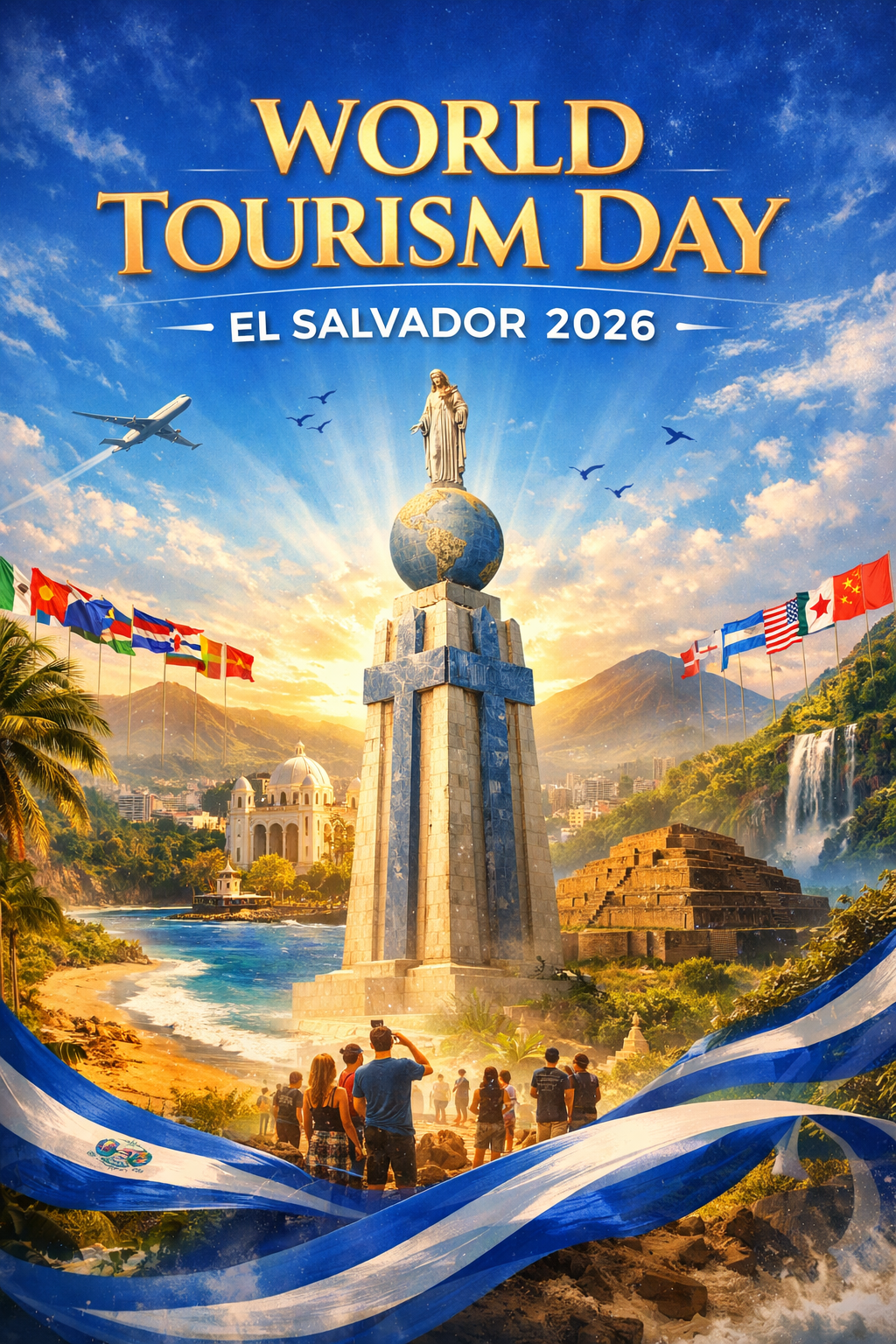
    According to Diario El Salvador, our country will host World Tourism Day for the first time in its history. The event is scheduled for the weekend of September 26 and 27, 2026, and will bring tourism ministers, international organizations, companies, innovators, and industry leaders to El Salvador.

    For a small country that was once spoken of mostly through conflict, danger, and limitation, this is more than a calendar event. This recognition marks an important shift for El Salvador. No longer standing on the outside of the global tourism conversation, the country is stepping forward with confidence and earning its place on the world stage.

    A Global Event With a Modern Theme

    World Tourism Day is not just another conference. It is one of the most important international gatherings connected to the future of travel, investment, culture, sustainability, and economic development.

    This time, the focus will be on artificial intelligence, digital transformation, and the future of tourism. That theme fits the moment we are living in. Around the world, technology is changing how people choose destinations, book travel, explore new places, and share their experiences.

    For El Salvador, this creates an opportunity to show not only our beaches, volcanoes, towns, food, and culture, but also the modernization taking place across the country.

    Tourism today is no longer only about beautiful views. It is also about safety, accessibility, digital tools, better services, stronger infrastructure, and experiences that make visitors feel welcomed from the moment they arrive.

    That is where El Salvador has been working hard to change its image.

    A Weekend That Will Bring the World to Our Shores

    Minister of Tourism Morena Valdez confirmed that El Salvador will host the event during the last weekend of September. International delegations are expected to participate in forums, conferences, investment discussions, and activities connected to the future of the tourism industry.

    These gatherings matter.

    Relationships begin at gatherings like these. Countries have an opportunity to present themselves to investors, new ideas can grow into real projects, and nations can demonstrate not only what they have accomplished, but also where they are headed.

    For El Salvador, the message is clear: we are open, we are changing, and we are ready to welcome the world.

    That matters not only for government officials or tourism companies. It matters for hotel owners, restaurant workers, tour guides, small businesses, artisans, transportation services, local communities, and families who depend on tourism income.

    When tourism grows in the right way, it reaches far beyond the beach. It reaches the small pupusería, the family-owned hostel, the guide who knows the history of a town, the farmer who sells fresh products, and the young person looking for work close to home.

    A Designation Earned on the Global Stage

    El Salvador’s selection was formalized during a handover ceremony in Malaysia, where the country was designated as host of World Tourism Day 2026. Ambassador Jaime José López Badía received the recognition on behalf of the government.

    That moment may have seemed ceremonial, but it carried real meaning.

    Diplomacy often works quietly. Much of it happens out of the public eye and out of the headlines. But those efforts can open doors that later bring investment, visibility, and international confidence.

    For El Salvador, receiving this designation on a global stage shows that the country’s tourism strategy is being noticed. It also shows that the world is willing to look at El Salvador differently than it did in the past.

    That difference matters.

    For many years, people outside the country often heard only one version of our story. Violence. Migration. Poverty. Instability. Those problems were real, and no one should pretend they did not exist. But they were never the whole story.

    El Salvador was always more than its struggles.

    It was always a country of strong families, hardworking people, natural beauty, deep culture, faith, resilience, and warmth. Now the world is beginning to see more of that truth.

    Tourism Built Around Families

    One important part of the government’s tourism strategy is the family-friendly approach. This is something I believe deserves attention.

    Tourism should not only be designed for luxury travelers or large investors. It should also serve families. It should create safe, clean, welcoming spaces where parents can bring their children, grandparents can enjoy the day, and visitors can feel comfortable exploring.

    That type of tourism helps build memories.

    IFamily-friendly tourism can be seen in simple moments: a child visiting a park for the first time, a family walking through the historic center, grandparents resting nearby while children play, or visitors spending a peaceful Sunday afternoon at the beach. These experiences show a country that feels alive, safe, welcoming, and full of possibility.

    For El Salvador, this is important because family is at the heart of the culture. If tourism grows while protecting that value, then it can become more than an industry. It can become part of national renewal.

    A Country Becoming a Benchmark

    The government has described this moment as part of El Salvador’s effort to become a benchmark in sustainable, innovative, and inclusive tourism.

    Those are important words, but they must also become real on the ground.

    Sustainable tourism means protecting the places that make El Salvador special. Our beaches, forests, volcanoes, rivers, historic towns, and protected areas must not be treated as disposable resources. They are part of the country’s identity.

    Innovative tourism means using technology wisely. Artificial intelligence and digital tools can help improve services, promote destinations, guide visitors, support small businesses, and make travel smoother. But technology should never replace the human warmth that makes El Salvador special.

    Inclusive tourism means that growth should reach ordinary Salvadorans. It should create opportunities not only in the most developed areas, but also in rural communities, small towns, and places that have waited a long time to be seen.

    That is the balance El Salvador must continue working toward.

    Growth is good. Recognition is good. Investment is good. But the true success of tourism will be measured by how much it improves the lives of the people who live here.

    A Moment to Reflect on How Far We Have Come

    There is something quietly powerful about seeing El Salvador step into this role.

    I have lived here long enough to remember when many people outside the country would never have imagined that El Salvador would host a global tourism event. Some would not even consider visiting. Others only knew the country through old headlines.

    But things have changed.

    Visitors are coming. Families are exploring. International events are arriving. The airport is growing. Beaches are gaining global attention. The historic center has new life. Roads, parks, and public spaces are being improved. More people are beginning to see the country with fresh eyes.

    That does not mean everything is perfect. No country is. There is always more work to do. Better infrastructure, stronger services, environmental protection, training, transparency, and long-term planning all matter.

    But progress should be recognized when it is real.

    And this moment is real.

    El Salvador Is Ready to Tell Its Own Story

    For decades, our story was often told by others. For too many years, El Salvador’s story was told from the outside, often without fairness, balance, or a real understanding of the people who live here, work here, raise families here, and love this land.

    Now El Salvador has a chance to tell its own story.

    World Tourism Day will bring ministers, companies, experts, and international organizations to our shores. It will bring conversations about artificial intelligence, investment, sustainability, innovation, and family-friendly tourism.

    But beyond the formal meetings, it will also bring something more personal.

    It will bring the world face to face with the Salvadoran people.

    That is where the real story lives.

    The real story is found in everyday moments: the smile of a vendor at the market, the cook preparing pupusas by hand, the fisherman heading out to sea, the farmer working the land, the hotel worker greeting guests, the guide sharing local history, the artist preserving culture, the student looking toward the future, and the family welcoming visitors with open arms.

    This event is about tourism, yes. But it is also about identity.

    It is about a nation that has passed through difficult years and is now standing taller. It is about a country that wants to be known not only for what it survived, but for what it is becoming.

    El Salvador is ready.

    And the world is coming.

    Gracias por acompañarnos en este camino.

    Seguimos adelante, juntos.

    — Our Life in El Salvador

    If you enjoy stories about El Salvador’s culture, development, tourism, and transformation, please consider liking, commenting, and sharing this article.

    And if you’re drawn to true-life stories that explore how experience shapes the soul — confronting reality, searching for meaning, and discovering the quiet spiritual guidance that helps us endure — you may find resonance in my memoir, Harmony of the Cosmos, available now on Amazon.

    https://www.amazon.com/s?k=Harmony+of+the+Cosmos+Hugh+Conway+Talley

    Consigue la edición en español en Amazon:
    https://www.amazon.com/dp/B0GXXK4FKX

  • Wishing Everyone a Happy and Safe Fourth of July 2026

    Wishing Everyone a Happy and Safe Fourth of July 2026

    Elizabeth and I want to wish everyone a very happy and safe Fourth of July.

    This year feels especially meaningful because 2026 marks America’s 250th birthday. That is hard for me to believe. I still remember the Bicentennial celebration back in 1976, when the United States turned 200 years old. Now, 50 years have passed, and I am 50 years older.

    Time has a way of moving faster the older we get. When I was young, a year felt like a long stretch of road. Now it seems we blink, and half the year is already behind us.

    Here we are, already halfway through 2026.

    For our family and friends in the United States, we hope this Fourth of July brings you a weekend filled with good food, laughter, family, and memories. We miss the cookouts, the fireworks, and those simple gatherings that made the holiday special. There is something about the smell of food on the grill, children running around, and fireworks lighting up the night sky that stays with you.

    We wish we could be there to celebrate with everyone, but we will have our own cookout here in El Salvador and spend the day with family. It may not be the same as being back in the States, but we will still take time to enjoy the day, remember the meaning of the holiday, and be thankful.

    Please be careful this weekend. Whether you are traveling, grilling, watching fireworks, or gathering with others, take your time and stay safe. Holidays are meant to be enjoyed, but they are always better when everyone makes it home safely.

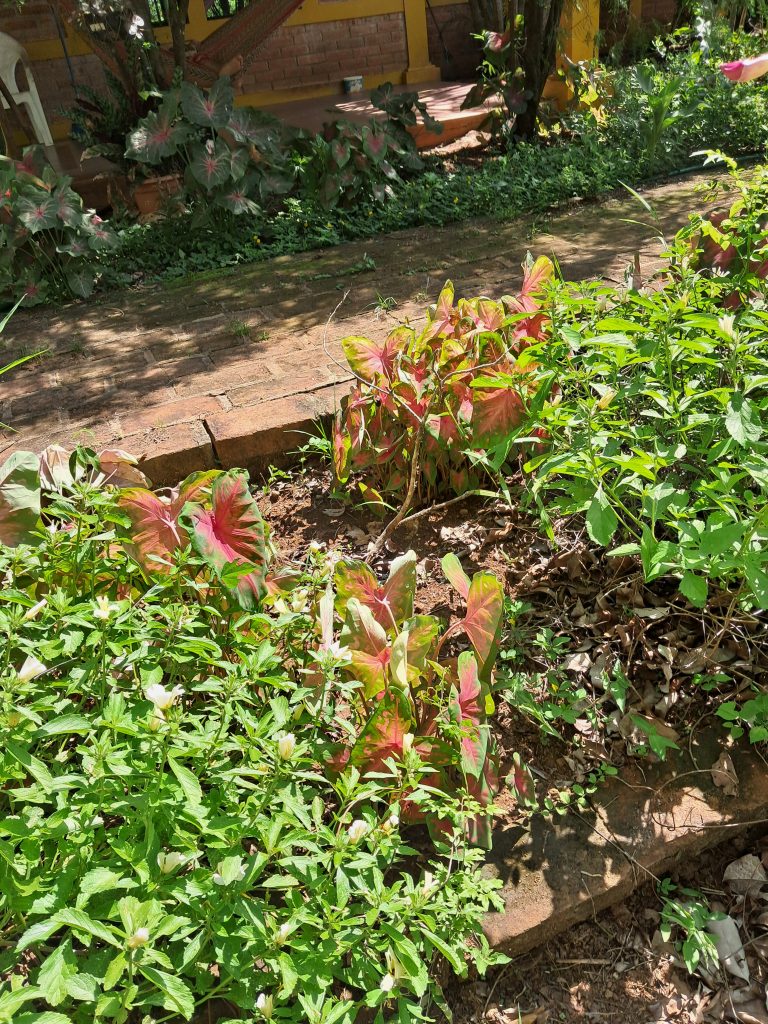
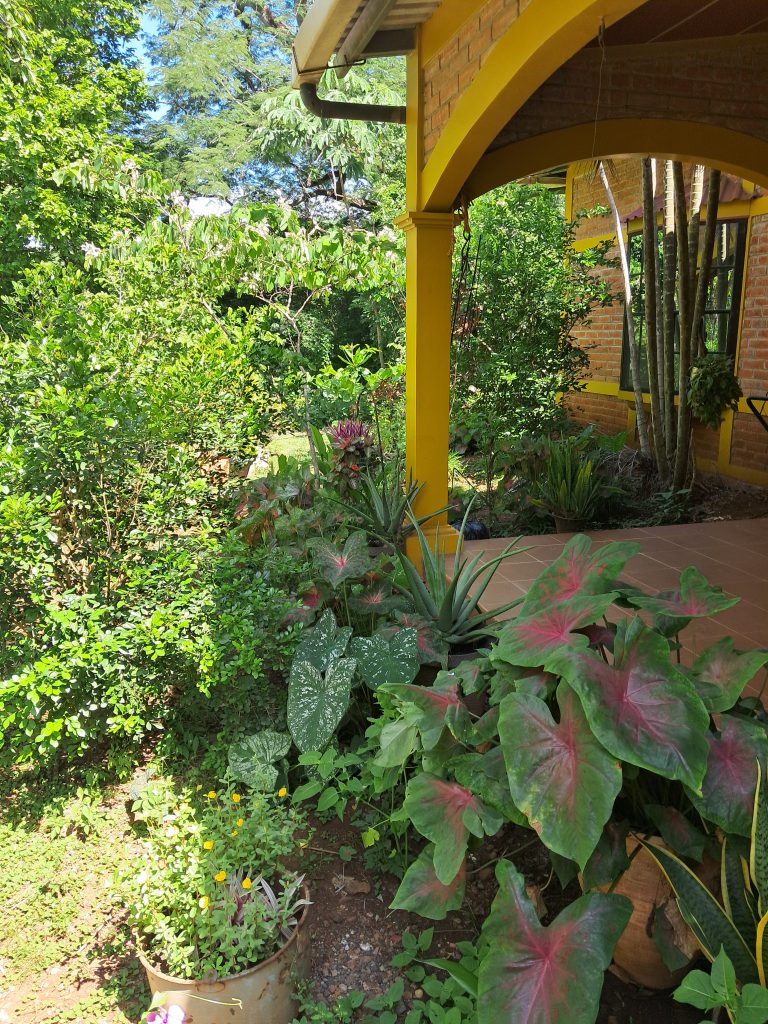
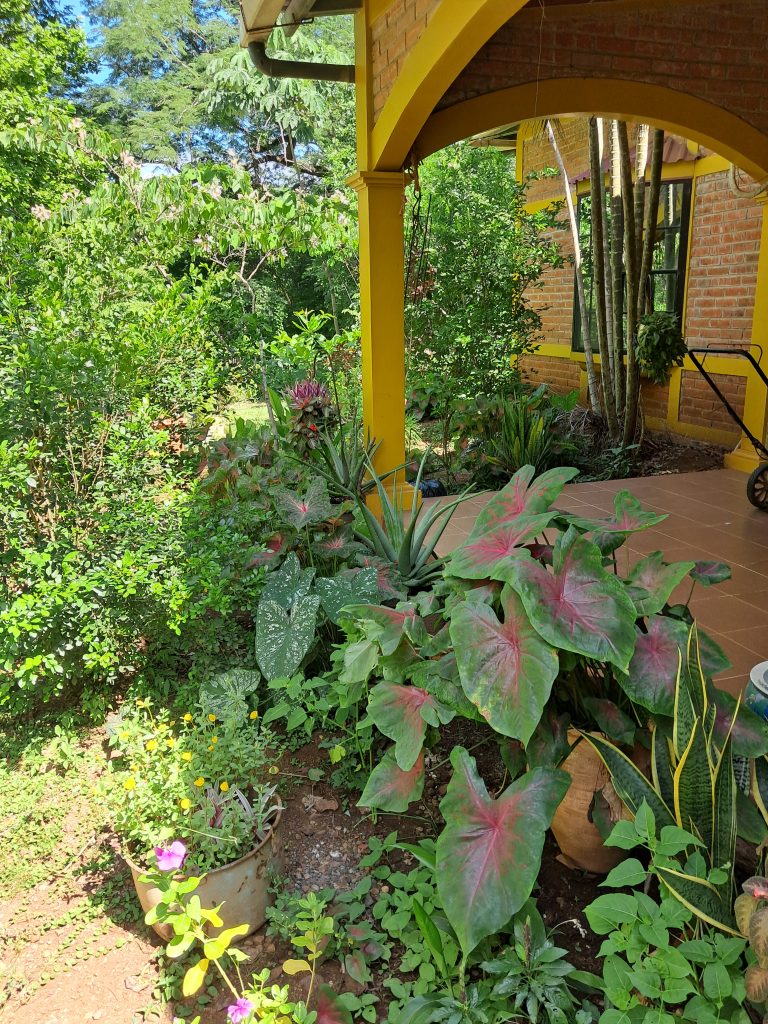
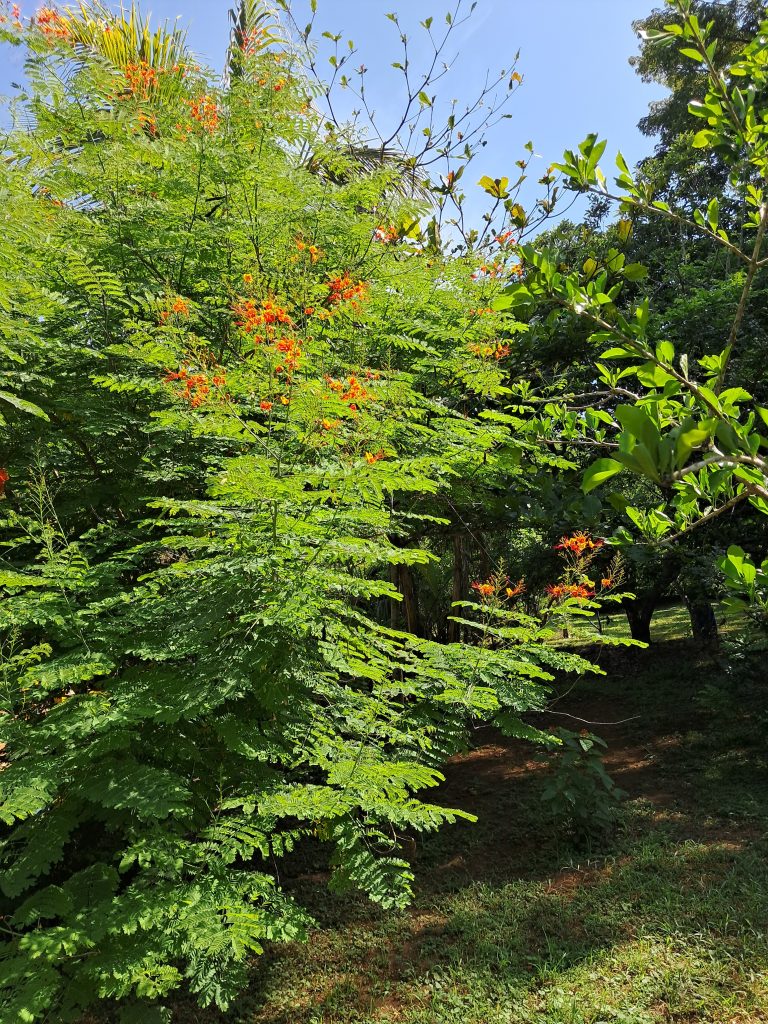
    Here in El Salvador, the rainy season started in June, and the land is coming back to life. The grass is green again, the flowers are blooming, and the plants around the house are full of color. It really is a beautiful time of year.

    Of course, all that beauty also means work.

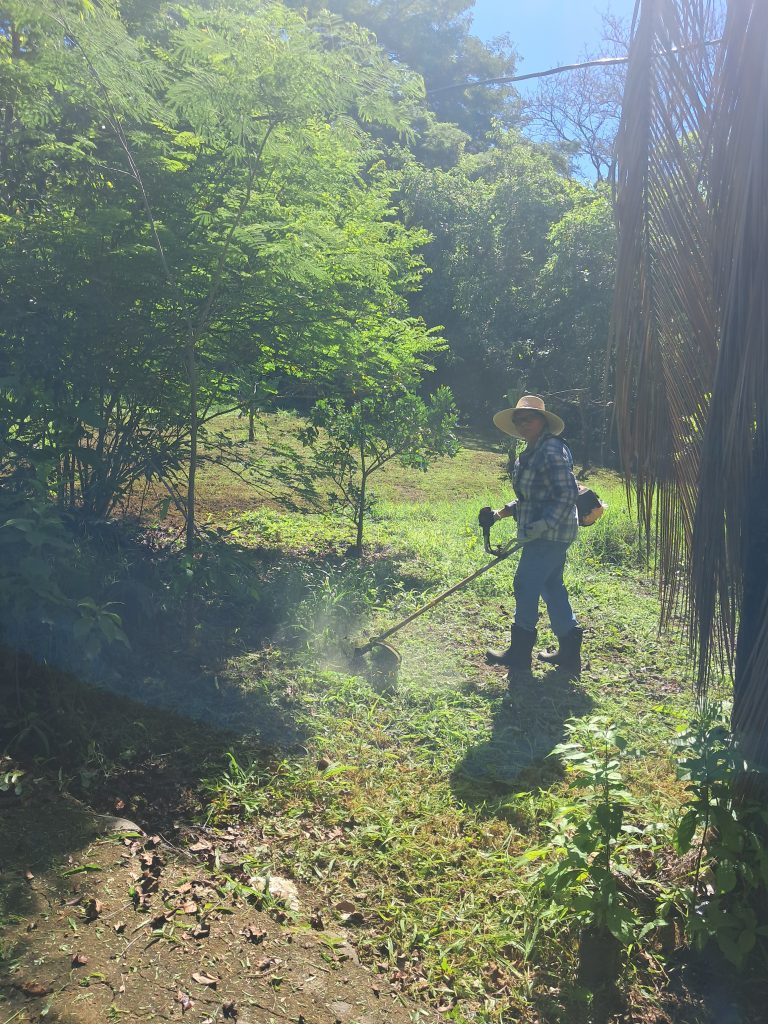
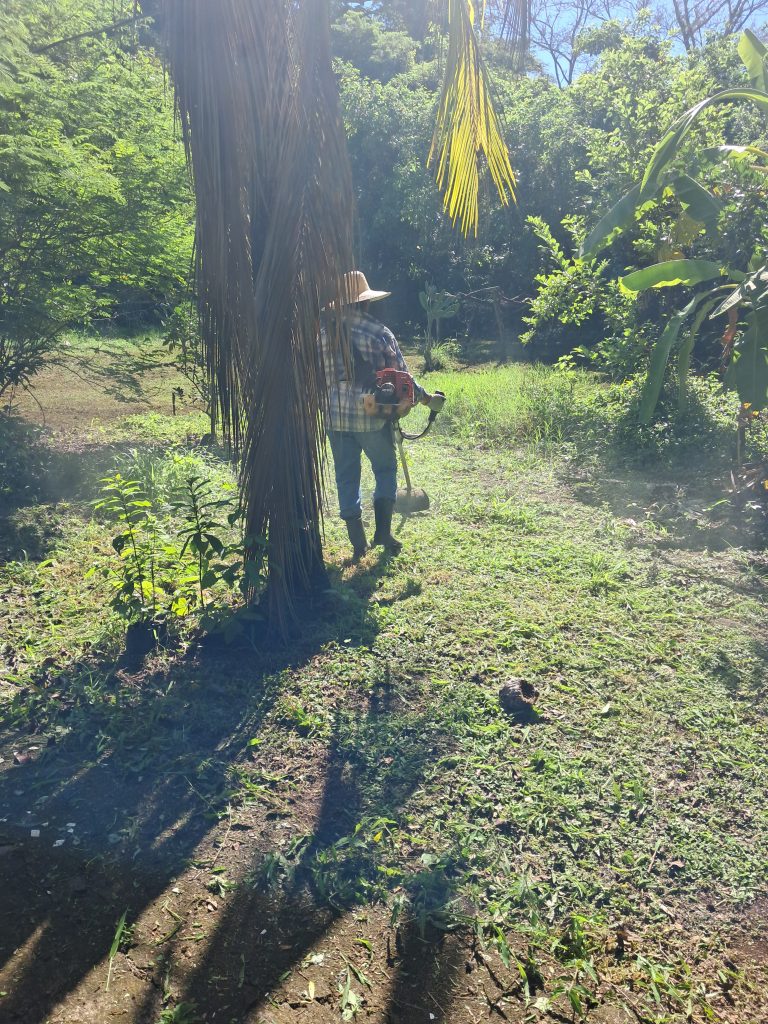
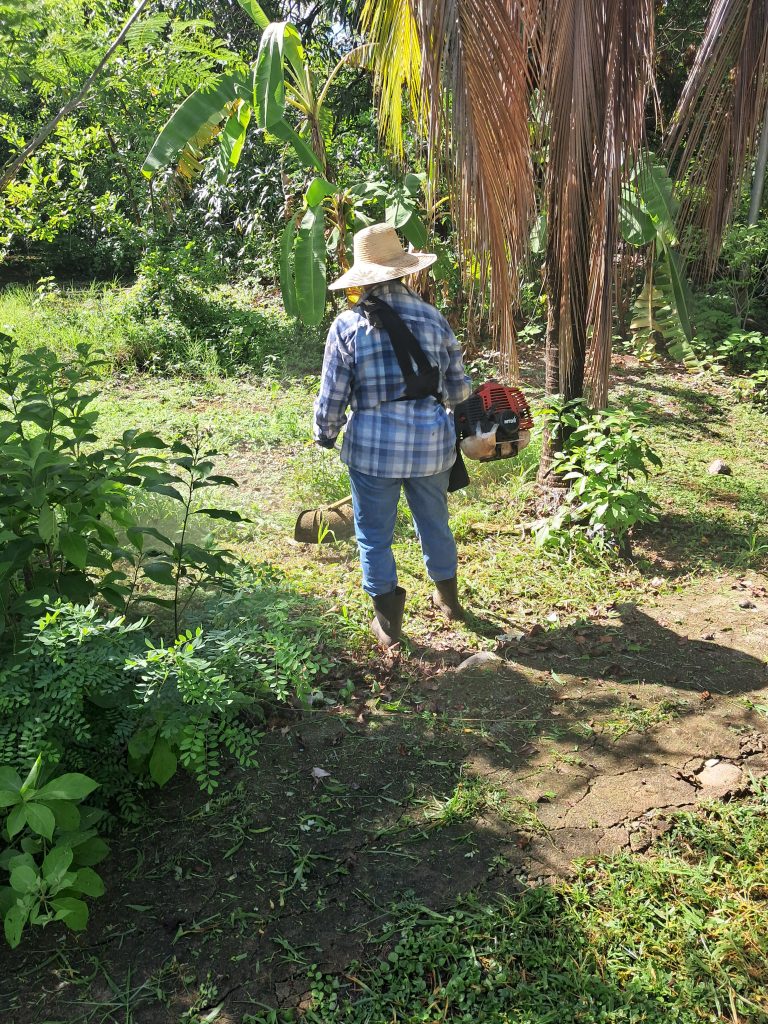
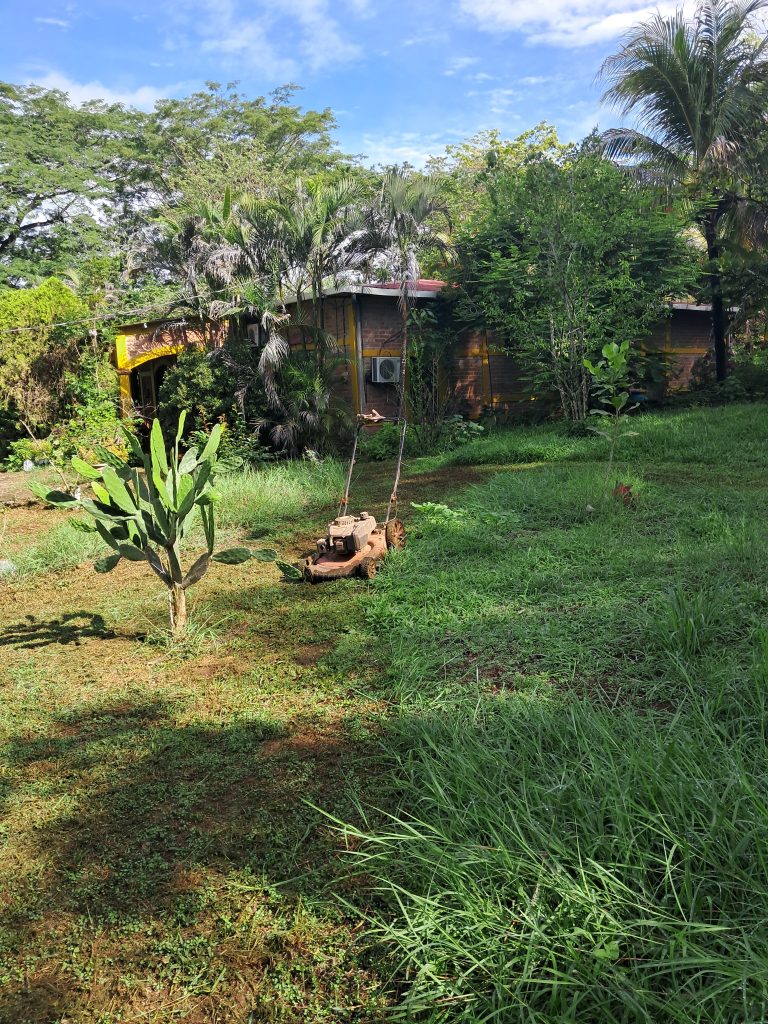
    The lawnmower and weed eater are back in action. We try to get outside early in the morning, just as the sun is coming up, and work for a couple of hours before the heat gets too strong. After 9 a.m., it can get very hot and humid, and that is when we know it is time to come back inside.

    Still, I enjoy seeing the yard looking good. There is something peaceful about working outside early in the morning, hearing the birds, feeling the day begin, and watching everything grow around us.

    Elizabeth and I are also planning some sightseeing trips soon. There are still so many places here in El Salvador we want to visit, enjoy, and share. This country continues to surprise me, even after all these years.

    At the same time, I am doing my best to keep up with the blog. There is always something happening here in El Salvador, and 2026 has been a very busy year for news, development, tourism, and change. I enjoy writing about it, even if some days it feels like there are not enough hours to cover everything.

    I am also working on my second book, and I hope to finish and publish it soon. This one is personal because it tells more of the story of my life in the United States and the path that eventually brought me here to El Salvador. It has taken time, but I believe the story is coming together.

    I have added a slideshow of Elizabeth and me working around the yard and getting things back in shape for the rainy season. It is nothing fancy, just part of our everyday life here. But sometimes those ordinary moments are the ones that mean the most.

    Once again, Elizabeth and I wish all our family, friends, and readers a happy Fourth of July.

    May your weekend be joyful, peaceful, and safe.

    Happy Fourth of July from our home in El Salvador.

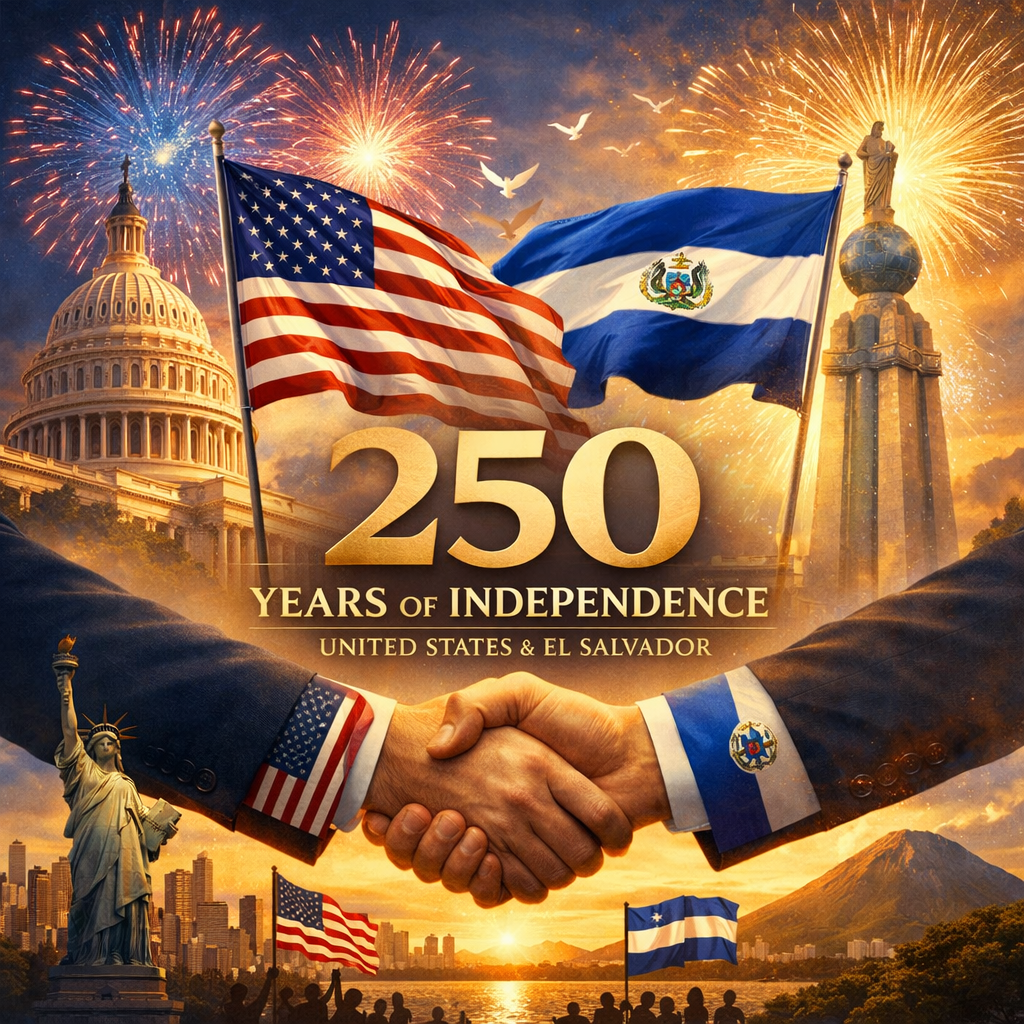
  • El Salvador Honors 250 Years of U.S. Independence With a Gesture of Friendship

    El Salvador Honors 250 Years of U.S. Independence With a Gesture of Friendship

    There are moments in diplomacy that do not require grand speeches to carry meaning.

    Sometimes a simple public gesture says enough.

    That is what happened when El Salvador’s Legislative Assembly issued an official pronouncement commemorating the 250th anniversary of the independence of the United States of America. The date, July 4, 2026, marks a historic milestone for the American people, but here in El Salvador, it also carries a deeper meaning because the relationship between these two countries is not only political. It is personal.

    For generations, El Salvador and the United States have been connected through migration, family, work, investment, security cooperation, education, and shared history. Many Salvadorans have relatives in the United States. Many families here depend on the hard work and sacrifices of loved ones who built new lives there. For that reason, the Fourth of July is not some distant foreign celebration. It touches homes, families, and communities across this country.

    A Gesture of Respect from the Legislative Assembly

    According to reports, the Legislative Assembly approved the pronouncement with the support of 60 deputies, reaffirming ties of friendship, cooperation, and mutual respect between El Salvador and the United States. The document highlighted cooperation in areas such as trade, investment, security, education, technology, and cultural exchange.

    That is important.

    At a time when the world often feels divided, it matters when one nation pauses to recognize the history and importance of another. The Assembly’s message was not only about honoring an anniversary. It was also about recognizing a relationship that has shaped both countries in many ways.

    The pronouncement described the United States as a nation whose founding principles of freedom, democratic representation, and respect for fundamental rights have influenced people beyond its own borders. It also recognized the role the United States has played in economic, political, and technological development internationally.

    For El Salvador, this gesture reflects respect, but also reality. The two nations are deeply connected.

    The Human Side of Diplomacy

    When we talk about international relations, it is easy to use big words: trade, security, investment, migration, cooperation, development.

    Those words matter, but they do not tell the whole story.

    The real relationship between El Salvador and the United States can be seen in families. It can be seen in a mother in El Salvador waiting for a call from her son in Los Angeles, and It can be seen in remittances sent home after long days of work. It can be seen in Salvadoran communities that carry their culture, food, faith, and family values into American cities while still keeping their hearts tied to this land.

    The Legislative Assembly recognized the Salvadoran diaspora as one of the strongest bridges between the two nations. That is exactly right. Salvadorans living in the United States have contributed to the economy and social fabric of both countries, while also keeping alive a connection that no border can erase.

    That human bridge may be the most powerful part of the relationship.

    Governments change. Policies change. Political winds shift. But families remain connected. Culture remains connected. History remains connected.

    Why the Fourth of July Matters Here

    The Fourth of July is an American holiday, but the values behind it are not limited to the United States.

    Freedom, self-determination, resilience, and the desire to build a better future are ideas that people everywhere understand. Salvadorans understand them very well.

    This is a country that has lived through hardship. It has known conflict, migration, insecurity, poverty, and uncertainty. It has also known courage, faith, family strength, and the determination to keep moving forward.

    That is why this anniversary can resonate here. It reminds us that nations are not built in one day. They are built through struggle, sacrifice, mistakes, correction, and hope. They are built by people who believe tomorrow can be better than yesterday.

    The United States began its journey 250 years ago with the Declaration of Independence. El Salvador has its own history, its own struggles, and its own path. But both nations understand that independence is not only a date on a calendar. It is a responsibility carried from one generation to the next.

    A Relationship That Continues to Evolve

    The relationship between El Salvador and the United States is not frozen in the past. It continues to evolve.

    Today, both countries work together in areas that affect daily life: economic development, investment, security, technology, education, and regional stability. The Assembly’s pronouncement stated that the relationship is based on mutual respect, democratic values, the rule of law, and shared interests.

    That does not mean everything is simple. No relationship between nations ever is.

    There are difficult issues, especially around migration, TPS, security, and economic opportunity. But strong relationships are not built by avoiding difficult conversations. They are built by maintaining respect while working through them.

    The U.S. Embassy in El Salvador has also been commemorating the 250th anniversary through its Freedom 250 initiative, including cultural, educational, and public diplomacy activities designed to highlight democracy, innovation, and exchange between both countries.

    That matters because diplomacy should not live only in government buildings. It should also reach students, artists, business leaders, communities, and ordinary people.

    More Than Politics

    As an American living in El Salvador, I see this relationship from both sides.

    I was born and raised in the United States. I served in the U.S. Army. I worked, raised a family, and lived most of my life there before retiring to El Salvador with my wife. Now this country is my home.

    So when I see El Salvador honoring 250 years of American independence, I do not see it only as a political act. I see it as a gesture between two countries that have both shaped my life.

    The United States gave me my beginning. El Salvador gave me a new chapter.

    That is why this moment feels meaningful.

    It reminds me that nations are not just governments. They are people, and families. They are memories and are the places that shape us and the relationships that help carry us forward.

    A Moment to Reflect on Freedom

    The Fourth of July is a celebration, but it should also be a moment of reflection.

    Freedom is not something to take lightly. It must be protected, respected, and renewed. It needs to include responsibility, fairness, opportunity, and dignity, and mean something not only in speeches, but in the daily lives of people.

    For Salvadorans, this anniversary can also be a reminder of their own journey. El Salvador is changing. It is rebuilding confidence, attracting attention, strengthening security, and looking for a larger role in the region and the world.

    That path will require wisdom. It will require balance. It will require strong institutions, honest effort, and respect for the people who call this country home.

    Freedom is not only about where a nation has been. It is also about where it chooses to go.

    A Tribute from El Salvador

    By commemorating the 250th anniversary of U.S. independence, El Salvador offered a gesture of friendship rooted in history, strengthened by migration, and carried forward through cooperation.

    It was a reminder that the relationship between these two nations is not only written in agreements and official documents. It is written in the lives of people who move between both worlds, who send money home, who build families, who open businesses, who study, who work, and who dream.

    On this Fourth of July, El Salvador joins the United States in recognizing freedom, resilience, and the enduring hope that tomorrow can be better.

    Que esta celebración nos recuerde que la libertad es un camino compartido.

    May our nations continue walking it together—with dignity, respect, and hope.

    If you enjoy stories about El Salvador’s culture, development, tourism, and transformation, please consider liking, commenting, and sharing this article.

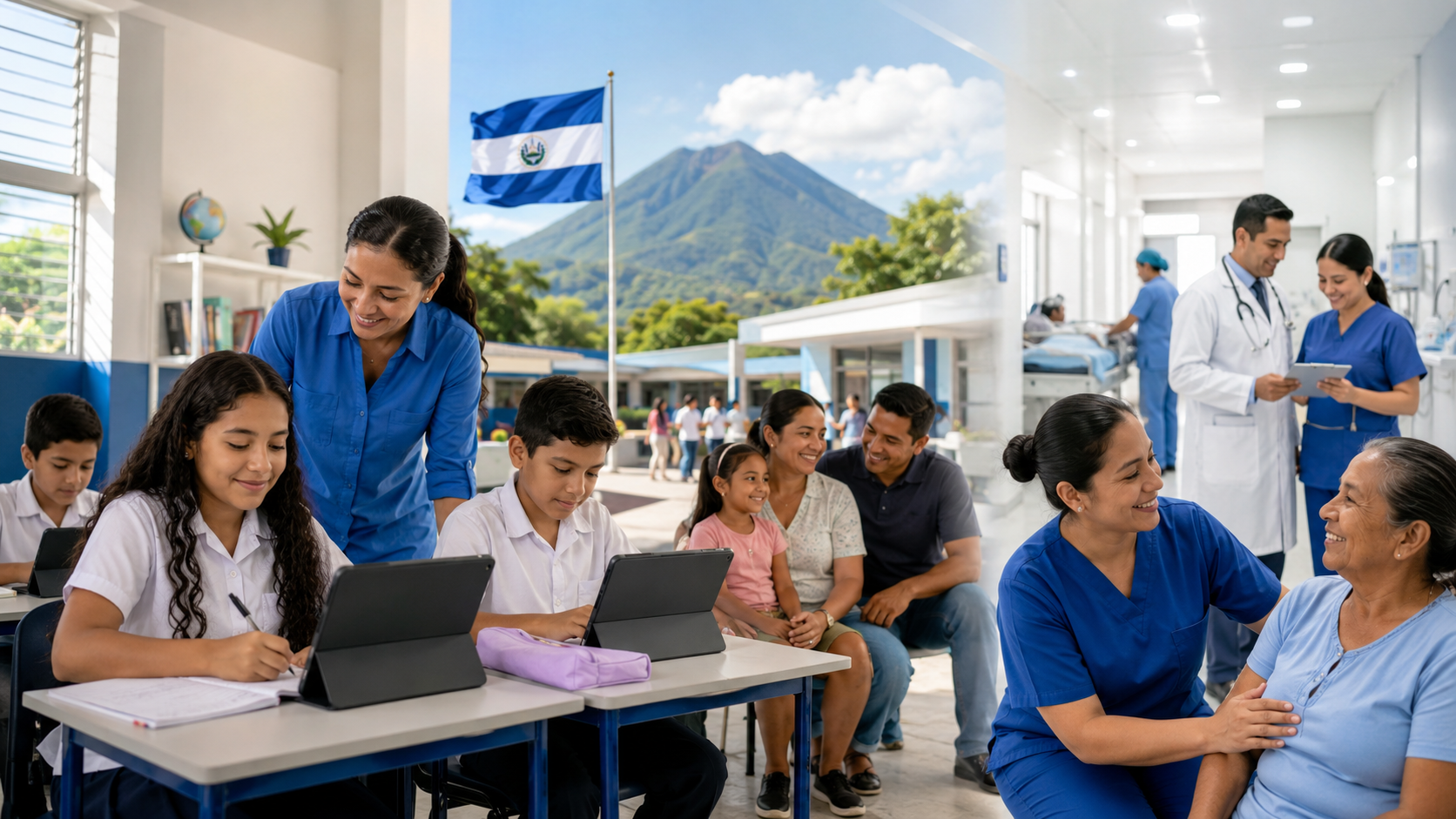
  • Salvadorans See Progress in Education and Health Under GOES

    Salvadorans See Progress in Education and Health Under GOES

    El Salvador education and health improvements are becoming part of the national conversation as many families report seeing changes in schools, clinics, and hospitals.

    A new public opinion survey is giving a clear look at how many Salvadorans feel about two areas that touch daily life more than almost anything else: education and health.

    According to the latest Iudop/UCA evaluation of President Nayib Bukele’s seventh year in office, 80.4% of respondents said public education has improved, while 59.5% said the quality of attention in the public health system is better. The survey was carried out from May 15 to May 26, 2026, through 1,271 in-person interviews across the country, with a 95% confidence level and a margin of error of ±2.75%.

    These numbers matter because they reflect more than politics. They show how families are experiencing services in their own communities — the school their children attend, the clinic they visit, and the public institutions they depend on.

    Education Stands Out

    The strongest public response came in the education sector. In the survey, 80.4% of Salvadorans said the quality of public education has improved during this period, while 9.8% said it has worsened and 8.1% said it remains the same.

    That is a significant response, especially in a country where public schools have faced years of challenges. For many families, education is not an abstract government program.For many families, education is deeply personal. It begins in the classroom where a child learns to read, but it also includes the school building itself, the materials students receive, the uniforms they wear, the technology they use, and the safer environment that helps them learn with confidence.

    Across El Salvador, school renovations, student support programs, and new technology have become part of the national conversation. These efforts are visible, and when people can see change with their own eyes, it shapes how they judge progress.

    For parents, small things can make a large difference. A backpack, a uniform, learning materials, or a better-equipped classroom can reduce pressure on the household. It can also give children a stronger sense of dignity when they walk through the school gate.

    Health Care and Daily Experience

    The health sector also received a favorable response, though not as high as education. According to the survey, 59.5% of respondents said the quality of attention in the public health system is better, while 24.2% said it is worse and 13.5% said it remains unchanged.

    Health care is one of the most sensitive areas of public life. People judge it not only by buildings or announcements, but by what happens when they need help. Was the patient attended to? Was the wait reasonable? Were services organized? Did the family feel respected?

    In that sense, perception becomes important. It does not replace a technical audit or a full review of hospital resources, medicine supply, staffing, or long-term outcomes. But it does show whether people feel a difference when they seek care.

    Digital health initiatives are also becoming part of this conversation. The survey asked about DoctorSV, including its second phase focused on patients with chronic illnesses. On that question, 46.6% said the program responds “mucho” to the needs of people with chronic conditions, while 18.6% said “algo.”

    For patients dealing with diabetes, hypertension, kidney problems, or other long-term conditions, better follow-up can mean less uncertainty. Families do not want health care only when there is an emergency. They need guidance, organization, and access before a situation becomes critical.

    Perception Is Not the Whole Story — But It Matters

    It is important to be fair about what a survey can and cannot tell us.

    Public opinion is not the same as a medical report, school performance review, or budget analysis. It does not answer every question about cost, staffing, equipment, medicine availability, or long-term results.

    But perception is still a social indicator. When people say education and health are moving in a better direction, they are speaking from lived experience. They are responding to what they see, hear, and feel in their communities.

    That matters.

    A government can publish plans and numbers, but families measure progress differently. Families recognize progress in practical ways: when their child receives better support at school, when a clinic visit feels more organized, when a hospital provides more attentive care, and when public services begin to feel closer, more modern, and more reliable.

    A Country Watching Its Own Transformation

    El Salvador continues to move through a period of big change. Some of that change is debated, and Some are celebrated. Some still need more explanation, more transparency, and more time to prove their lasting value.

    But surveys like this help capture the national mood. They show where people believe progress is happening and where expectations remain high.

    In education, the public response is especially strong. In health, the numbers also show a majority seeing positive movement, while reminding us that many people still believe more work is needed.

    That balance is important. Progress should be recognized, but public services must always continue improving. Schools need constant investment. Hospitals need resources. Digital tools must be reliable and accessible. Families need to feel that the system works not only in announcements, but in daily life.

    A Positive Sign for Salvadoran Families

    For me, the most important part of this survey is not just the percentage. It is what those numbers represent.

    They represent parents who feel their children have better opportunities, and patients who sense changes in public health care. They represent communities watching their country move in a new direction.

    Education and health are two of the foundations of any nation. When people begin to feel progress in those areas, it strengthens confidence in the future.

    El Salvador still has challenges. No serious person would deny that. But when a majority of Salvadorans say they are seeing gains in schools and health services, that is worth paying attention to.

    It shows that the transformation of the country is not only being discussed in government offices or newspaper headlines.

    It is being noticed by the people who live it every day.

    A Personal Note on Health Care

    I have to be honest: the 59.5% number on health care surprised me.

    I do not know exactly who was surveyed, but I live here, and I have used the public health system myself. In 2016, I had heart surgery in a hospital in San Salvador. That operation saved my life. At that time, the hospital building and conditions were in very bad shape, but the doctors were outstanding. They worked with skill, dedication, and compassion, even when the system around them clearly needed improvement.

    That is why the changes in health care under President Bukele stand out so strongly to me. Anyone who remembers how things looked before and sees what is happening now can recognize that the country has made major progress. Hospitals have been renovated, new facilities have opened, technology has improved, and public health has become a much greater national priority.

    This does not mean every problem has disappeared. No health system is perfect, and there will always be patients who experience delays, shortages, or frustration. But from my own experience living here, the difference between then and now is dramatic.

    For me, this is not just a statistic. It is personal. I saw the old system up close, and I am seeing the new investments with my own eyes. That is why I believe the progress in health care deserves more recognition than that number alone may suggest.

    If you enjoy stories about El Salvador’s culture, development, tourism, and transformation, please consider liking, commenting, and sharing this article.
  • El Salvador Tracks the Tortuga Prieta by Satellite

    El Salvador Tracks the Tortuga Prieta by Satellite

    How science, mangroves, and local communities are helping protect one of the country’s endangered sea turtles

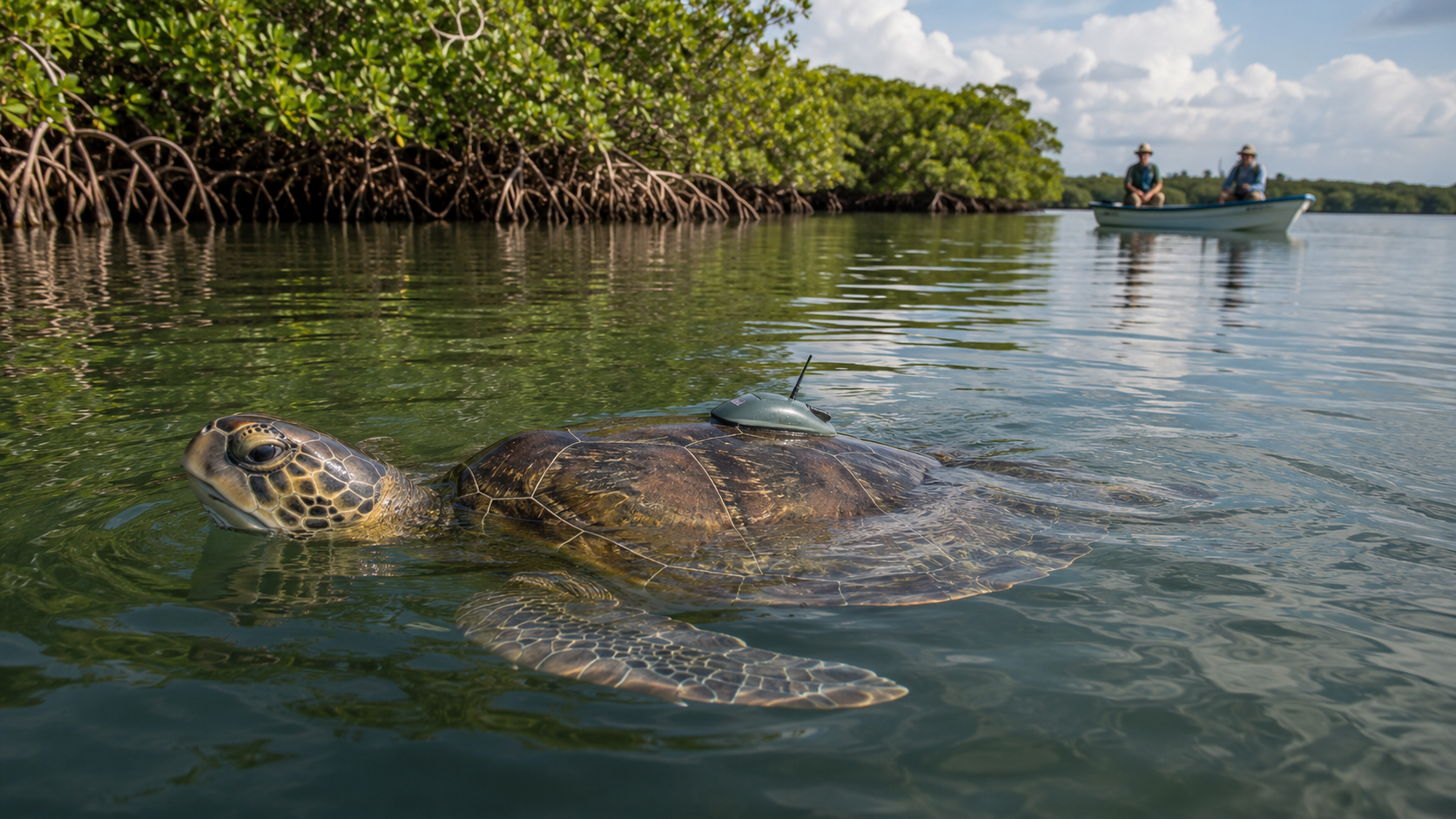
    In Bahía de Jiquilisco, the movement of one endangered sea turtle is helping El Salvador see its coastline in a new way. Through a pioneering satellite tagging program, the tortuga prieta, or black turtle, is beginning to reveal a journey that has long taken place beyond human view. According to a recent report in Diario El Salvador, this effort allows scientists and conservation groups to follow the turtle’s movements in real time, opening a clearer window into how this species lives, feeds, and travels through Salvadoran waters.

    For a country with a small coastline, this is a significant step. It shows that El Salvador’s beaches, mangroves, and wetlands are not only places of beauty and daily life. They are also living laboratories, where science, community, and conservation are beginning to work together in a deeper way.

    A New Chapter for the Tortuga Prieta

    The initiative is being carried out by Fundación Naturaleza El Salvador, FIAES, Red Xiuhtic, and the Ministry of Environment and Natural Resources, known as MARN.

    Their focus is the tortuga prieta, a Pacific population of the green sea turtle. In El Salvador, this species is considered endangered, and much of its life remains difficult to study because it spends most of its time in the ocean.

    Only females come ashore to nest, and even that happens during limited periods. For the rest of their lives, these turtles move through waters most people never see. They feed, rest, travel, and survive in places that have often remained invisible to science.

    That is why satellite tagging matters.

    Until now, much of the country’s satellite research on marine turtles had focused on the critically endangered hawksbill turtle, known in El Salvador as the tortuga carey. Expanding this technology to the tortuga prieta opens a new window into how another important species uses Salvadoran waters and the wider Pacific.

    This is not just a technical project. It is a milestone for marine conservation in El Salvador.

    Why Bahía de Jiquilisco Matters

    Bahía de Jiquilisco is one of El Salvador’s most important coastal ecosystems. It is a Ramsar wetland recognized internationally for its ecological value and contains a rich mix of mangroves, channels, seagrass beds, reefs, beaches, and coastal communities.

    For the tortuga prieta, this area offers more than a place to pass through. It provides food, shelter, resting zones, and nesting areas. The same mangroves that protect coastlines and support fish populations also help sustain endangered wildlife.

    This is one reason the satellite project is so important. It reminds us that conservation cannot be limited to one beach, one nesting season, or one species. A sea turtle’s life connects many habitats. If one part of that chain is damaged, the whole system suffers.

    Protecting the tortuga prieta also means protecting mangroves, seagrass beds, coastal waters, and the communities that depend on them.

    How Satellite Tagging Works

    The project uses small satellite transmitters attached to the turtle’s shell. These devices are placed carefully on the carapace using materials designed to hold in saltwater without harming the animal.

    When the turtle surfaces or the equipment contacts water, the transmitter sends signals through a satellite tracking system. Over time, those signals create a map of the turtle’s movements.

    Researchers can begin to understand where the turtles travel, where they feed, how they use the mangroves, and what areas may need stronger protection.

    The technology used in the program includes SPOT satellite transmitters and the Argos tracking system. These tools allow conservation teams to receive valuable location data and study behavior that would otherwise remain hidden.

    The most important part is that this work follows scientific and animal-welfare protocols. During the training process, participants learned how to prepare, attach, and monitor the devices in a way that protects the health and natural behavior of the turtles.

    Science must never come at the expense of the animal it is trying to protect. This project recognizes that balance.

    Training Local Hands for Long-Term Conservation

    One of the most encouraging parts of this initiative is the local participation behind it.

    The training in Bahía de Jiquilisco brought together biologists, veterinarians, field technicians, community leaders, and organizations connected to marine turtle conservation. Many of these people already work close to the beaches, mangroves, and coastal communities where turtles nest or feed.

    That matters.

    Conservation is strongest when local people are not treated as outsiders to the science, but as partners in it. The people who live near the mangroves, patrol the beaches, protect nesting sites, and understand the rhythm of the coast carry knowledge that cannot be replaced by technology alone.

    Satellite transmitters provide data. Communities provide presence, memory, care, and daily commitment.

    When both come together, conservation becomes more complete.

    What the First Turtles Are Teaching Us

    The first phase of the project has already tagged four tortugas prietas. The broader study plans to monitor up to eight individuals, giving researchers a better understanding of how this species uses the Salvadoran coast.

    Early information has revealed a fascinating pattern. When the tide rises, the turtles enter the mangrove areas. When the water level drops, they return toward the open ocean.

    That detail may sound simple, but it carries a powerful message. It shows that the tortuga prieta is not only tied to beaches or open water. It also depends on the mangrove forest.

    This finding strengthens what conservationists have been saying for years: mangroves are not empty swamps or wasted land. They are nurseries, feeding grounds, natural barriers, and wildlife corridors. They protect life in ways that are not always visible from the road or the shoreline.

    For the black turtle, the mangroves of Bahía de Jiquilisco may be part of a daily survival pattern.

    From Turtle Signals to Better Decisions

    Every signal sent by a tagged turtle becomes more than a point on a map. It becomes information that can guide decisions.

    This data can help researchers and government institutions identify key feeding areas, resting zones, travel routes, and habitats that need protection. It can also support environmental education programs in nearby communities.

    That is where science becomes practical.

    A map can help shape a conservation plan. A movement pattern can help protect a feeding area. A better understanding of habitat use can guide local outreach, fishing practices, school programs, and regional cooperation.

    El Salvador is part of the Eastern Pacific, a region where marine species do not stop at national borders. A turtle that feeds in Salvadoran waters may later travel far beyond them. This makes cooperation with neighboring countries and international conservation networks even more important.

    The tortuga prieta belongs to the ocean, but El Salvador has a responsibility for the time it spends along our coast.

    A Broader Way to See the Salvadoran Coast

    This project also invites us to look at El Salvador differently.

    When people think of national progress, they often think of highways, airports, tourism, security, exports, or investment. Those things matter. But progress is also found in the protection of ecosystems that future generations will inherit.

    A country’s future is not only built in concrete. It is also shaped by wetlands, forests, rivers, reefs, and coastlines.

    Bahía de Jiquilisco is not just a scenic place on a map. It is a living system where turtles, fish, birds, mangroves, fishermen, researchers, and local families are connected.

    The same coast that supports livelihoods can also support science. The beach that welcomes visitors can also protect a nesting turtle. The same mangrove channel that looks quiet from a distance may be carrying the story of a species that has traveled the Pacific for generations.

    Why This Story Matters

    In a world where so many environmental stories feel discouraging, this one offers something different.

    It offers hope with discipline behind it.

    Hope, because El Salvador is taking steps to better understand and protect an endangered species. Discipline, because this work depends on data, training, cooperation, and long-term commitment.

    The tortuga prieta cannot speak for itself in meetings or policy discussions. But through satellite tagging, its movements begin to tell a story. They show where it goes, what it uses, and what it needs.

    That information gives the turtle a kind of voice.

    It also gives the country a responsibility to listen.

    Looking Ahead

    The satellite tagging of the tortuga prieta is still in its early stages, but its direction is promising.

    As more data is collected, El Salvador will have a clearer picture of how this species uses its coastal waters. That knowledge can strengthen national conservation programs, support local education, and help protect habitats that are easy to overlook.

    This work also builds on the country’s experience with hawksbill turtle conservation, helping create a broader understanding of how different marine turtles depend on Salvadoran ecosystems.

    That is important because no species exists alone. The health of the tortuga prieta is connected to the health of the mangroves, the water, the seagrass, the beaches, and the people living nearby.

    Final Reflection

    The story unfolding in Bahía de Jiquilisco may seem quiet compared with the headlines that usually dominate the day. But it is not small.

    Each tagged turtle is a traveler, a teacher, and a reminder that El Salvador’s natural heritage extends far beyond what we see from land.

    For most of its life, the tortuga prieta moves beyond human view. Now, with the help of science and community effort, we are beginning to follow its path and understand its needs.

    That matters.

    Because conservation begins with knowledge. It grows through cooperation. And it becomes real when a country decides that even the quietest lives along its coast are worth protecting.

    En nuestras costas, la ciencia y la comunidad se están encontrando.

    And in that meeting, the tortuga prieta finally has a voice.

    If you enjoy stories about El Salvador’s culture, development, tourism, history, and transformation, please consider liking, commenting, and sharing this article.
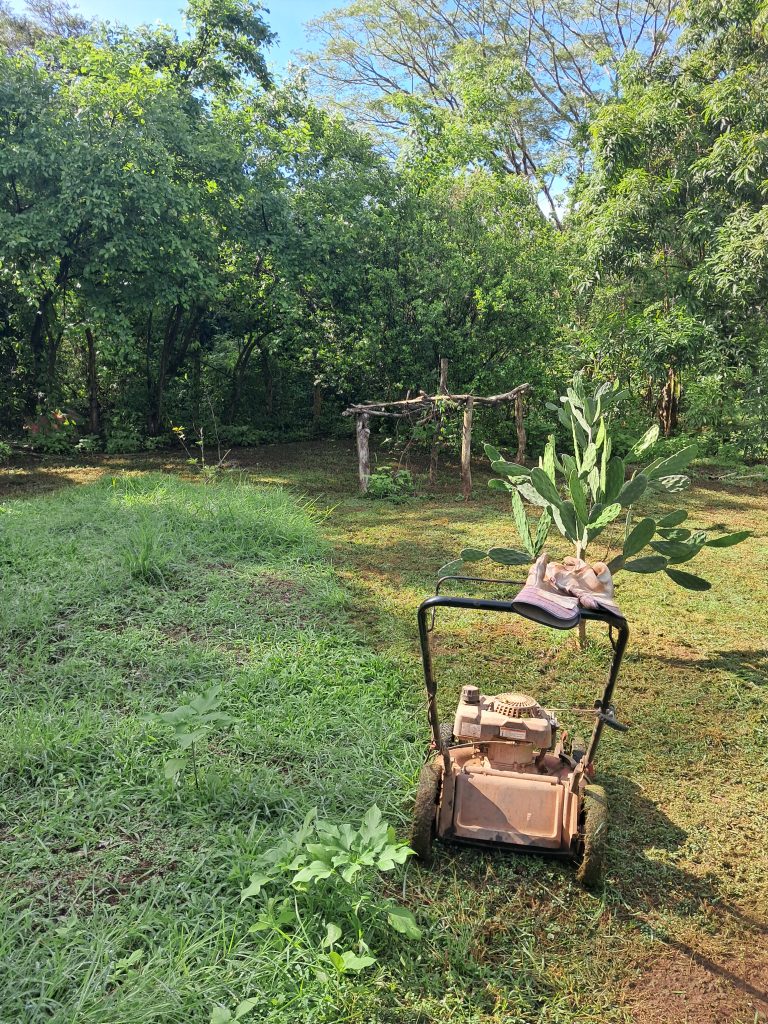
    Harmony of the Cosmos

    My book Harmony of the Cosmos shares the deeper story of my life — from childhood through adulthood, with the memories, lessons, losses, spiritual reflections, and quiet guidance that shaped the person I became.

    It is a personal memoir about life’s unexpected turns and the unseen ways our path often comes together over time.

    The book is available on Amazon in English and Spanish.

    Read more or order your copy on Amazon.

  • El Salvador’s Economy Grew 4.8% in Early 2026: A Quarter That Redefined Momentum.

    El Salvador’s Economy Grew 4.8% in Early 2026: A Quarter That Redefined Momentum.

    El Salvador began 2026 with a figure that deserves attention: the economy grew by 4.8% in the first quarter of the year.

    For a country that spent many years moving at a slower pace, this figure stands out. It is not just another economic statistic. It suggests that something broader is happening across the country — in construction, tourism, trade, public investment, household income, and the everyday confidence people feel when they decide to build, spend, visit, invest, or open a small business.

    For those of us living here, this growth does not feel distant. You can see it in the roads, markets, airports, coastal towns, construction sites, and the steady movement of people and goods.

    Numbers matter, but in El Salvador, economic change is often felt before it is fully understood.

    A Quarter That Broke the Pattern

    According to the Banco Central de Reserva, El Salvador’s economy grew 4.8% in the first quarter of 2026.

    That is a strong result by recent historical standards, especially since the growth was not limited to a single area. Seventeen of nineteen productive activities expanded, representing more than 80% of the economy.

    That detail is important.

    When only one sector grows, the result can be fragile. A tourism boom, a construction wave, or a temporary rise in exports can lift the numbers for a while, but the foundation may remain narrow. This quarter looked different. The expansion was spread across several areas, suggesting a more balanced form of momentum.

    That does not mean every family feels the benefit equally. It does mean the economy is moving through more than one channel at the same time.

    Construction Leads the Way

    The standout sector was construction, which grew by 13.5%.

    This is not hard to believe when you drive through different parts of the country. New housing projects are rising. Roads are being repaired or expanded. Commercial spaces are taking shape. Logistics centers, public works, and infrastructure projects are changing the physical landscape.

    Construction matters because it does more than produce buildings. It creates jobs, moves materials, supports transportation, generates demand for hardware stores, and gives people visible proof that investment is happening.

    New roads can shorten a commute.

    A repaired school can improve daily life for students.

    Housing projects can create work for masons, electricians, drivers, suppliers, and small food vendors in the area.

    An airport or logistics investment can affect trade far beyond the project itself.

    This is why construction often becomes one of the clearest signs of economic confidence. People do not build when they expect things to stand still. They build when they believe tomorrow may be stronger than yesterday.

    Private and Public Investment Are Moving Together

    The BCR attributed the construction surge to both private and public investment.

    Private investment has been visible in housing, commercial development, and logistics projects. Public investment has focused on roads, schools, airports, and other infrastructure meant to support long-term growth.

    That combination matters.

    Private investment shows confidence from businesses, developers, and families. Public investment lays the foundation for more activity later. When the two move together, the effects can spread through the wider economy.

    A country cannot grow only through announcements. It needs roads that work, schools that function, airports that move passengers efficiently, ports that support exporters, and communities where businesses can operate with less uncertainty.

    El Salvador still faces challenges, but this quarter shows that investment is becoming one of the main drivers of the country’s economic growth.

    Logistics and Trade Gain Strength

    Another important part of the story is logistics.

    El Salvador’s location gives it natural advantages, but geography alone is not enough. Goods need ports, customs systems, roads, airports, warehouses, and reliable transport. When those systems improve, exporters and importers feel the difference.

    Recent investments at the San Óscar Arnulfo Romero International Airport and the Port of Acajutla are part of that bigger picture. They support the movement of goods, reduce bottlenecks, and help El Salvador position itself as a more serious logistics hub in the region.

    Exports also grew, supported by industrial products, traditional goods, and services.

    For a small country, export growth is important because it connects local production to foreign markets. It means Salvadoran products are competing abroad. It also supports jobs in manufacturing, agriculture, transportation, packaging, and services tied to trade.

    When exports rise, the benefits are not limited to large companies. Small suppliers, drivers, warehouse workers, farmers, and service providers can all become part of the chain.

    Tourism Continues to Reshape the Country

    Tourism remains one of the most visible parts of El Salvador’s transformation.

    In the first quarter of 2026, the country received around 1.3 million international visitors. Security improvements, international promotion, major events, and the growing popularity of destinations such as Surf City, Ruta de Las Flores, Suchitoto, Apaneca, and El Tunco have helped reshape the country’s image.

    This is one of the areas where the change feels especially personal.

    Years ago, many people abroad associated El Salvador mainly with violence, migration, and instability. Today, more visitors are coming to surf, explore volcanoes, visit colonial towns, enjoy coffee country, attend concerts, and experience a country they may have once avoided.

    That shift affects real communities.

    Restaurants fill tables.

    Hotels hire staff.

    Guides find work.

    Artisans sell more.

    Transportation services expand.

    Small towns begin to see visitors not as a rare event, but as part of their future.

    Tourism is no longer only seasonal. In some areas, it is becoming structural — part of how communities think about income, opportunity, and local identity.

    Household Income Helped Drive Consumption

    Economic growth also depends on families having money to spend.

    During the first quarter, household income received support from two important sources: labor-related changes and remittances.

    The Ley de la Quincena 25 gave many workers additional disposable income. Remittances also remained a powerful force, reaching approximately $2,435.6 million during the first three months of 2026.

    That money matters.

    Remittances are not just financial transfers. They are family lifelines. They help pay for food, medicine, education, home improvements, transportation, and emergencies. Many communities also support small businesses, construction projects, and local commerce.

    When families have more income, they spend more in the local economy. That supports tiendas, markets, restaurants, hardware stores, transportation providers, and service businesses.

    This is the quiet side of economic growth. It does not always appear in photos of airports or construction cranes, but it can be felt in a family’s ability to buy what they need, repair a home, or plan with a little more confidence.

    Commerce, Restaurants, and Services Feel the Effect

    When household income rises, the service economy often feels the impact quickly.

    People buy groceries, eat out, travel, repair vehicles, purchase clothing, visit shopping centers, and spend on entertainment. Some of that spending is modest, but across millions of transactions, it becomes important.

    This is why private consumption remains a major part of El Salvador’s economic story.

    A family that has a little extra money at the end of the month may not think of itself as part of GDP growth. But every purchase contributes to economic activity.

    A meal in a restaurant.

    A bag of cement.

    A school uniform.

    A bus trip.

    A hotel stay.

    A repaired motorcycle.

    A new refrigerator.

    These choices may look small individually, but together they help explain why commerce and services continue to matter so much.

    Public Services Create a Stronger Foundation

    The BCR also pointed to improvements in public services, especially in health and education.

    These areas may not always receive the same attention as construction or tourism, but they are essential to long-term economic resilience.

    In health care, the expansion of the national hospital network and the adoption of digital tools such as DoctorSV are part of a broader effort to improve access and coverage. A stronger health system helps families, workers, employers, and communities. When people can receive care earlier and closer to home, the benefits extend beyond the hospital walls.

    Education also plays a major role. School supply packages, technology programs, and improvements in learning conditions reduce barriers for students and families. A child with access to school materials and digital tools has a better chance of participating in the modern economy.

    Economic development is not only about what gets built today. It is also about preparing people for tomorrow.

    A Broader Growth Story

    The most encouraging part of the first-quarter report is the breadth of the growth.

    Investment, consumption, foreign trade, tourism, construction, logistics, public services, and remittances all played a role. That makes the 4.8% figure more meaningful than a temporary spike driven by one source.

    A multisectoral economy is stronger than one dependent on a single engine.

    Tourism can rise or fall.

    Exports can face global pressure.

    Construction can slow.

    Remittances can change with conditions in the United States.

    But when several areas are moving together, the country has more ways to absorb pressure and continue forward.

    That is why this quarter feels important. It suggests that El Salvador may be moving into a different economic rhythm.

    What This Looks Like From Daily Life

    Living here, you don’t just see economic growth in official reports.

    In daily life, the signs appear in many ways: busier roads, new businesses opening their doors, small towns welcoming more visitors, construction materials moving through rural areas, and conversations about remodeling, investing, or starting something new.

    In places like Cara Sucia, Sonsonate, Ahuachapán, La Libertad, and San Salvador, the signs are different but connected. Some are large, like airport improvements and new developments. Others are small, like a family adding a room, a restaurant hiring help, or a tienda keeping more inventory on the shelves.

    Economic confidence does not always arrive loudly. Sometimes it appears in practical decisions made day after day.

    Reasons for Optimism and Reasons for Care

    This quarter gives El Salvador reasons to be optimistic.

    A 4.8% growth rate is strong. Construction is moving. Tourism continues to expand. Remittances are supporting families. Trade and logistics are gaining strength. Public investment is helping modernize key parts of the country.

    But growth also brings responsibility.

    The country must make sure development reaches more than the most visible areas. Rural communities, small farmers, informal workers, and families outside the main tourism corridors need to feel included in the progress.

    Infrastructure should be planned carefully.

    Tourism should grow without damaging the natural beauty that attracts visitors.

    Public spending should remain transparent.

    Economic confidence should be supported by strong institutions, good planning, and long-term thinking.

    Growth is good news, but sustainable growth is the real goal.

    A Country in Motion

    El Salvador’s first quarter of 2026 showed more than economic expansion. It showed momentum.

    The 4.8% growth figure matters because it reflects activity across many parts of the country. It points to a nation building, moving, receiving visitors, exporting products, supporting families, and investing in its future.

    For those of us who live here, the story is not only in the data. It is in the visible changes around us.

    Roads are improving.

    Tourism is reshaping communities.

    Construction is changing landscapes.

    Families are spending and investing.

    Businesses are looking to the future with greater confidence.

    There are still challenges, and no serious discussion of the economy should ignore them. But this quarter shows that El Salvador is not standing still.

    The country is moving.

    And when confidence begins to take root across different parts of society, it can become one of the most powerful forces a nation has.

    Final Thoughts

    El Salvador’s 4.8% economic growth in early 2026 is more than a quarterly statistic. It is a sign of direction.

    It reflects construction cranes, tourism flows, remittance support, trade activity, public investment, and the everyday decisions of families and businesses.

    The real question now is how the country builds on this momentum.

    Growth should not only be measured by numbers on a chart. It should also be measured by opportunity, stability, better services, stronger communities, and the ability of ordinary families to feel that progress is reaching them.

    This first quarter gave El Salvador a strong start to the year.

    Now the challenge is to turn momentum into lasting development.

    If you enjoy stories about El Salvador’s culture, development, tourism, and transformation, please consider liking, commenting, and sharing this article.
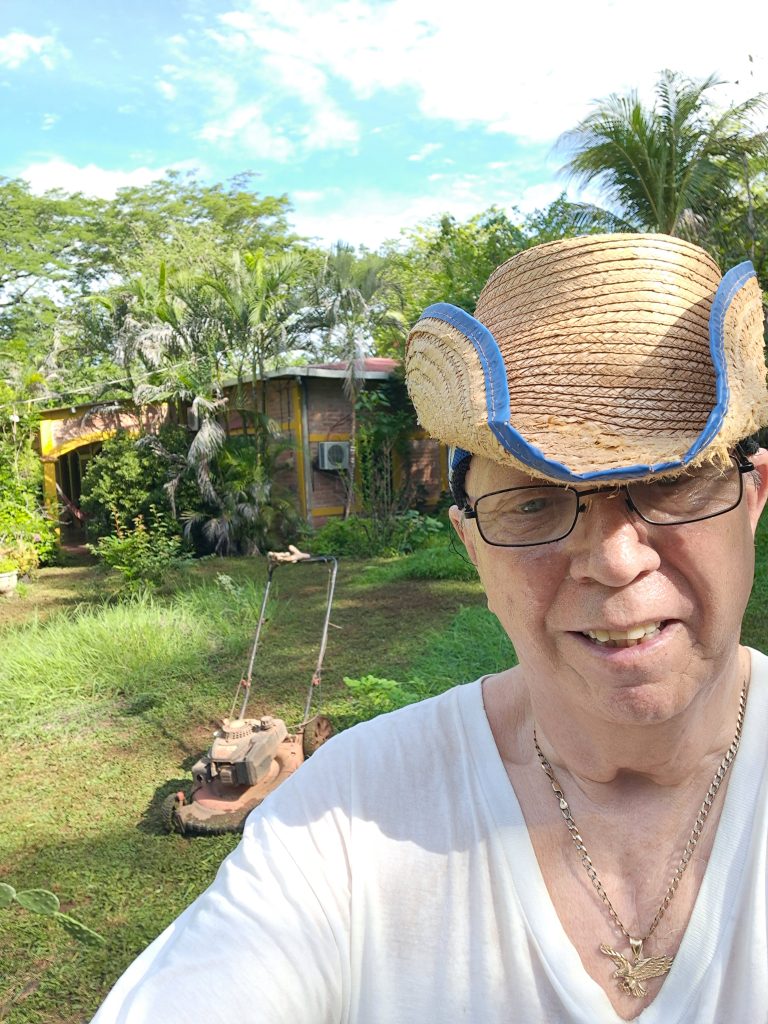
    If you enjoy stories about El Salvador’s culture, development, tourism, and transformation, please consider liking, commenting, and sharing this article.